
One of the reasons why many people put off skin checks is because they are not certain whether a spot is serious or to check with a specialist.
People wait until the mole has bled, or to occur suddenly and quickly, or until it is painful – but there are numerous skin cancers that are not perceived any longer in their initial phases.
Knowledge of those times when a case of skin cancer specialist is required can prove to be a life-saving factor.
Though general practitioners are a significant force in routine care, the specialists in skin cancer are highly trained and equipped as well as experienced and have specialized in the early detection of skin cancer.
As the numbers in skin cancer are among the highest in the globe, the awareness of when to address a specialist is the key aspect of active health care.
Have you ever wondered whether changing spots, family history or sun exposure can expose you to a risk? This guide tells you exactly in which situations specialist attention is prescribed–and why it is so important to do it early.
In case you are not sure when to make a checkbook, our full guide to skin cancer has it all.
Learning about the Risk of Skin Cancer.
Not all people have equal experience with skin cancer.
The risk depends on your genes, exposure to the sun, and the type of skin among others, and your history.
The importance of early assessment.
- Skins do not develop cancers very rapidly and quietly usually.
- Most individuals believe that dangerous lesions should be dramatic i.e., dark, high, or bleeding.
- Actually, cancerous cells in forerunners can be normal.
Early visits to a specialist in skin cancer can result in:
- Accurate diagnosis
- Early treatment
- Decreased surgical operation.
- Higher cure rates
Waiting until during the emergence of symptoms usually indicates that the cancer has already advanced.
Who Is a Specialist in Skin Cancer?
A specialist in skin cancer is a physician who has received enhanced learning on how to diagnose and manage skin cancer.
They are employed in special skin cancer practices with an interest in:
- Early detection
- Dermoscopic examination
- Mole monitoring
- Biopsy and surgical treatment.
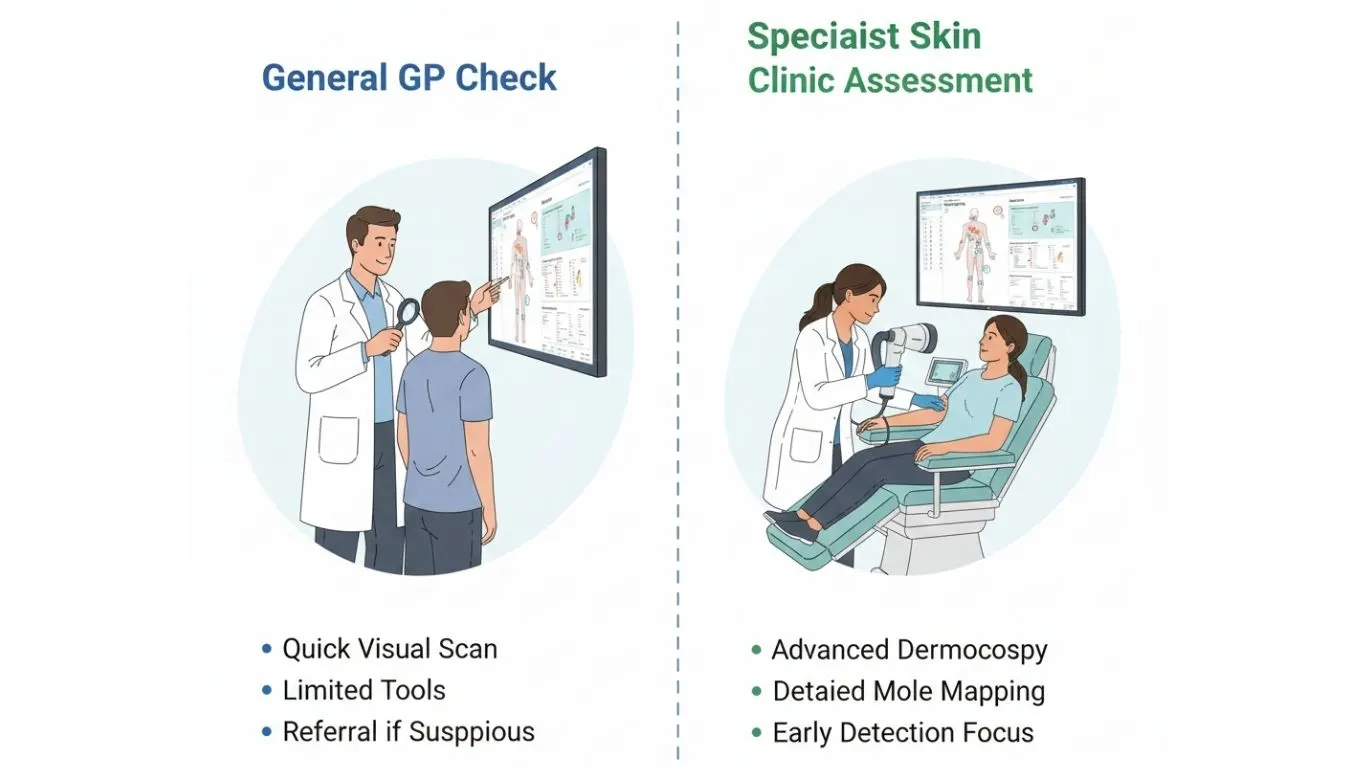
In contrast to general practitioners, who see a variety of conditions, specialists see skin disease on a daily basis thus being able to identify any warning signs that other people may overlook.
GP vs Skin Cancer Specialist
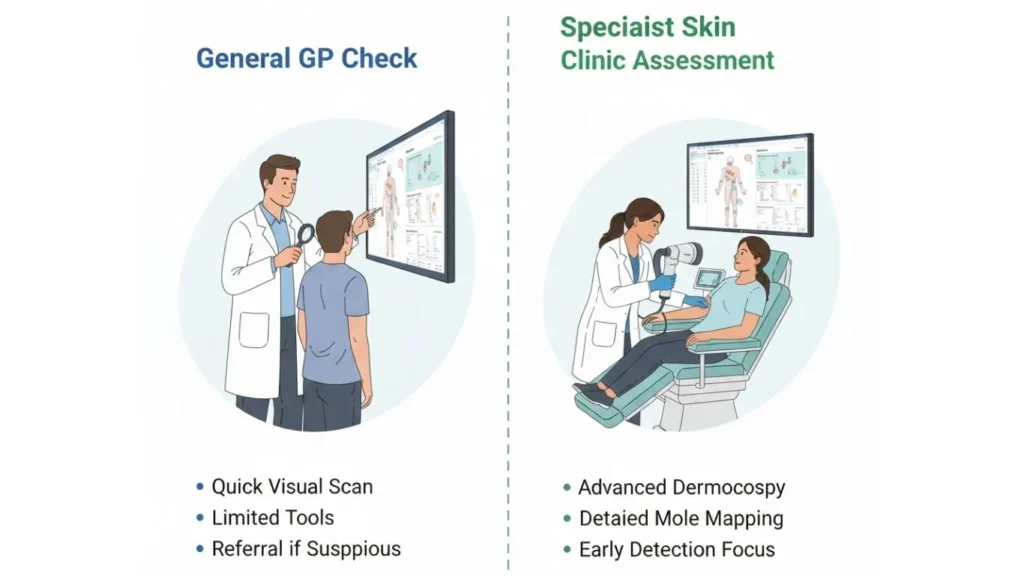
Realizing the distinction between GP and specialist will enable one to clarify when referral or direct booking is warranted.
What a GP typically provides
General practitioners serve as their great starting points and have the capacity to:
- Perform basic skin checks
- Identify obvious lesions
- Provide referrals
- Deal with some basic medical issues.
A time crunch and relative inaccessibility to specialised imaging can, however, implement depth of assessment.
What a specialist in skin cancer teaches.
Dermatologists provide:
- Advanced dermoscopy
- Thousand plus lesions every year.
- Digital surveillance technology.
- Surgical expertise
- Risk-based follow-up plans
Key differences at a glance
| Area | GP | Specialist |
| Skin focus | General | Dedicated |
| Dermoscopy | Limited | Advanced |
| Mole mapping | Rare | Common |
| Surgical treatment | Limited | Comprehensive |
| Ongoing monitoring | Basic | Structured |
Specialist evaluation is a far better concern to those with more risk.
When to visit a specialist in skin cancer.
Specific review is highly advisable in a few circumstances.
You notice a changing spot
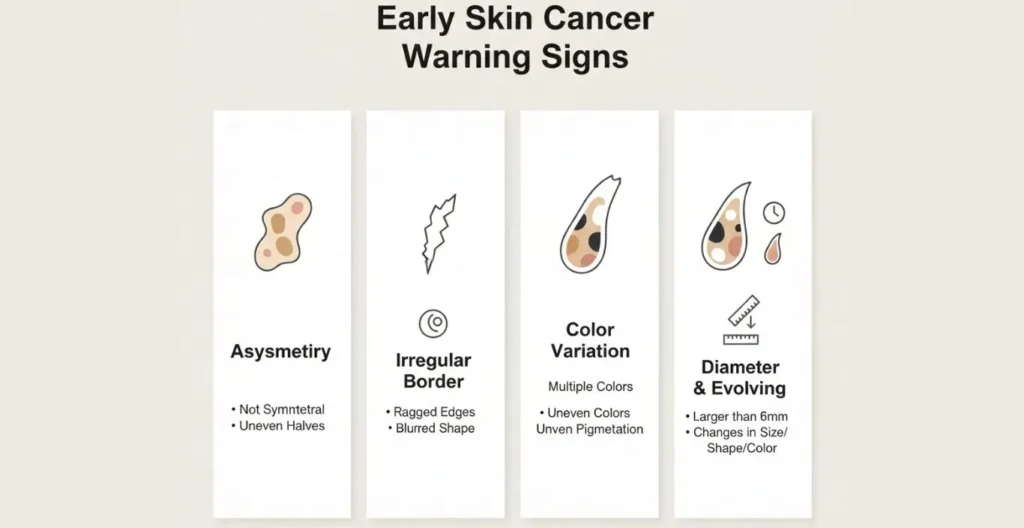
Assessment should be done on any mole or lesion that evolves.
Changes may include:
- Growth
- Darkening or lightening
- Irregular borders
- Shape alteration
- New colour shades
However, change rather than appearance is something oftentimes sentinel evidence.
You have a personal history of being a skin cancer patient.
After one skin cancer, you are at serious risk of getting one more.
The specialist monitoring assists in identification:
- New primary cancers
- Recurrence
- Secondary lesions
Follow-up should be done on a long-term basis.
You have many moles
- Individuals who have many moles are at risk of having melanoma.
- It is not easy to monitor individual moles by visual means without the aid of special equipment.
- In this regard, special skin cancer centers are very relevant through systematic surveillance.
Your skin is fair or sun-sensitive.
People that easily burn, with freckles or who have difficulties getting a tan are more susceptible to UV damage, with sun protection.
You are exposed to a lot of sunshine.
Risk increases with:
- Outdoor occupations
- Sporting activities
- Past sunburns
- Childhood UV exposure
A hurt is something that is built with time.
Red Flags People miss most of the time.
Several of the skin cancers are diagnosed at a late age when the cancers are ignored.
Normal changes normally ignored.
- A flat spot that slowly grows
- A mole that is getting a little unequivocal.
- Lesion appearing dissimilar to others.
- A sore that doesn’t heal
- Mild colour variation
Such indicators could be rather vague, however, not unimportant.
The “ugly duckling” sign
A lesion that appears different on your body in case of all keepsake is one of the crucial warning signs.
Difference alone can be a defense to specialist evaluation even when it does not meet traditional standards.
A History of Family and Risk.
The family history contributes significantly to the risks of melanoma.
In the case of a close family member who had melanoma.
Your individual risk heightens when:
- A parent had melanoma
- A sibling had melanoma
- There are several members of the family involved.
Skin cell response to UV can be altered among genetic factors.
At-risk persons can need:
- More frequent checks
- Digital monitoring
- Long-term follow-up plans
Primary disease is done away with before regressing to a more serious level.
Becoming familiar with Risk Categories.
In most cases, patients are evaluated by the skin cancer specialists according to the risk level.
Low risk
- Few moles
- No medical or family history.
- Minimal sun exposure
Periodical inspections can be adequate.
Moderate risk
- Multiple moles
- Intermittent sun exposure
- Fair skin
Frequent professional examinations are prescribed.
High risk
- Previous skin cancer
- Strong family history
- Numerous atypical moles
Close monitoring that is run by specialists is highly recommended.
Referral vs Direct Booking
A significant number of individuals are at a loss about the necessity of a referral.
Do you need a GP referral?
When visiting a skin cancer specialist, in most instances, no referral is necessary, especially in privately owned skin cancer clinics.
When referrals may be used
- Medicare considerations
- Complex medical history
- Opinion requests Specialist opinion requests
Nonetheless, a large number of patients prefer to make a direct booking because it is convenient and their evaluation is quick.
Benefits of direct booking
- Shorter wait times
- Emergent specialist examination.
- Imaging and treatment direct access.
This is the reason why most patients would choose specialized clinics.
How Skin Cancer Clinics are More Monitored.
Specialized skin cancer centers are intended to detect these cancers at an early stage.
They typically offer:
- Extended appointment times
- Full-body examinations
- Dermoscopic imaging
- Digital skin mapping
- Structured recall systems
In the general practice set-up, this kind of monitoring is hard to obtain.
The Frequency of Specialists Ought To Be?
Frequency is related to personal risk.
General guidance
- High risk: every 6-12 months
- Moderate risk: every 12 months
- Low risk: as advised
It is consistency and not frequency.
Failure to make follow-ups lowers the accuracy of early detection.
Emotional Reasons that People Wait to see a Specialist.
Many people delay care due to:
- Fear of bad news
- Anxiety about procedures
- The symptoms of assumption need to be present.
- Busy schedules
Unluckily, one of the most prevalent causes of the evolution of skin cancers is the delay.
Nevertheless, early assessment is not usually bad news, but relief.
Personnel: What Occurs in the case of a Specialist Skin Check?
In a normal appointment one can visit:
- Full-body examination
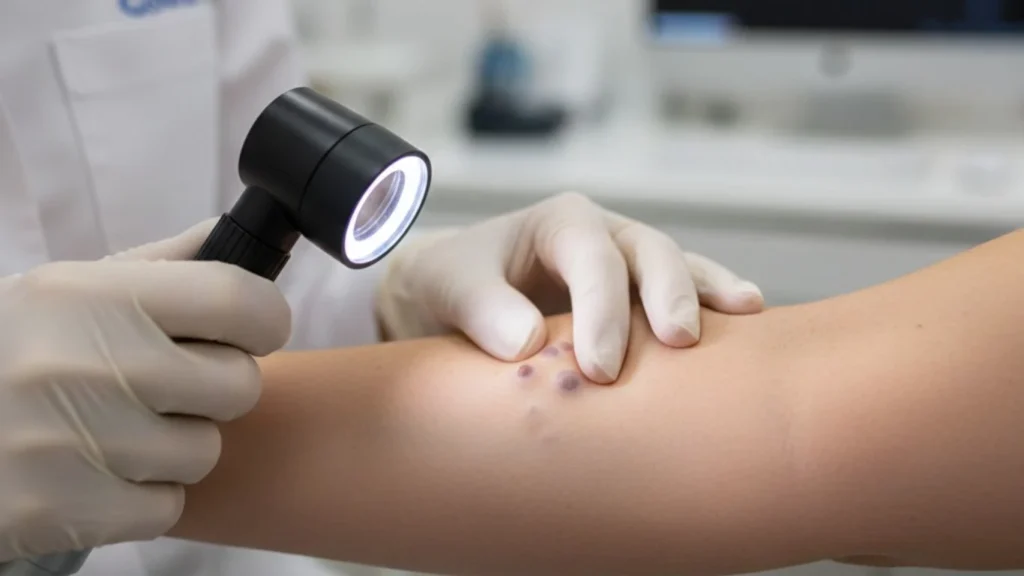
- Dermoscopic assessment
- Determination of risk patterns.
- Needs of monitoring discussion.
In case of a suspicious lesion, choices can be carried out through following, skin biopsy, or early excision.
The majority of the procedures are uncomplicated and conducted using local anaesthetic.
The reason why Early Specialist Review Saves Lives.
At an early detection of the skin cancer:
- Surgery is smaller
- Recovery is faster
- Scarring is reduced
- There are much improved outcomes.
Specialized evaluation cuts off false diagnoses and unwarranted tests.
FAQs
1: Am I required to be symptomatic to visit a skin cancer specialist?
No. A lot of skin cancers at an early stage are asymptomatic. Experts are concerned with the recognition of changes before pain develops.
2: Is it possible to spend all skin cancers on a GP?
The GPs can treat most cases, but there are also higher-risk patients in whom the specialists offer high-quality assessment and follow-up.
3: Am I overpaid to visit a specialist once every year?
Not if you have risk factors. Periodic screening is not provisive, but proactive.
4: But what when I am not sure that a spot is any thing?
Assessment can be recommended in case of doubt. It’s always safer to check.
5: Is it all skin cancer clinics in melanoma?
No. They examine every form of skin cancer such as squamous and basic cell carcinoma.
6: Is family history something that is risk-enhancing?
Yes. Genetics is a significant factor, especially for melanoma.
7: Do younger people have the opportunity to see a specialist?
Yes. An aged person is not free of danger particularly when we are at high levels of UV.
8: And what about no evidence of suspicion?
You will effectively get a reminder and a follow on plan based on your risk profile.
Final Thoughts
The ability to establish the right time to contact a skin cancer specialist helps you to be proactive and not reactive.
Although GPs still play a critical role in the health sector, experts and skin cancer clinics offer superior equipment, expertise, and surveillance which contribute greatly towards early detection.
In case you see change, risk factors are present or you just need a sense of calmness and security, then specialist assessment is a relief and safe haven.
And when to rent a check, we suggest that you look at all the aspects of skin cancer in our main kew guide.
Book a Skin Cancer Specialist Consult.
Early evaluation is all you need just in case you have observed a shifting area, a family history of skin cancer, and just need professional confirmation.
An expert dermatologist is able to assess your risk, closely investigate your skin and provide you with the best alternative of monitoring action. Get your skin cancer today and have peace and early intervention.
| Canberra Skin Cancer Clinic- Green Way | Canberra Skin Cancer Clinic- Molonglo Valley |
| Phone:(02) 6100 9956 | Phone: (02) 5110 3155 |
| Email:reception@greenwaymedicalcentre.com.au | Email: reception@greenwaymedicalcentre.com.au |
| Address: Unit 6/175 Anketell Street, Greenway ACT 2900 | Address: 110 Woodberry Ave Coombs ACT 2611 |
| Website:https://canberraskincancerclinic.com.au/ | Website:https://canberraskincancerclinic.com.au/ |