
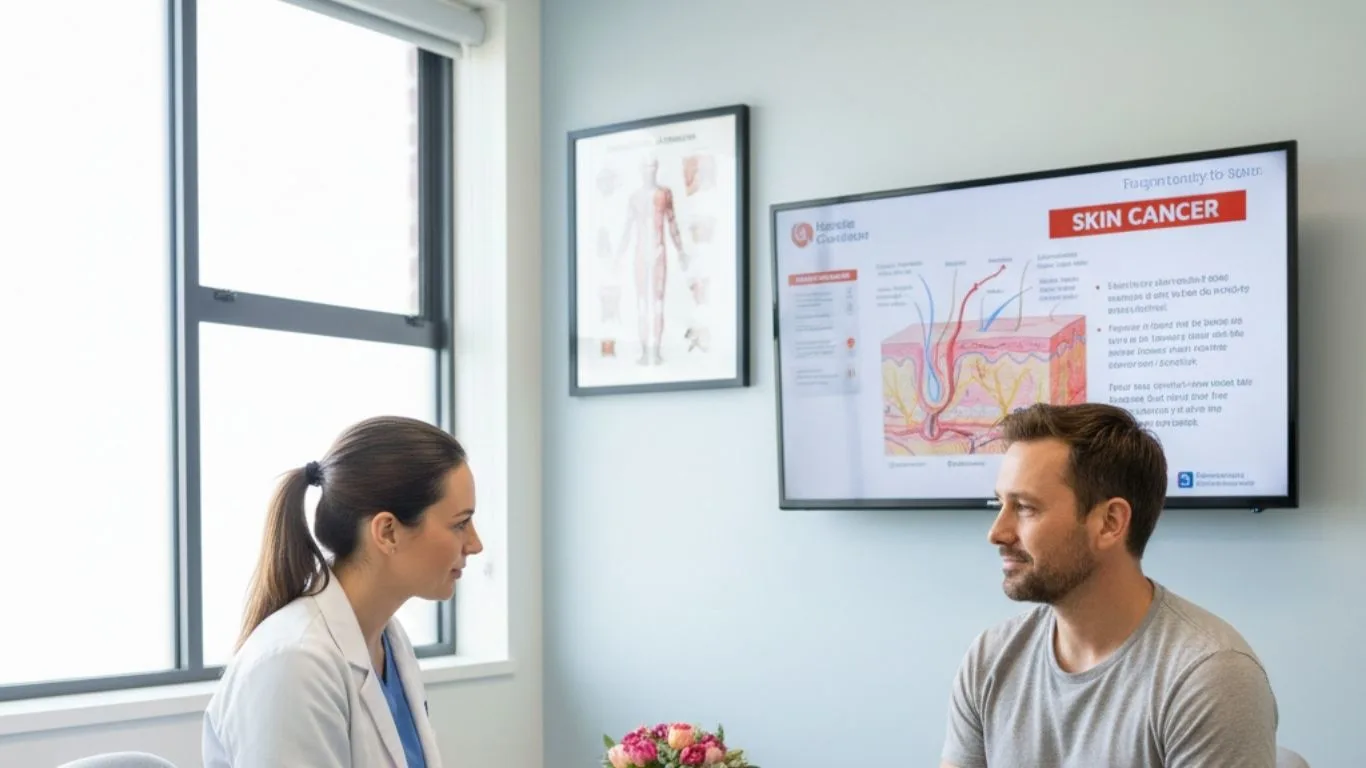
First Skin Cancer Screening
Canberra is a place where one can have a wide open space, fresh air and live an active outdoor life. Weekend strolls around Lake Burley Griffin to gardening, cycling, school sporting, outdoor labour and so on, many locals use a great portion of their time in the sun, with little or no thought of accumulating UV over the years.
To most individuals, the process of reserving their first skin cancer screening may seem foreign or rather fearful. You would like to know what it does during the visit, is it painful, or what the doctor is searching for. These are quite normal questions, more so when this is the first time that your skin is being checked.
This guide takes you through the whole process using simple language that even leaves out the non-techie, from how to book your appointment to right about the follow-up care. It is targeted at Canberra inhabitants particularly the local weather, lifestyle and exposure to the sun. It will aim at making you feel informed, prepared, and reassured before you can go to have your first assessment.
The Importance of First-Time Skin Screenings in Canberra
The rates of skin cancer in Australia are among the highest world over, and the ACT is not an exception. The altitude, clear skies and dry weather could further enhance UV levels in Canberra even on a day which may feel cool or mild.
Several individuals believe that the sun damage only occurs during sun scorching days or when out on a holiday. Actually, there is exposure to UV all year round whether in the winter or during the rainy days. Glacial sun exposure is painfully reduced and often many years develop over time without any actual signs.
The changes on the skin that occur later in life are often a result of sun exposure several decades ago. This is the reason why adults of any age should have regular skin checks, not just the older Australian people.
A first screening provides:
- A record of a skin baseline
- Timely detection of abnormal variations
- Recommendations based on your own risk factors
- Tranquility and sanity in the future
In the case of families, outdoor workers and individuals who have been residing in Australia the majority of their lifetime, early checks are critical in long-term skin condition.
The Actual Process of Skin Cancer Screening
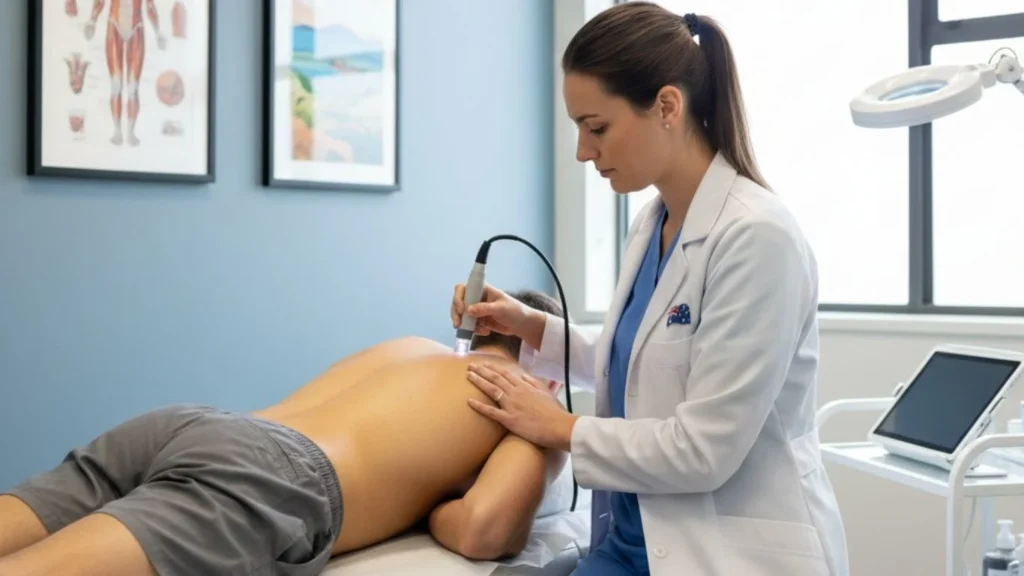
A skin cancer screening is a screen of your body concerning your skin done by a trained medical practitioner. It is aimed at the finding of spots, moles, or moles that might need additional attention or observation.
Notably, it is not painful, invasive or hurried. The meeting is structured to be peaceful, dignified and systematic.
It is not a case of the clinician merely seeking problems that are obvious. Lots of changes in early skin are not evident and we need adequate lighting and magnification to be able to see them.
The initial visit is also used to define the natural appearance of your skin, and it serves as a much more precise point of reference in future comparisons.
What to Expect on Your Initial Visit
Booking and Preparation
When booking in advance on your appointments you are generally being recommended to:
- Do not use artificial tan or thick make-up
- Take off nail polish whole where you can
- Wear loose and comfortable dresses
- Make a list of spots about which you have any concern
There is no special preparation or shaving that is required of your skin. The best assessment is that of natural skin appearance.
You can also bring photos of the previous changes or treatment which you have had.
Preliminary Conversation and Medical History
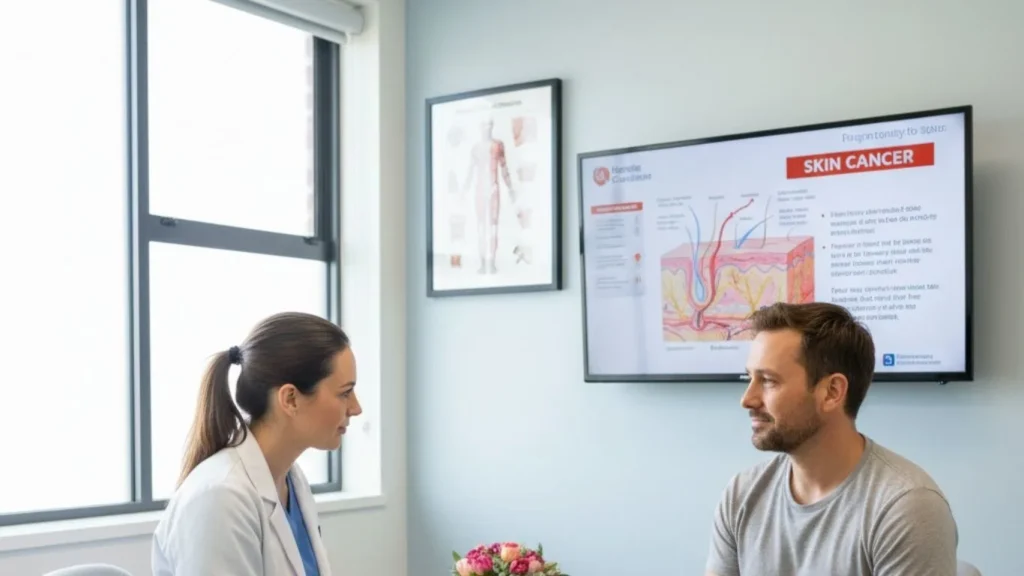
I will usually start by talking briefly with you. This will make the clinician realize your own risk factors.
Topics often include:
- Your age and skin type
- History of sun exposure
- Childhood sunburns
- Outdoor work or hobbies
- Family/ personal history of skin cancer
- New irritating/ changing spots
This discussion aids in determining how in-depth your analysis will be and make sure that care is focused on you, as a person.
Changing and Privacy
You will be allowed to dress up, to put on a gown. Only the under-analyzed areas remain bare at any given moment.
Clinics are highly qualified in making the patients comfortable, particularly the first time check. Examinations are carried out in a professional, respectful and according to your time.
In case there is a point when you are not sure or require an explanation, you are welcome to raise your voice on skin check.
The Full Skin Examination
The clinician will review your skin with a head-to-toe examination. This also involves places that are most likely to be ignored like:
- Scalp and hairline
- Behind the ears
- Under the breasts
- Between fingers and toes
- Soles of the feet
- Back of the legs
- Under nails
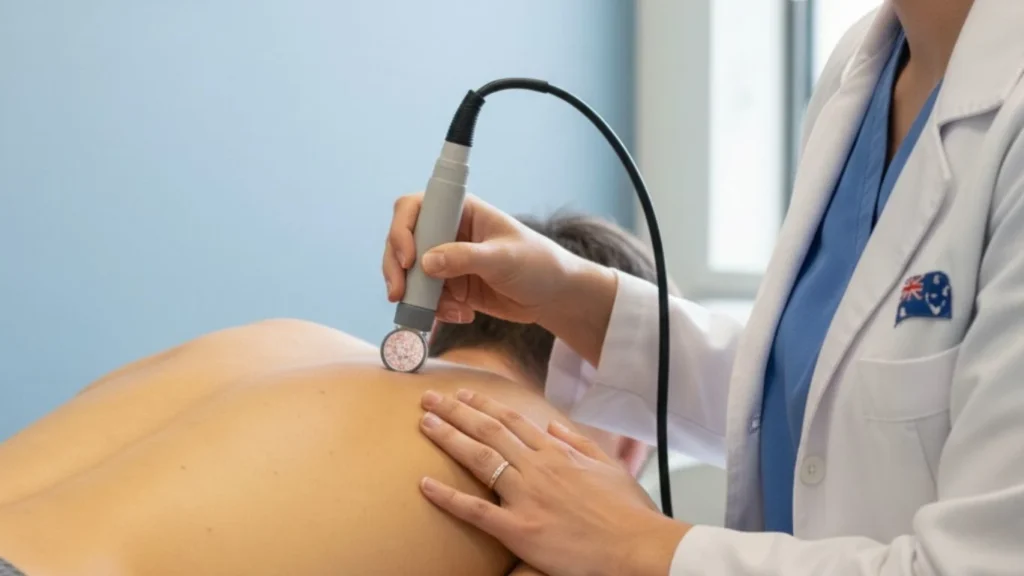
The structures below the skin surface are frequently observed with the help of a specialised magnifying instrument. This enables one to discern finer details that cannot be observed at all.
This stage is purely visual and does not entail the use of needles, cutting or any procedure.
The simplicity and nonchalance of this part of the appointment is astonishing to most people.
There Are Areas That Should Be Detected
In case the clinician there observes a spot that does not appear as part of your standard pattern, then he or she may:
- Measure it
- Monitor it by taking up photographs
- Compare it to other lesions
- Define in common language what they see
All suspicious areas are not harmful. Most of them are benign changes of the sun that only require observation.
At this stage, its aim is review, not diagnosis.
Discussion of Findings
After examining you, your clinician will narrate the results in an understandable way.
This may include:
- Assurance in case of no alarming spots are present
- Spot detection of spots to track
- Timing of follow-up, etc.
- Recommendations on sun protection practices
In case that something will demand additional inquiry, you will be assisted through the course of actions that follow systematically and clearly.
What Would Occur in Case a Spot Should Be Examined Further?
There are instances such that a closer evaluation needs to be performed on a lesion. This is not necessarily an indication that one has skin cancer.
The potential follow-up actions can be:
- Temporal observation of photographs
- Several months of the review appointment
- Referral to additional evaluation in case of necessity
Your clinician will clarify on why he/she makes this recommendation as such in order to synchronize on the plan and timeline.
Effective communication is a major component of quality skin care.
Some Canberra-Specific Variables That Predict Skin Risk
High UV Exposure
Canberra enjoys a high UV radiation because it is high and the skies are clear. There are times when the people feel cool but the UV can still be so high and cause skin damage.
During many people would underrate their exposure:
- Spring
- Autumn
- Cloudy days
- Exercise general mild weather pulsing
This is a specific concern that regular monitoring is especially important to locals.
Outdoor Lifestyle Habits
Most of the activities that are typical to Canberra can expose one to prolonged exposure to the sun, such as:
- Walking and cycling paths
- Gardening and landscaping
- Field sports ovals and school ovals
- Construction and trade work
- Agriculture and land tenures
The cumulative action of these exposures is not immediately noticeable.
The Trends in Long-Term Sun Damages
David does not finally wake up one morning with skin damage. Alterations usually arise 10–40 years post-exposure.
That is why adults who have grown up in Australia, even the ones that avoid the sunward GAAP today are also benefiting through routine checks.
A baseline test is used to pinpoint these trends at an earlier stage.
Reasons Patients Have First Moment Anxiety
It is very common to feel:
- Fearful of what there would be
- Self-conscious with appearance of skin
- Unsure what questions to ask
- Feared to waste the time of doctor
Such emotions are totally natural.
The skin checks are preventive in nature. It is precisely what they are intended to do since they are to be attended before problems arise.
Clinicians anticipate any first-time patient to have inquiries and uncertainty. What you are in is learning but not judging.
Famous Myths of Skin Screenings
“I Would Know It Something Has Gone Awry”
Numerous alarming skin alterations are painless, itchless, and not bloody. Others are low and delicate years.
Professional evaluation reveals those features that cannot be observed without the training and tools.
“I Just Need Checks in Case I Easily Burn”
Although people of fair skin have the greatest risks, individuals of dark skin colour also might have skin cancer, particularly in places where people come into contact with the sun regularly.
Lifetime exposure is also a risk factor and not skin colour.
“I Only Check Moles I Can See”
The soles of the feet, the back and the scalp are just some of the common places where convenient lesions are missed.
A comprehensive analysis makes sure that nothing is missed.
“I Will Wait Till Something Will Change”
Delayed early detection may occur because of waiting until the change is visibly noticed.
Regular examinations are aimed at detecting any risk prior to symptoms being experienced.
What to Consider on Canberra-Based Skin Care
Making a decision in favor of continuous skin monitoring is not only convenient.
Important factors include:
- Elaborate inspection methodology
- This is done in a systematic head-to-toe process that has been found to be consistent and accurate over time
- This is done in a systematic head-to-toe process that has been found to be consistent and accurate over time
- Clear communication
- Patients ought to know what is measured, and the reason behind
- Patients ought to know what is measured, and the reason behind
- Continuity of care
- The ability to contrast changes throughout the years not merely months enables the opportunity of seeing the same clinic to compare it
- The ability to contrast changes throughout the years not merely months enables the opportunity of seeing the same clinic to compare it
- Reliable follow-up systems
- Monitored by means of reminders and paper trail help avoid oversomissions
These aspects favour the health of skin in the long term and not a one-time check.
How Frequently Should You Be Having Skin Checks?
The prescribed frequency will depend on some risk factors like the individual risk factors like:
- Skin type
- History of sunburn
- Occupational exposure
- Personal or family history
- Number of moles or sun spots
Routine reviews are recommended to be attended by many Canberra residents at the intervals which are determined during the first appointment.
The first check-up is what will create this individual schedule.
Post-Appointment Skin Monitoring
Besides professional checks, there is the promotion of self-awareness.
There is no need to read each of the moles. Rather, observe such changes like:
- Growth
- Colour variation
- Irregular edges
- Persistent redness
- New spots at adulthood
When something does not appear in the habitual pattern of your skin, then give it a second look.
Seasonal Awareness in Canberra
Summer
UV levels are highest. Protection against the sun becomes important especially in the midday.
Autumn and Spring
UV exposure is however huge and mostly ignored. A lot of individuals will suffer sunburns during these pleasant months.
Winter
The UV radiation persists even at lower temperatures. Skin inspections are applicable throughout the year.
Damage of the skin is not in seasons in a pause.
Helping Families and Contractors
The first screening is frequently booked by parents becoming more conscious about exposure to the sun in their children.
Outdoor workers can also train after years of accumulative exposures.
The first-time screenings are typical of:
- Tradespeople
- Gardeners
- Farmers
- Teachers and coaches
- Defence/ emergency workers
As these appointments aid emphasis is on education, monitoring, and future planning and not alarm.
Appreciating the Purpose of Continuous Monitoring
Skin health is not a single examination. It is a continual process and it is constantly changing with your skin change.
The initial appointment determines:
- A baseline record
- Knowledge of your skin patterns
- A program adaptable to your lifestyle
Future checks are also more accurate and quicker as changes can be compared accurately.
To have all the details about the detection and continued monitoring of skin cancer, refer to our entire instruction on the skin cancer checks in Canberra.
Critical Things You Learned During Your Initial Screening
- The booking is not intimidating, nuanced or threatening
- The analysis is pictorial and systematic
- Majority of the findings are non-hazardous or just followed
- Timely evaluation is important as it offers clarity and assurance
- The UV check is valuable at Canberra
- Your first screening being a proactive planning toward knowledge of your skin is not something to fret over
Frequently Asked Questions
1: What is the frequency of skin checks of Canberra residents?
The perfect rate will be determined by your skin type, the history of sun exposure, and the way of life. Routine reviews are done by many Canberra residents every 6 to 12 months more so people who spend some time outdoors. With your initial appointment, a schedule that is tailored to your unique risk factors and long-term care requirements is established.
2: Should skin check still be prominent in the winter season in the ACT?
Yes, the UV radiation is an ever-present phenomenon even during the colder seasons. The skies of Canberra are transparent chases and the sun is exposed even when it is at lower temperatures. Skin checks are also feasible during winter since the damage accrued during the sun-burning period might have intensified and the clinics are usually not too busy.
3: What is going to happen in case something suspicious is detected?
In case a region requires more implication, your clinician must provide the reason why and clear up on some steps to be taken. This can include surveillance, photography, or any other evaluation. Most of the discoveries are tender and not grave. You will be provided with time frames and instructions so that you know very well what comes next.
4: The duration of a complete skin check?
In most cases the length of a first appointment is between 20 and 30 minutes. This involves medical history, examination and discussion of findings. Subsequent visits can be conducted in less time as a baseline has been provided. The clinics are to provide space to ensure that the process does not feel an urgency.
5: According to the Canberra region, who is regarded as more at risk?
Individuals at greater risk usually involve people with fair skin and history of sunburn, outdoor jobs, high number of moles or prolonged exposure to the sun. People that have grown up in Australia also have more chances of accumulating UV damage. In your initial check-up, your clinician will evaluate your condition, taking into account your personal risk. One step to go ahead and have their first skin cancer screening is influential, preventive, and assured, rather than scared. Canberra has a good UV environment and an outdoor lifestyle, which means that the knowledge you have now about your skin can help you to keep your health very safe in the future.
Book a Skin Cancer Specialist Consult
Early evaluation is all you need just in case you have observed a shifting area, a family history of skin cancer, and just need professional confirmation.
An expert dermatologist is able to assess your risk, closely investigate your skin and provide you with the best alternative of monitoring action.
Get your skin cancer today and have peace and early intervention.
| Canberra Skin Cancer Clinic- Green Way | Canberra Skin Cancer Clinic- Molonglo Valley |
| Phone: (02) 6100 9956 | Phone: (02) 5110 3155 |
| Email: reception@greenwaymedicalcentre.com.au | Email: reception@greenwaymedicalcentre.com.au |
| Address: Unit 6/175 Anketell Street, Greenway ACT 2900 | Address: 110 Woodberry Ave Coombs ACT 2611 |
| Website: https://canberraskincancerclinic.com.au/ | Website: https://canberraskincancerclinic.com.au/ |