
Living in Canberra Means Living With High UV Exposure Australia
Canberra is known for its sky, its outdoor lifestyle and its distinct seasons. From weekend sport and hiking activities to gardening and school events, a lot of life in the ACT is conducted outside.
What many people don’t realise is that our environment also brings consistently high levels of ultraviolet radiation. Due to altitude, clear skies and Australia’s overall location closer to the equator than many countries in the Northern Hemisphere, UV exposure Australia levels are among the highest in the world.
It’s common to think of skin damage as a painful sunburn. If your skin isn’t red or peeling, it may not feel like any harm has been done. However, sunburn is just one visible sign of injury. A large amount of sun damage skin changes occur gradually, silently, and without obvious warning.
Understanding how this cumulative process works is especially important for Canberra locals who consistently spend time outdoors, even in winter.

What Exactly Happens to Skin Under UV Radiation
UVA vs UVB: What’s the Difference?
Different types of ultraviolet radiation are found in sunlight. The two that have the greatest effects on the skin are UVA and UVB.
- UVB rays cause most sunburns. They affect the top layers of the skin and are strongest in the middle of the day.
- UVA rays penetrate the skin more deeply. They are present throughout the day and year, and they can pass through clouds and glass.
Both types are responsible for long-term damage.
While UVB is more likely to produce visible redness, UVA works behind the scenes in a more discreet way. It plays a major role in premature skin ageing and deeper structural changes.
How UV Radiation Penetrates the Skin
Your skin has several layers. The outer layer (epidermis) acts as a barrier. Beneath that is the dermis, which contains collagen and elastin that make the skin strong and flexible.
UV radiation can:
- Disrupt skin cells
- Break down collagen
- Change pigment-producing cells
- Damage the DNA contained in skin cells
This damage may not be immediately visible. The skin has repair mechanisms, but these are not perfect. Over time, repeated exposure can overwhelm the repair process.
Why Damage Can Exist Without Redness
Sunburn is an inflammatory response. It occurs when exposure to UVB rays exceeds the skin’s tolerance.
However, even lower levels of daily exposure can still impact cellular structures. You may not notice redness, but changes can take place at a microscopic level.
This is how cumulative sun exposure develops. Small levels of injury accumulate over the years.
How Sun Damage Is Slowly Built Over Years
Long-term damage from UV rays rarely comes from a single day in the sun. It develops through patterns of exposure across several decades.
Childhood Exposure
Australia has a rich outdoor culture. Many of Canberra’s adults today grew up playing sport, swimming and spending time outside before consistent sun protection was common.
Childhood skin is sensitive. Even mild exposure during early years can contribute to later changes.
Because children recover quickly and may not feel the full effects, early exposure is often overlooked.
Teenage and Young Adult Years
Teen years often include:
- Outdoor social activities
- Sporting commitments
- Summer holidays
- Tanning behaviours
In earlier decades, tanning was often regarded as healthy. While attitudes have changed, many adults today accumulated exposure during those formative years.
Even without severe sunburn, cumulative radiation exposure in adolescence plays a role in long-term skin ageing from the sun.
Outdoor Work and Hobbies
Many people in Canberra work outdoors, including:
- Builders and tradespeople
- Landscapers
- Agricultural workers
- Sports coaches
- Postal and delivery staff
In addition, many residents enjoy:
- Golf
- Cycling
- Hiking
- Gardening
- Running
Daily exposure over 10, 20 or 30 years has a cumulative effect.
Even when sunscreen is used occasionally, missed areas or inconsistent reapplication mean radiation exposure can continue to affect the skin.

Everyday Incidental Exposure
Not all UV contact happens at the beach.
Daily activities such as:
- Walking the dog
- Driving
- Hanging washing
- School drop-offs
- Sitting near windows
can contribute small increments of cumulative exposure.
UVA can penetrate glass. This means time spent driving or sitting near windows still contributes to sun skin damage changes over the long term.
Cloudy Day Misconception
Cloud cover does not block UV radiation.
Many Canberra residents assume overcast days are safe. However:
- Up to 80% of UV rays can pass through clouds
- Cooler temperatures do not mean lower UV
- Wind can reduce the feeling of heat without reducing radiation
This is why UV exposure Australia warnings are issued year-round.
Winter UV in Canberra
Canberra winters are crisp and cold, yet UV levels can still be moderate or high, especially on clear days.
Altitude plays a role. Canberra sits higher than many coastal cities. UV intensity increases with elevation, meaning residents may receive more radiation than expected during winter sport or outdoor activities.
The lack of heat makes it easy to forget protection during this season.
Why You May Not Experience Damage Right Away
One of the challenges of long-term UV damage is delay.
Delayed Visible Effects
Skin often appears healthy in youth. Visible signs of cumulative sun exposure may not appear until:
- Late 30s
- 40s
- 50s and beyond
By then, much of the cellular damage had already occurred.
Changes in Pigmentation
Common gradual changes include:
- Uneven skin tone
- Dark spots
- Freckles increasing over time
- Patchy pigmentation
These shifts reflect the effect of UV radiation on melanin-producing cells.
Changes in Texture and Elasticity
Collagen breakdown may lead to:
- Fine lines
- Wrinkles
- Rough texture
- Thinning skin
These changes are often labelled as “normal ageing,” but environmental sun impact plays a major role.
Pre-Cancerous Changes
Long-term exposure may also contribute to rough, scaly patches that develop gradually. These changes may not cause discomfort at first.
Because they are subtle, many people leave them unassessed for long periods.
Canberra-Specific Environmental Factors
Canberra’s distinct environment influences cumulative sun exposure.
High Altitude UV Intensity
Ultraviolet radiation increases with elevation because there is less atmosphere to filter it.
Canberra’s inland plateau location means residents may receive higher radiation levels compared to some coastal areas at sea level.
Clear Skies
The ACT is known for clear, blue skies. While beautiful, the lack of cloud cover allows UV rays to reach the ground more directly.
This contributes to consistent UV exposure Australia warnings throughout much of the year.
Outdoor Sport Culture
Canberra families are active. Weekends often involve:
- Junior sport
- Community events
- Barbecues
- Outdoor markets
- Cycling and bush trails
These habits support health and wellbeing but also increase cumulative exposure.
Long, Bright Summers
Summers in the ACT are dry and sunny. Long daylight hours encourage extended time outdoors.
Without consistent protection, these months contribute significantly to long-term sun damage skin changes.
Reflection From Surfaces
UV radiation reflects from:
- Concrete
- Water
- Sand
- Light-coloured surfaces
Reflected exposure can increase total radiation dose, even when sitting under partial shade.
Preventing Long-Term Sun Damage
The good news is that protective habits can reduce harm at any age.
Small, consistent steps matter more than occasional intense protection.
Protective Clothing
Clothing provides a reliable barrier. Consider:
- Long-sleeved shirts
- Collared tops
- Densely woven fabrics
- Long trousers when practical
Clothing does not wash off during the day.
Broad-Brimmed Hats and Sunglasses
A broad-brimmed hat protects:
- Face
- Ears
- Neck
Sunglasses help protect the sensitive skin around the eyes.
Sunscreen Use
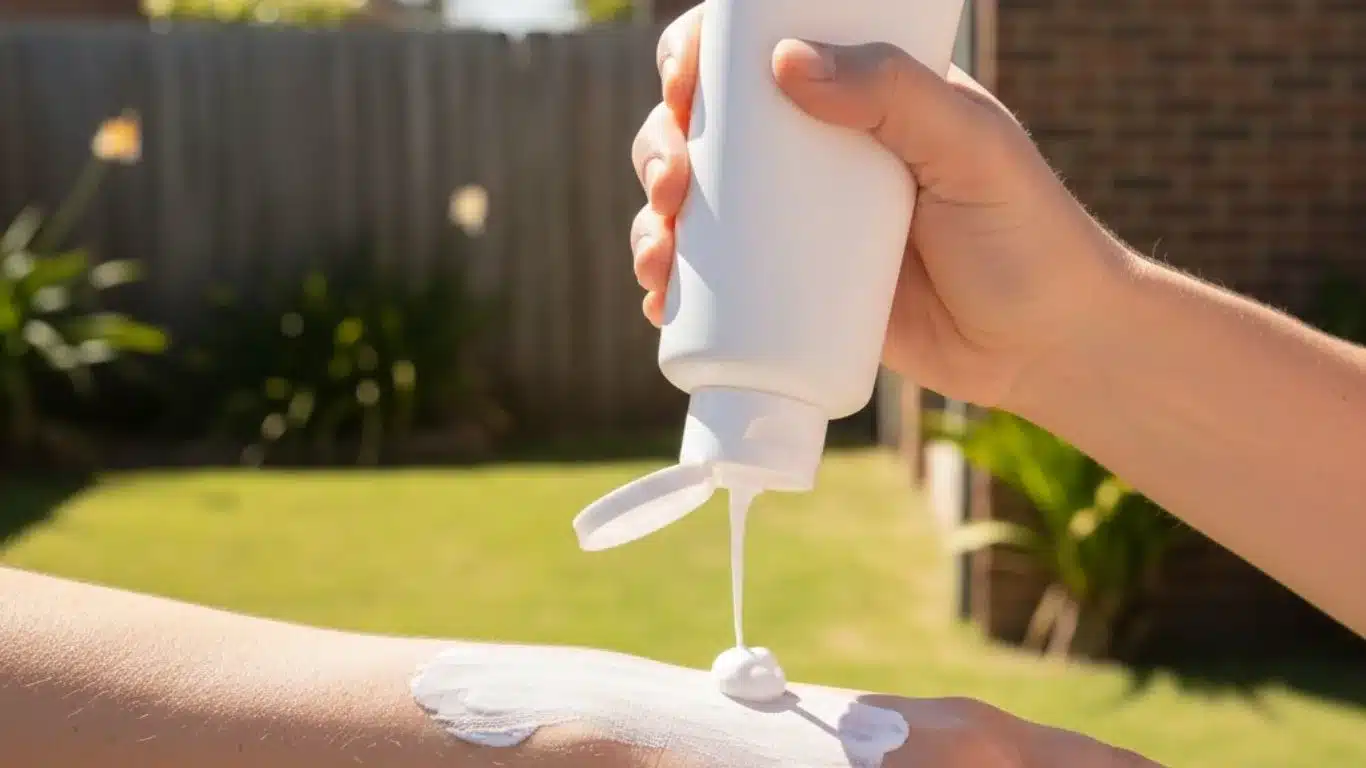
Sunscreen is an important layer of defence when used properly.
Helpful reminders:
- Apply 20 minutes before sun exposure
- Reapply every two hours
- Reapply after swimming or sweating
- Don’t forget ears, neck and hands
- Sunscreen works best when combined with shade and clothing.
Seek Shade When Possible
Where practical:
- Schedule outdoor tasks earlier or later in the day
- Use umbrellas or shelters
- Take breaks in shaded areas
Monitor Your Skin
Regularly inspect your skin for:
- New spots
- Changes in existing moles
- Persistent rough patches
- Non-healing areas
Understanding long-term UV exposure is an important component of preventing skin cancer.
Building awareness helps you respond early if something changes.
When to Get a Professional Skin Check
Many adults believe skin checks are only needed after severe sunburn. In reality, anyone with cumulative exposure may benefit from professional monitoring.
You may consider a skin check if you:
- Are over 30 and grew up in Australia
- Have fair skin
- Work outdoors
- Have noticed new or changing spots
- Have a family history of skin cancer
General recommendations suggest routine checks every 12 months for those at average risk. Those with greater exposure or previous skin cancers may require more frequent monitoring, guided by a healthcare professional.
Early evaluation supports timely management. Many skin changes are easier to treat when detected early.
Routine checks are about awareness and prevention, not alarm.
Key Takeaways
- Sun damage occurs slowly over many years
- Visible sunburn is not required for harm to occur
- Canberra’s altitude and clear skies amplify UV intensity
- Cloudy or cool days can still deliver radiation
- Everyday exposure adds up
- Protective habits reduce future damage
- Regular skin monitoring supports early detection
Small, consistent steps can help protect your skin long term.
Frequently Asked Questions
1. Can you have sun damage and never burn?
Yes. Sunburn is a visible response to high UVB exposure, but lower levels of radiation can still cause changes over time. Cumulative exposure, including time spent outdoors in Canberra, may lead to gradual skin changes even if you rarely experience redness.
2. Is UV exposure worse in Canberra than other cities?
Canberra’s higher altitude and frequent clear skies can increase UV intensity compared to some coastal areas. While UV levels vary across Australia, residents of the ACT should remain aware that radiation exposure remains significant for much of the year, including cooler months.
3. Does sunscreen totally prevent skin damage?
Sunscreen reduces the amount of ultraviolet radiation reaching the skin, but no sunscreen blocks 100%. It works best when combined with protective clothing, shade and sensible timing of outdoor activities. Regular and correct use is important for effectiveness.
4. At what age does sun damage occur?
Sun damage can begin in childhood. Even small, repeated exposures during early years contribute to cumulative changes. Although visible signs may not appear until adulthood, the process can start much earlier, especially in fair-skinned Australians.
5. Should I have my skin checked if I’ve never had a sunburn?
Yes, it may still be worthwhile. Many people with long-term sun damage skin changes have never experienced severe sunburn. If you have spent years outdoors in Australia, particularly in Canberra, periodic skin checks can provide reassurance and support early detection if needed.
Sun exposure is part of Australian life. With knowledge and consistent protective habits, you can continue enjoying Canberra’s outdoor lifestyle while reducing long-term risks to your skin.
Book your skin check today with Canberra Skin Cancer Clinic
Early detection saves lives. Your skin is worth checking.
| Canberra Skin Cancer Clinic- Green Way | Canberra Skin Cancer Clinic- Molonglo Valley |
| Phone: (02) 6100 9956 | Phone: (02) 5110 3155 |
| Email: reception@greenwaymedicalcentre.com.au | Email: reception@greenwaymedicalcentre.com.au |
| Address: Unit 6/175 Anketell Street, Greenway ACT 2900 | Address: 110 Woodberry Ave Coombs ACT 2611 |
| Website: https://canberraskincancerclinic.com.au/ | Website: https://canberraskincancerclinic.com.au/ |