

Many people assume that skin cancer or a dangerous mole will hurt, itch, or bleed. However, this is not always true. In many cases, a cancerous mole may develop without pain, discomfort, or obvious symptoms. This is why regular skin checks and mole monitoring are important, especially in Australia where UV exposure is high throughout the year.
People often search for a mole check near me only when they notice something unusual, but skin cancer can develop silently. Understanding how moles change and when to see a skin cancer specialist can help detect problems early and improve treatment outcomes.
This article explains whether a mole can be cancerous without symptoms, what signs to watch for, and when to see a professional for a skin check in Canberra.
Understanding Moles and Skin Changes
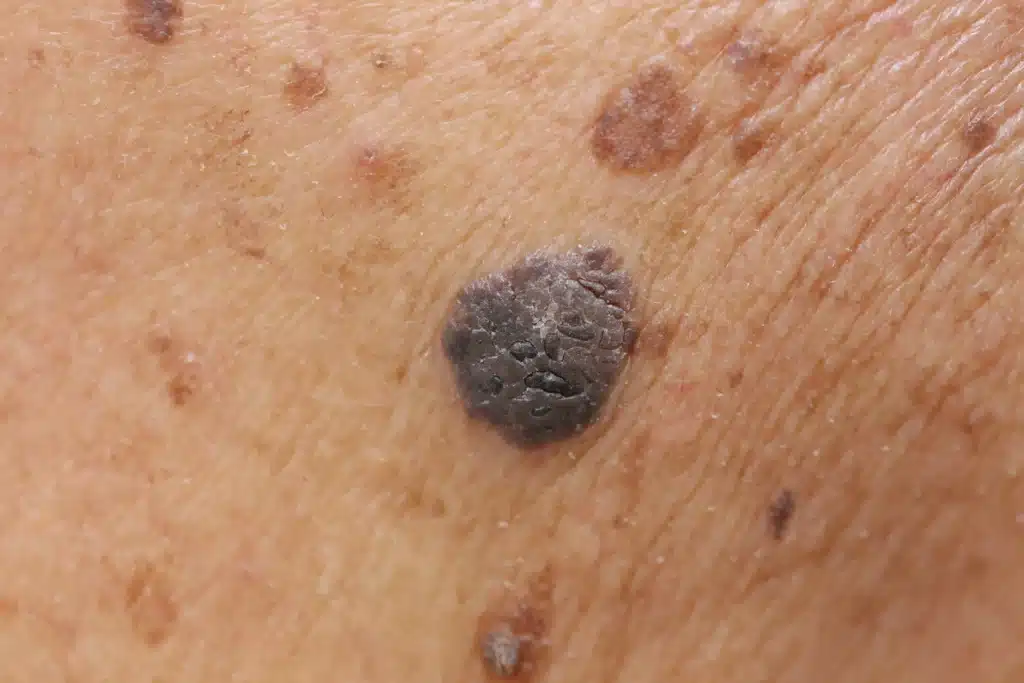
What Is a Mole?
One mole is a skin growth that is caused by pigment producing cells known as melanocytes. Majority of the moles are harmless and can take years to remain the same. These can be flat or elevated, and light or dark brown and can be found anywhere on the body.
There are those people who possess few moles and those who possess dozens of moles. The presence of numerous moles does not always indicate skin cancer, but it does raise the value of regular skin examinations.
How Moles Normally Change
Moles are alterable with time. Certain alterations are normal particularly in childhood, teenage, and pregnancy. Nevertheless, any sudden or unusual changes are to be monitored by a professional.
Normative changes in the mole may involve:
- Minor darkening under the sun.
- Growing a little as time went by.
- The mole has its hair growing.
- Gradual expansion in years.
The abnormal changes are distinct and can be a sign of skin cancer.
Can a Mole Be Cancerous Without Pain?
Yes, Skin Cancer Often Has No Pain
The most widespread myth concerning skin cancer is that it has to be painful. As a matter of fact, most of the early skin cancers are painless. A mole is not necessarily itchy, bleeding, or painful.
Skin cancer is typically slow moving and its early stages usually appear as a normal mole or a small spot. The fact that it is painless leads to individuals neglecting the mole before it becomes severe.
This is the reason why frequent skin examinations are necessary, even when you may have normal skin.
Types of Skin Cancer That May Not Cause Symptoms
Melanoma
The most severe kind of skin cancer is melanoma. It may occur on an already existing mole or form as a spot. Early melanoma is not painful, thus its manifestation is not noticeable.
The signs of early melanoma include:
- Uneven colour
- Irregular border
- Asymmetrical shape
- Growing size
- Dark colour or black colour.
- Various colours in a single mole.
Basal Cell Carcinoma
The most prevalent skin cancer in Australia is basal cell carcinoma. It mostly comes up in the form of a small shiny bump, pink spot, or sore, which does not heal.
It usually:
- Does not hurt
- May bleed occasionally
- May as a pimple that never heals.
- May come to sunny spots.
Squamous Cell Carcinoma
The squamous cell carcinoma may come in the form of scaly patch, thickened skin or a sore that fails to heal. It can tend to be tender at a later age, but in the early stages, it can be painless.
Warning Signs of a Dangerous Mole

The ABCDE Rule
The ABCDE rule is used by doctors to detect suspicious moles.
- A – Asymmetry:In case one of the halves of the mole is not corresponding to the other half, it is to be verified.
- B – Border:Irregular, jagged, or blurry edges may be a warning sign.
- C – Colour:Several colours i.e. brown, black, red, white or blue in a single mole ought to be examined.
- D – Diameter:Moles bigger than 6mm are monitored, but the small ones are also hazardous.
- E – Evolving:Any mole that alters in size, shape, colour or height must be looked into.
Other Signs That Should Not Be Ignored
You should visit a doctor in case you notice:
- An appearance of a new mole in adulthood.
- A mole that was fast growing.
- And a mole that changes colour.
- A mole rising up on its hind legs.
- A mole that has an irregular edge.
- A wound with no healing.
- An easy-bleeding place.
- A mole that is so unlike other moles.
Dermatologists refer to it as the ugly duckling sign, an ugly mole that appears out of place among others.
Why Early Detection Is So Important
Skin Cancer Is Easier to Treat Early
Early detection of skin cancer is normally easy and very effective to treat. Treatment can be done early by removing the mole or lesion before it becomes widespread.
When it is late discovered, treatment can be more complex and can include:
- Surgery
- Medication
- Radiation therapy
- Ongoing monitoring
Serious health issues can be avoided with early detection and cost of treatment is also reduced.
Who Is at Higher Risk of Skin Cancer?
Others are at a greater risk and need frequent skin examinations.
High-Risk Factors
You are more likely to be in danger when you:
- Live in Australia
- Have fair skin
- Is red or blonde haired.
- Have many moles
- Family history of skin cancer.
- Spend much time out.
- Have had severe sunburn
- Use tanning beds
- Are over age 40
- Previous history of having skin cancer.
In case you fall within these groups, routine skin examinations are highly essential.
When Should You See a Skin Cancer Specialist?
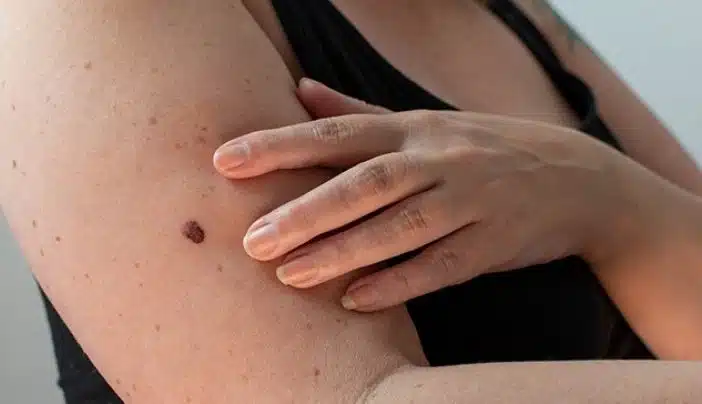
You have to consider booking a skin check because:
- You see a new mole.
- A mole is altered in shape or colour.
- A mole reproduces rapidly.
- You have many moles
- There is melanoma in your family history.
- You work outdoors
- It has been more than one year since you had a skin check.
A skin cancer specialist has the ability to evaluate your skin with special equipment such as dermoscopy and mole mapping to identify initial changes.To get the comprehensive description, our Mole Check Near Me guide will be helpful.
What Happens During a Skin Check?
Full Body Skin Examination
In a skin check, the physician will check your skin all the way up to the head. This involves things that people tend to forget like:
- Scalp
- Behind ears
- Back
- Feet
- Between toes
- Nails
The doctor can also examine the moles with the help of a dermatoscope.
Mole Mapping
There are even clinics where they do mole mapping whereby they take pictures of your moles and follow them to see any changes.
This comes in handy especially when one has numerous moles.
How Often Should You Get a Skin Check?
This is based on the level of risk.
General Recommendations
- Low risk: Once every 2 years.
- Medium risk: Once per year.
- High risk: every 612 months.
- History of skin cancer: As suggested by your doctor.
Depending on your skin type and history, your doctor can prescribe a schedule.
How to check your Moles at Home
Self-checks are regularly done to help identify changes at an early stage.
Self-Check of the Skin
Examine your skin at least once a month with a mirror and bright light.
Look at:
- Face
- Neck
- Chest
- Back
- Arms
- Hands
- Legs
- Feet
- Scalp
- Behind ears
Take images of moles to be able to compare the changes.
Tips to Protect Your Skin
It is always better to prevent than cure.
Sun Protection Tips
- Use SPF 50 sunscreen
- Wear a hat
- Wear sunglasses
- Shun sun between 10am and 4pm.
- Wear protective clothing
- Avoid tanning beds
- Re-apply sunscreen after every 2 hours.
- Remain in the shade where possible.
These practices lower the chances of skin cancer.
Frequently Asked Questions (FAQs)
Q1. Is it possible that a cancerous mole can be painless?
Yes, there are a lot of cancerous moles that do not hurt, at least at the first stages. Skin cancer is slow in progression and may not result in itching, bleeding, or discomfort. This is the reason why you should have a regular skin check when you feel your skin to be normal. Even an innocent mole is potentially harmful when it alters in size, shape, or colour.
Q2. What is to be done to determine whether a mole is dangerous?
A mole can be harmful when it transforms in colour, shape or size, has uneven borders, more than one colour or appears different to others. The ABCDE rule is a useful rule. In case of any changes, consult a doctor or a specialist in skin cancer to provide a professional examination.
Q3. How frequently should my skin check be in Australia?
In Australia, every 12-24 months, most people are supposed to undergo a skin check. Individuals at high risk like fair skin, numerous moles, family history of skin cancer or past skin cancer ought to be examined every 6 to 12 months. The physician will be able to prescribe the most appropriate schedule.
Q4. Does mole mapping outperform a standard skin check?
Mole mapping is convenient to individuals who have numerous moles or are highly susceptible to skin cancer since it helps to monitor the change in moles with time by taking photographs. Frequent skin examinations are still relevant since the doctors will be able to study the skin through a dermoscopy. The combined approach is beneficial to many.
Q5. Could I visit a doctor in case a mole changes, but it does not hurt?
Yes, even when the mole does not hurt, it is always worth visiting a doctor. Skin cancer is not a good indication of pain. Any alterations in size, shape, colour, or height are more significant warning changes and must be looked into by a specialist at the earliest opportunity.
Conclusion
One mole can certainly be cancerous and be painless and symptomless. This is what makes most skin cancers be detected during regular skin checkups and not due to discomfort. The best method of early detection of skin cancer is by checking your skin, being aware of warning signs, and visiting a doctor to have regular skin checks.
In case you find a new or different mole, you should consult a doctor and make an appointment with them to check your skin. The difference between early treatment and late treatment as well as health in the long run is a big one.
Need a Mole Check Near You?
Need a mole check near you? Book with a trusted skin cancer clinic in Canberra. Early detection saves lives—schedule your professional skin check today.
| Canberra Skin Cancer Clinic- Green Way | Canberra Skin Cancer Clinic- Molonglo Valley |
| Phone: (02) 6100 9956 | Phone: (02) 5110 3155 |
| Email: reception@greenwaymedicalcentre.com.au | Email: reception@greenwaymedicalcentre.com.au |
| Address: Unit 6/175 Anketell Street, Greenway ACT 2900 | Address: 110 Woodberry Ave Coombs ACT 2611 |
| Website: https://canberraskincancerclinic.com.au/ | Website: https://canberraskincancerclinic.com.au/ |