
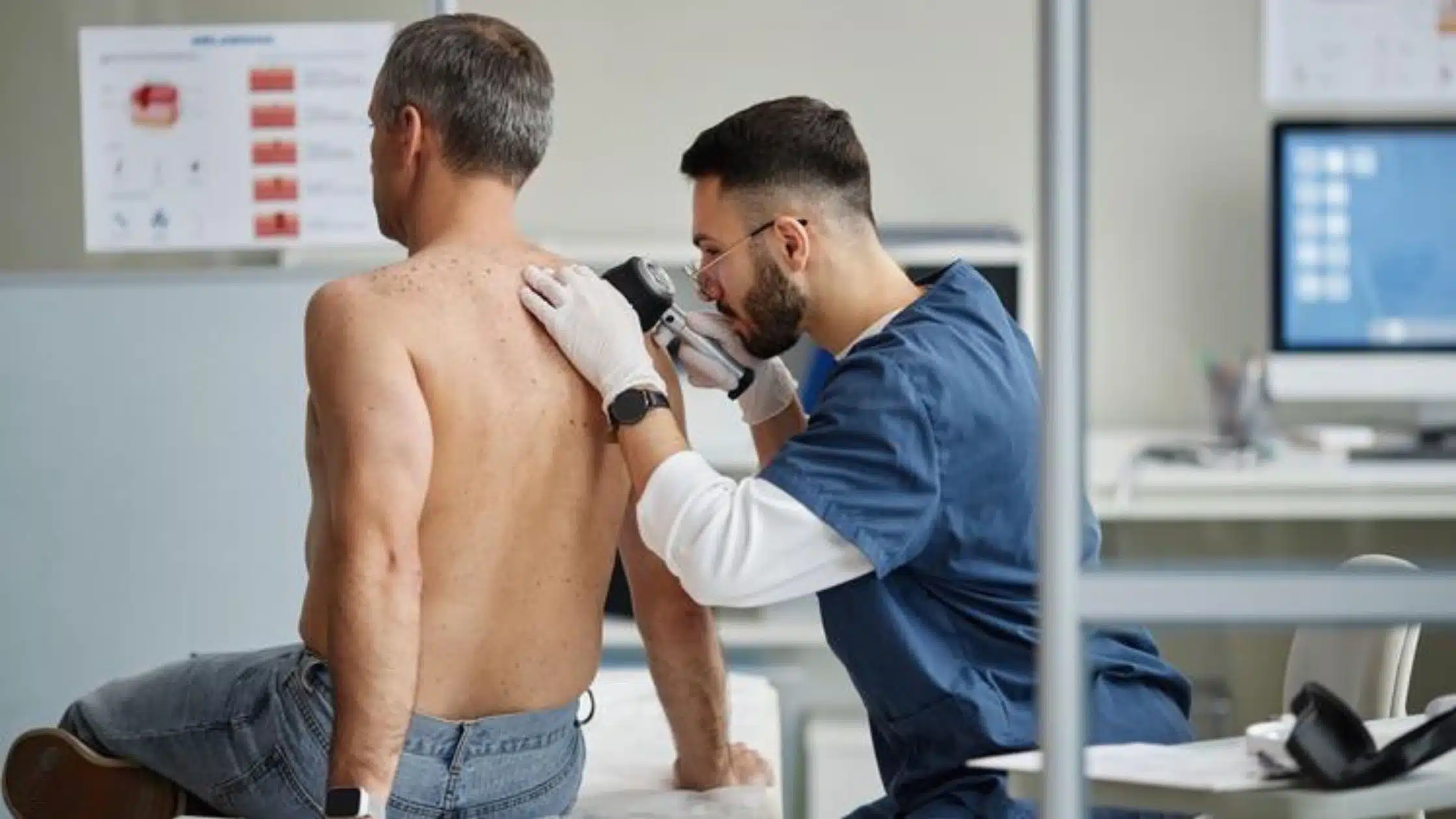
Many people know that regular skin checks are important, but not everyone knows what actually happens during a Full Body Skin Cancer Check. If you’ve never had one before, it’s completely normal to feel unsure about the process. You may wonder how long the appointment takes, whether it will be uncomfortable, or what the doctor is looking for.
The good news is that a Full Body Skin Cancer Check is a simple, thorough, and painless examination designed to identify suspicious skin changes as early as possible. Early detection plays a vital role in improving treatment outcomes, especially in Australia, where skin cancer is one of the most common forms of cancer.
For people living in Canberra, regular skin checks are particularly important because of the high levels of ultraviolet (UV) radiation experienced throughout much of the year. Whether you spend your weekends outdoors, work in the sun, or simply want peace of mind, scheduling a routine cancer skin check is one of the best ways to protect your long-term health.
In this guide, we’ll walk you through exactly what happens during a skin examination, what your doctor is looking for, and how to prepare for your appointment.
Why Is a Full Body Skin Cancer Check Important?
Skin cancer tends to grow slowly. During the early stages of many diseases, there are no noticeable symptoms. A mole can develop gradually, or a small mole may look completely normal, while cells are growing under the surface that are abnormal.
That’s why regular skin exams are so important.
A Full Body Skin Cancer Check by a professional gives trained professionals the chance to recognize suspicious spots before they get worse. Often times, early diagnosis can result in a simpler treatment, a smaller procedure, and a quicker recovery.
Regular skin checks can also:
- Get a head start on skin cancer detection.
- Closely watch any existing moles to see if they change.
- Look for new lesions that might need treatment.
- Minimize the risk of high risk skin cancer.
- Reassure if skin is healthy.
Regular skin checks are an important practice in prevention which can help treat many skin cancers if they are caught early.
Who Should Book a Full Body Skin Cancer Check?
While anyone is at risk for developing skin cancer, certain individuals are more susceptible than others.
Consider having a Full Body Skin Cancer Check if you:
- Fair skin, low in pigment, that is prone to burning.
- Get plenty of outdoor activity.
- Have a history of sunburn.
- Work outside.
- Have many moles.
- Be on the lookout for any changes to an established mole.
- Have previously been diagnosed with skin cancer.
- Have a family history of melanoma.
- Are older than 40 years old.
- Have a weakened immune system.
Whilst these may not apply to you, it is still recommended that you have a routine skin examination, especially in Australia.
Booking Your Appointment
The first thing to consider is selecting a clinic that is appropriately trusted and has experience in the detection of skin cancer.
For the best skin cancer clinic near me, check if the clinic offers detailed skin exams, cutting-edge diagnostic tools, and tailored treatment.
Here are some questions you might need to give the reception staff when booking your appointment:
- Your objective when you came here.
- If you’ve had any type of skin cancer before.
- Any concerning moles or spots.
- Patient’s preferred appointment time.
When making your booking, let the vet know if you have noticed any particular lesion is changing.
How to get ready for your appointment.
Preparing for a skin check is easy and will make it easier for your doctor to see and examine your skin properly.
Here are some things to think about before your appointment:
Wear Comfortable Clothing:
The doctor will ask you to undress to your underwear, so he or she can inspect the entire surface of your skin. It is easier if you wear comfortable clothing.
Remove Nail Polish:
It is not uncommon for skin cancer to occur under the nails. Nail polish can be removed to enable these areas to be properly evaluated.
Avoid Heavy Makeup:
Great for makeup to examine facial skin; light makeup is better.
Skip Fake Tan:
Fake tan can alter your skin’s appearance and cause some lesions to be more difficult to evaluate.
Make a Note of Any Changes:
You may notice a mole that changes color, size, or shape, so you can make note of it and share it with your doctor during your appointment.
What does happen on arrival?
Once you arrive at the clinic, you’ll typically be given a form to fill out to provide history of your medical situation.
This form could include questions regarding:
- Previous skin cancers.
- Having a family history of melanoma.
- Current medications.
- Allergies.
- Medical conditions.
- Sun exposure.
- Outdoor occupation.
Your doctor may look at this information before he or she starts the exam.
Talking with your doctor.
Your doctor will take a few minutes to talk with you before the physical examination before beginning the exam.
These are some of the questions you might receive:
- Have you seen any new moles?
- Is there any change in the spot recently?
- Are there any lesions which bleed or itch?
- Have you ever had many burns from the sun?
- Do you regularly use sunscreen?
- Did any members of your family get melanoma?
These questions help your doctor determine your own risk factors and if there are any factors to concentrate on.
The Full Body Skin Examination
After the consultation starts, you will be required to get into suitable attire, and you’ll remain private and comfortable during the consultation.
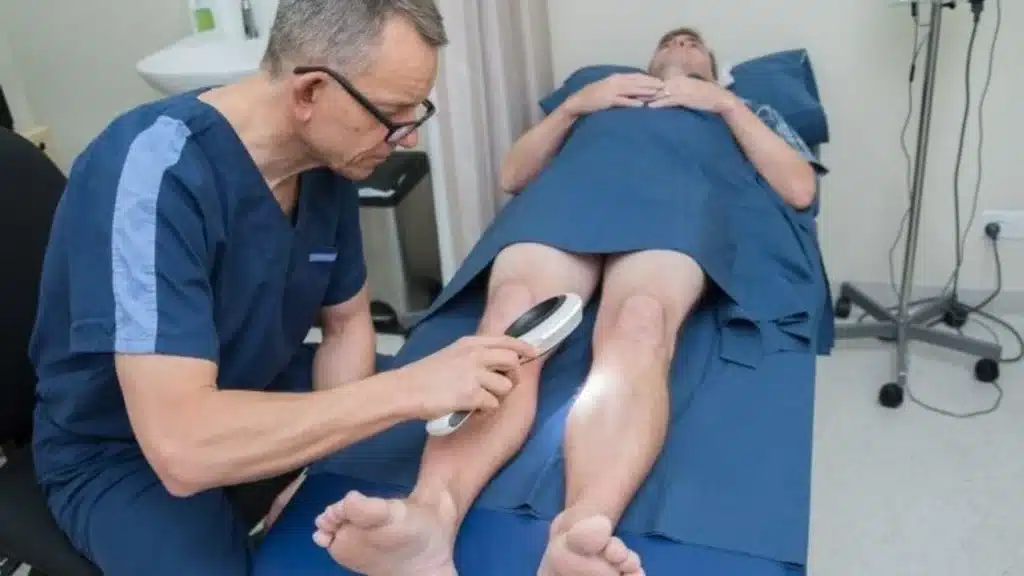
Your doctor will then thoroughly check your skin from head to toe.
This typically involves reviewing:
- Face
- Scalp
- Ears
- Neck
- Chest
- Abdomen
- Back
- Arms
- Hands
- Fingernails
- Legs
- Feet
- Soles of the feet
- Between the toes
Spots that get little to no sunlight are also checked as skin cancer can sometimes occur in unlikely places.
The exam is non-stressful and painless.
Using a Dermatoscope
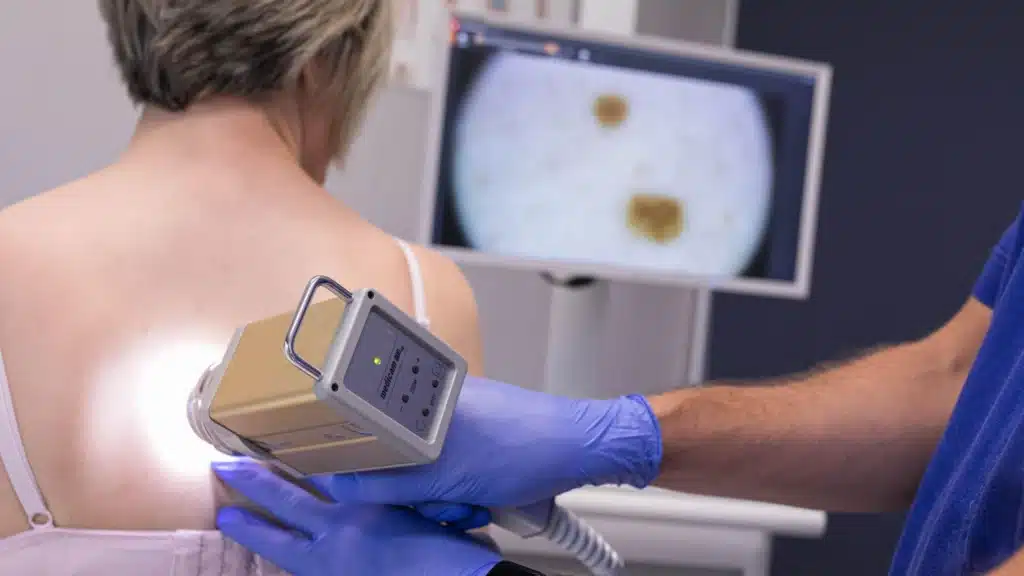
A dermatoscope is one of the most useful instruments utilized in a Full Body Skin Cancer Check.
A handheld instrument called dermatoscope can magnify the skin so your doctor can see structures under the skin that can’t be seen with the naked eye.
This will aid in the more precise diagnosis and make suspicious lesions more thoroughly evaluated.
A dermatoscope is safe to use and will not cause any harm. The exam is still rapid, comfortable and non-invasive.
What’s Your Doctor Looking For?
Your doctor thoroughly reviews all moles, freckles and lesions during the examination.
They are searching for abnormalities that might lead to abnormal cell growth.
These include:
- New moles.
- Moles that have been altered over time.
- Irregular borders.
- Uneven colours.
- Rapidly growing lesions.
- Non-healing sores.
- Recurring clots or blood loss.
- Rough, scaly patches.
- Smalls shiny or pearly bumps.
Not all unusual-looking spots are cancerous, but when changes are detected in a spot early, the spot can be further assessed if necessary.
The ABCDE Rule
The ABCDE rule is employed by doctors when examining moles.
Asymmetry: One half of the mole looks different from the other.
Border: The edges are irregular, blurry or uneven.
Colour: Lesions contain more than one colour.
Diameter: The mole is larger in size than about 6 mm, but smaller melanomas may also occur.
Evolving: The mole grows in size, shape, color, and/or appearance with time.
While the ABCDE rule is an excellent guideline, it cannot be used in place of a skin cancer specialist’s examination.
What kinds of skin cancers can be spotted?
A Full Body Skin Cancer Check is done to check for various types of skin cancer.
These commonly include:
- Melanoma
- Basal Cell Carcinoma (BCC)
- Squamous Cell Carcinoma (SCC)
The importance of early diagnosis is due to the differences in the characteristics and treatment options of each type.
What If Your Doctor Sees A Suspicious Spot?
If you find a suspicious area when you do a Full Body Skin Cancer Check Full Guide, it does not necessarily mean you have skin cancer. Although many lesions of the skin do not pose serious health risks, there are others that necessitate more thorough observation or additional tests.
If your doctor finds an area of concern, he will let you know why it needs further evaluation and talk to you about what to do next.
Depending on the appearance of the lesion, your doctor may recommend:
- Long-term observations of the location
- Taking clinical photographs
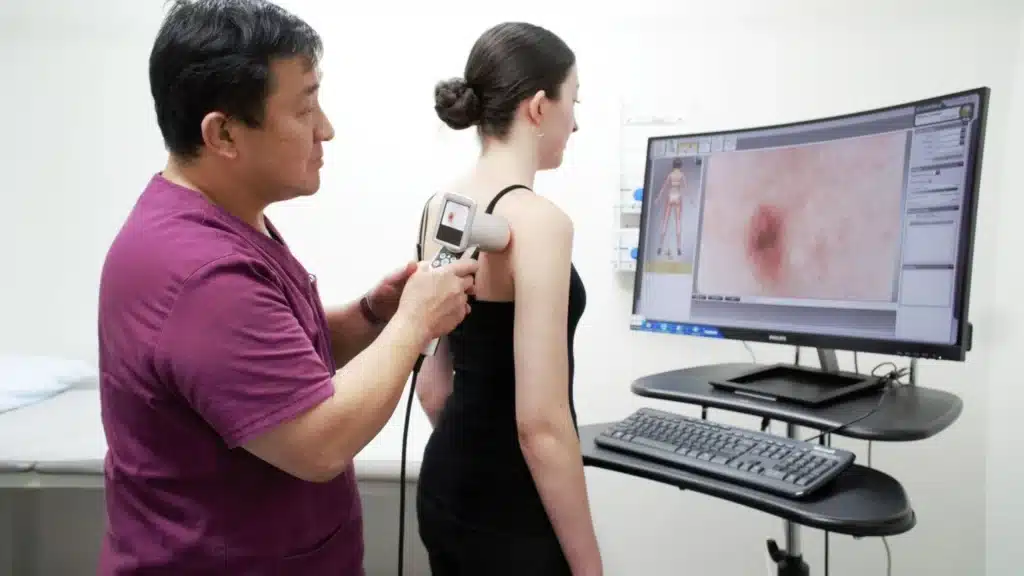
- Digital mole mapping
- A skin biopsy
- The lesion was completely removed.
The treatment recommended will be based on your medical history, risk factors and the appearance of the skin lesion.
Produce charts to track changes over time.
Not all moles that look out of place should be treated right away. Some lesions may persist for several years without being a problem.
If the mole is slightly unusual, but not a clear case of skin cancer, your doctor might suggest to watch it.
At later visits they will compare the mole with previous visits to determine if it has changed in:
- Size
- Shape
- Colour
- Border
- Texture
Monitoring prevents unnecessary procedures and allows for early detection of any changes.
So what is Digital Mole Mapping?
Digital mole mapping is a great tool to monitor moles for patients who have numerous moles or have a higher risk of developing melanoma.
Digital mole mapping is the process of making high-quality photos of your skin that can be used to make a detailed record of your moles and other skin lesions.
At subsequent examinations, these pictures are checked against new photos and even the smallest variations may not be evident at the time of self-examination.
You might be advised to have a digital mole map if you:
- Have a large number of moles.
- Have moles that are unusual or irregular in size, shape or color.
- Have previously had melanoma.
- Have a family history of skin cancer.
- Are at increased risk of developing melanoma.
This technology provides enhanced monitoring and contributes to better skin cancer diagnosis.
When is there a need to perform a skin biopsy?
If a lesion appears suspicious, your doctor may recommend a skin biopsy.
Biopsy is a simple procedure in which a small piece of tissue (or sometimes the entire lesion) is taken from the body and sent to a laboratory for examination.
Only this can be used to determine if a lesion is malignant.
It is generally done with local anaesthetic and you should not experience pain during the biopsy.
Most people recover to their normal daily routine soon afterwards.
Your doctor will discuss the results of the pathology with you and tell you if any other treatment is needed.
If Skin Cancer Is Diagnosed
The news of a skin cancer diagnosis can be frightening, but it’s important to keep in mind that many skin cancers are easily treated when caught early.
Treatment will vary based on the following:
- The type of skin cancer
- Its size and depth
- The part of the body in which it is found
- Your overall health
Treatment may include:
- Surgical removal
- A laser or cryotherapy may be used for certain lesions.
- Topical prescription medications
- Curettage and cautery
- Ongoing monitoring
Each treatment alternative will be explained to you by your doctor and you will be advised on the treatment which is best for you.
How Long Does a Full Body Skin Cancer Check Take?
Lots of individuals are pleasantly surprised at how fast the consultation is.
A Full Body Skin Cancer Check appointment usually lasts 15-30 minutes.
If you have lots of moles, or need further evaluation, your appointment may be slightly longer.
The time invested will be worthwhile, for the benefits of early diagnosis and peace of mind.
Is a Full Body Skin Cancer Check Painful?
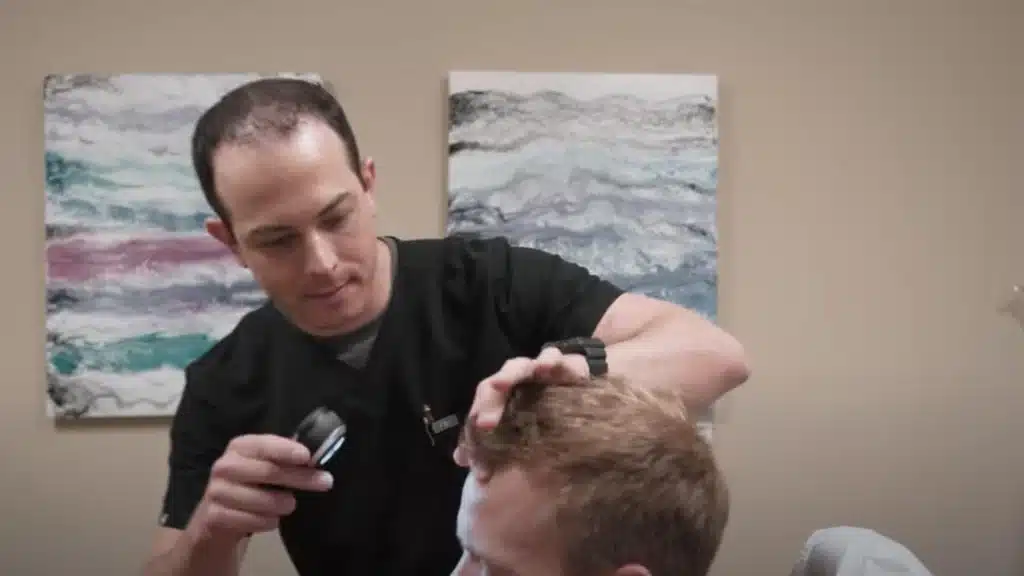
One of the most common concerns patients have is whether the examination will be uncomfortable.
The answer is no.
A routine cancer skin check is completely painless.
Your doctor will visually examine your skin and use a dermatoscope to inspect any areas of concern.
If a biopsy is recommended, a local anaesthetic is used to minimise discomfort during the procedure.
When to get a skin cancer check?
No specific time frame for skin exams.
The frequency is based on individual risk factors/med history.
Your doctor may recommend more regular check-ups if you:
- Have previously had skin cancer.
- Have many moles.
- Have atypical moles.
- Get plenty of fresh air.
- Have a family history of melanoma.
- Have a weakened immune system.
Regular skin checks are an important component of preventative health care for an average risk population.
Your clinician will suggest a plan that is suitable for your needs.
Is Home Skin Check possible?
Yes. Self-examinations monthly are a great practice and can familiarize oneself with the skin.
In a self-check, you should search for:
- New moles.
- Changes to existing molds.
- Non-healing sores.
- Bleeding lesions.
- Persistent scaly patches.
- Lumps or bumps that continue to grow.
Check hard to reach places like your lower back, back of your ears and belly button with a full-length and handheld mirror.
Self-checks are important, but are not a substitute for a skin cancer specialist’s examination.
Common Myths About Skin Cancer Checks
There are several myths that discourage people from booking regular skin examinations.
Myth: Skin cancer only affects older people.
Skin cancer can develop at almost any age. Although the risk increases over time, younger adults can also be affected.
Myth: I only need a check if a mole changes.
Many skin cancers have no obvious symptoms during their early stages. Routine examinations can detect changes before they become noticeable.
Myth: Skin checks are painful.
A professional Full Body Skin Cancer Check is painless and non-invasive.
Myth: Darker skin cannot develop skin cancer.
Although the risk may be lower, people with darker skin can still develop skin cancer and should remain aware of any changes.
Myth: I wear sunscreen, so I don’t need skin checks.
Sunscreen is an important form of protection, but it does not eliminate the risk of skin cancer. Regular professional examinations remain essential.
Tips for Protecting Your Skin
Regular cancer skin checks are just one of the things that contribute to healthy skin.
To further minimize risk:
- Using SPF 50+ sunscreen on a daily basis.
- Applying sunscreen again every 2 hours while outside.
- Wearing a broad brimmed hat.
- Choosing protective clothing.
- Wearing UV-protective sunglasses.
- Taking shade during high UV times.
- Avoiding tanning beds.
- Performing monthly self-examinations.
- Getting regular professional skin checkups.
These habits can help to minimise lifetime exposure to harmful UV radiation.
Choosing the Best Skin Cancer Clinic Near Me
If you’re searching for the best skin cancer clinic near me, choosing an experienced clinic can make a real difference.
Look for a clinic that offers:
- Comprehensive full body skin examinations.
- Experienced clinicians.
- Dermoscopy.
- Digital mole mapping.
- Skin biopsies.
- Diagnosis and treatment under one roof.
- Ongoing follow-up care.
A trusted check skin cancer clinic will take the time to answer your questions, explain the findings clearly, and provide personalised recommendations based on your individual risk.
Why Early Detection Matters
The best thing about Full Body Skin Cancer Check is that it can help detect skin cancer in its early stages.
If early treatment is administered, treatment is often:
- Less invasive.
- More effective.
- In association with a quicker recovery.
- Less damage to the skin, resulting in a less noticeable scar.
- More successful overall.
Postponing a skin check could give abnormal cells time to develop, making treatment more difficult.
Proactive skin care today can help ensure wellness in the future.
Frequently Asked Questions
Q1. Do I need a referral for a Full Body Skin Cancer Check?
In most cases, you can book directly with a skin cancer clinic without needing a referral. If you’re unsure, contact the clinic before making your appointment.
Q2. Should I remove makeup before my appointment?
Yes. Minimal makeup allows your doctor to examine your facial skin more thoroughly. It’s also helpful to remove nail polish if possible.
Q3. Can skin cancer develop in areas that don’t get much sun?
Yes. Skin cancer can occasionally appear on the soles of the feet, beneath the nails, and in other less-exposed areas. That’s why a full body examination is important.
Q4. What should I do if I notice a changing mole?
Book a professional Full Body Skin Cancer Check as soon as possible. Early assessment gives your doctor the best opportunity to diagnose and treat any concerns promptly.
Q5. Is one skin check enough?
No. Skin health changes over time, so regular examinations are recommended, particularly if you have ongoing risk factors or a history of skin cancer.
Full Body Skin Cancer Checks
Your skin deserves expert care. At Canberra Skin Cancer Clinic, we provide comprehensive Full Body Skin Cancer Checks using advanced skin cancer detection techniques to identify suspicious lesions as early as possible. Whether you’re due for a routine cancer skin check or have noticed a changing mole, our experienced team is here to help. Book your appointment today and take a proactive step towards protecting your skin and your health.
| Canberra Skin Cancer Clinic- Green Way | Canberra Skin Cancer Clinic- Molonglo Valley |
| Phone: (02) 51046409 | Phone: (02) 51046409 |
| Email: reception@greenwaymedicalcentre.com.au | Email: reception@greenwaymedicalcentre.com.au |
| Address: Unit 6/175 Anketell Street, Greenway ACT 2900 | Address: 110 Woodberry Ave Coombs ACT 2611 |
| Website: https://canberraskincancerclinic.com.au/ | Website: https://canberraskincancerclinic.com.au/ |