
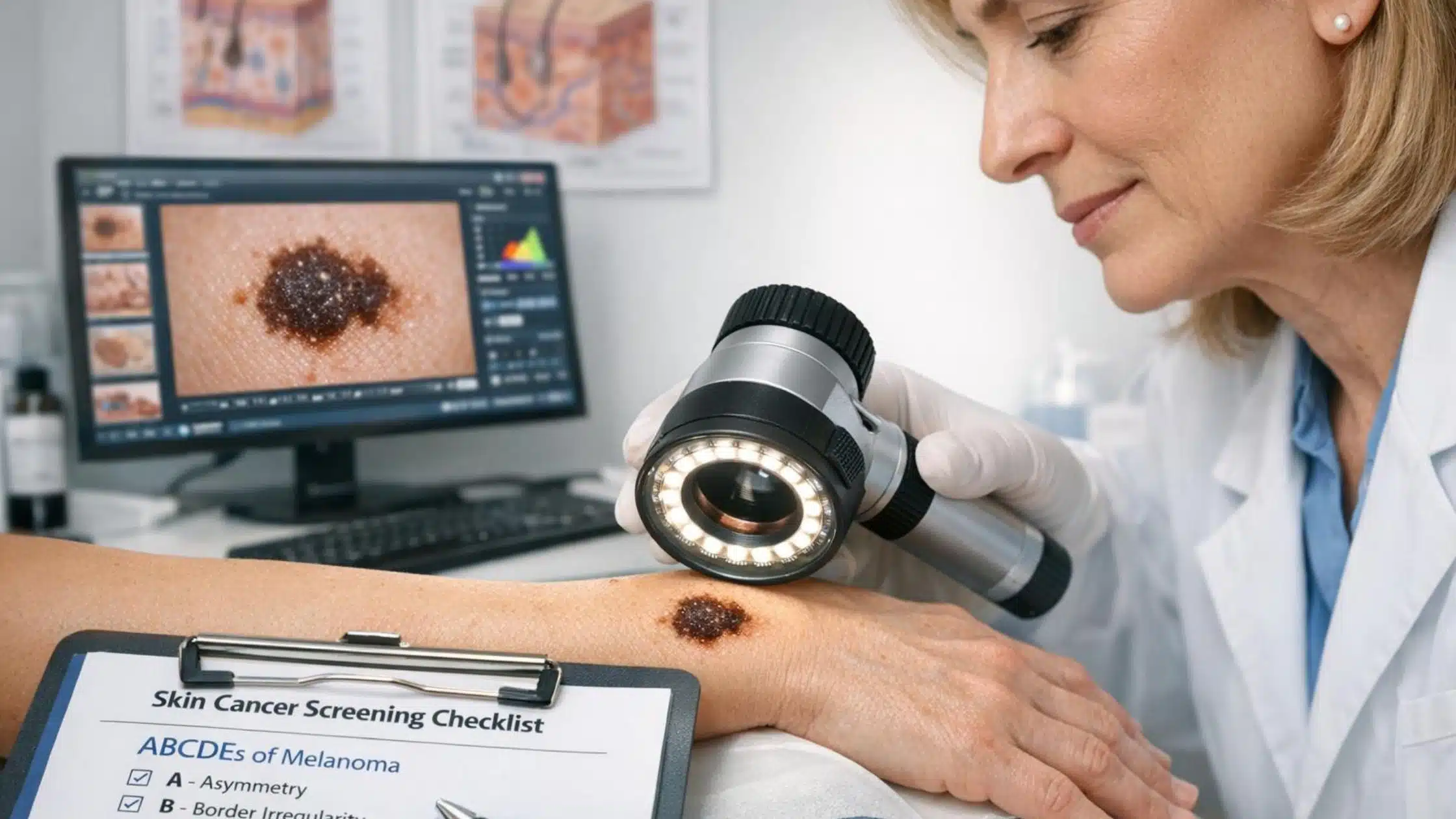
Australia has one of the highest rates of skin cancer in the world, making early diagnosis one of the most important steps in protecting your long-term health. For people living in Canberra, regular skin checks and prompt assessment of suspicious spots can help detect skin cancer before it becomes more serious.
Many people assume that skin cancer is always painful or easy to recognise. In reality, some skin cancers develop slowly and show very few symptoms in the early stages. Others can change rapidly without causing discomfort. This is why professional assessment is so important.
Whether you’ve noticed a new mole, a changing spot, or simply want peace of mind, understanding the diagnosis process can help you feel more confident about seeking medical care.
In this complete guide, you’ll learn how Skin Cancer Diagnosis in Canberra works, who should book a skin examination, what to expect during your appointment, and why early detection can make a significant difference.
Why Early Skin Cancer Diagnosis Matters
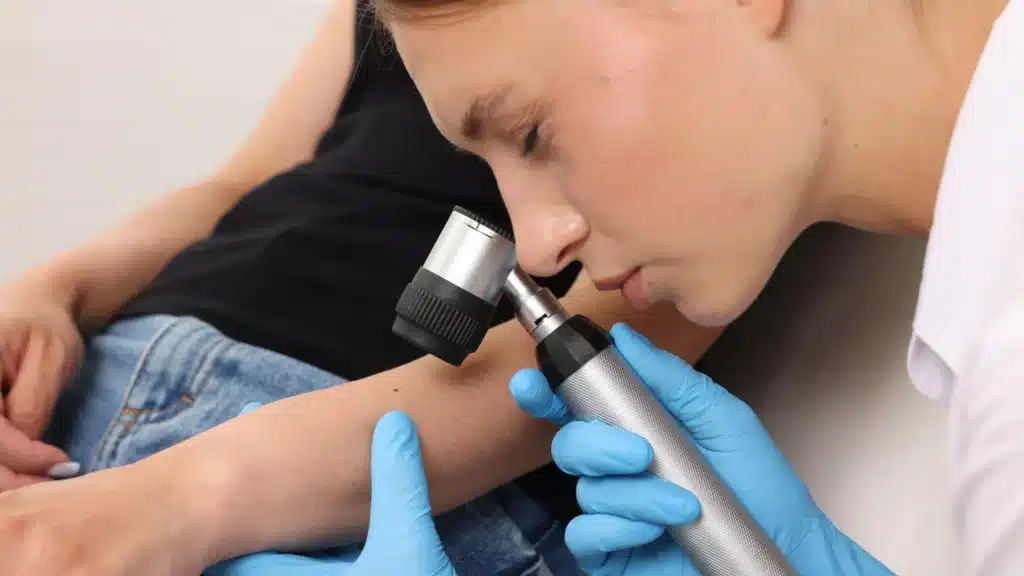
It is important to diagnose skin cancer early.
Skin cancer is the result of damaged skin cells, which is usually caused by years of exposure to ultraviolet (UV) radiation from the sun. Although many skin cancers grow slowly, others—particularly melanoma—can spread if they are not detected early.
Early diagnosis offers several benefits:
- Improved success rates of treatment
- Less invasive treatment options
- Better cosmetic outcomes
- Reduced cancer metastases.
- Reduced spread of cancer.
- Reduced treatment costs
- Reduced stress and worry.
Regular skin monitoring for Canberra skin cancer early detection and prevention is a critical aspect for everyone who spends time outdoors.
Why Canberra Residents Have a Higher Risk
There is strong UV in Canberra for much of the year. On cooler or cloudier days, the UV level can be high enough to be harmful to skin.
The Canberra locals are known to have a lot of fun, such as:
- Outdoor sports
- Hiking
- Cycling
- Gardening
- Golf
- Weekend recreation
- Outdoor work
Exposure to the UV radiation from sunlight over the course of time raises the likelihood of various types of skin cancer developing.
Understanding the Different Types of Skin Cancer
The first step in preventing skin cancer is to know the various types.
Before discussing diagnosis, it’s helpful to understand the three most common types of skin cancer.
Basal Cell Carcinoma (BCC)
Basal Cell Carcinoma is the most common skin cancer in Australia.
Typically looks like:
- A shiny bump
- A pinhole pink area
- An unhealing sore
- A discolored, leaking or crusty area
Rarely, BCC can be found in other organs, but if left untreated can continue to grow and reach nearby tissues.
Squamous Cell Carcinoma (SCC)
Squamous Cell Carcinoma tends to be more aggressive than BCC.
It may appear as:
- Thick scaly patches
- Crusted lesions
- Tender lumps
- Persistent ulcers
If diagnosed early, further damage to the tissues can be avoided, and the risk of further spread is lower.
Melanoma
Melanoma is the most deadly type of skin cancer.
It develops in pigment-producing cells and has the greatest potential to spread throughout the body if not diagnosed early.
Signs may include:
- If the mole has been altered over time.
- If the mole is modified from previous.
- A new dark spot
- Irregular borders
- Multiple colours
- Rapid growth
Early assessment is key as melanoma can rapidly develop.
What Is Skin Cancer Diagnosis?
Diagnosis of skin cancer is the identification of a possible skin cancer lesion.
A diagnosis usually requires a number of steps, such as:
- Medical history
- Full skin examination
- Dermoscopic assessment
- Digital monitoring (if appropriate)
- Biopsy if required
- Laboratory pathology
These steps give more information to arrive at an accurate diagnosis.
When Should You Book a Skin Cancer Check?
A lot of people wait until it hurts or begins to bleed.
Skin cancers, however, also can form without any pain.
If you see the following, you might want to consider booking an appointment for a skin cancer check canberra:
- An adult new mole.
- Changes in size or colour
- Irregular borders
- Persistent itching
- Bleeding lesions
- Non-healing sores
- Scaly patches
- Rapidly growing bumps
If there’s no apparent problem, people at higher risk are suggested to have routine skin checks.
Who Is Most at Risk?
Everyone is at risk for skin cancer, but some individuals are at a greater risk.
Everyone is at risk for skin cancer, but some individuals are at a greater risk.
- Fair Skin: Fair skinned individuals are more prone to burn and less protected against UV rays.
- Family History: If anyone in your family had melanoma, your lifetime risk would be higher.
- Personal History: If you’ve previously had skin cancer, your chance of developing another is higher.
- Outdoor Lifestyle: Those who work outdoors and are physically active are exposed to more cumulative UV.
- Numerous Moles: The more moles there are, the more monitoring is required.
- Age: Generally, the sun damage will add up over the years and increase the risk of getting sunburnt.
- Previous Sunburns: Sunburns during childhood and adolescence are a major risk factor for skin cancer later in life.
What Happens During a Skin Cancer Diagnosis Appointment?
Knowing what to expect may help you feel less anxious before your appointment.
Step 1: Medical History
Your doctor will first ask you about:
- Previous skin cancers
- Family history
- Sun exposure
- Occupation
- Recent skin changes
- Medications
- Overall health
This information gives information about your personal risk profile.
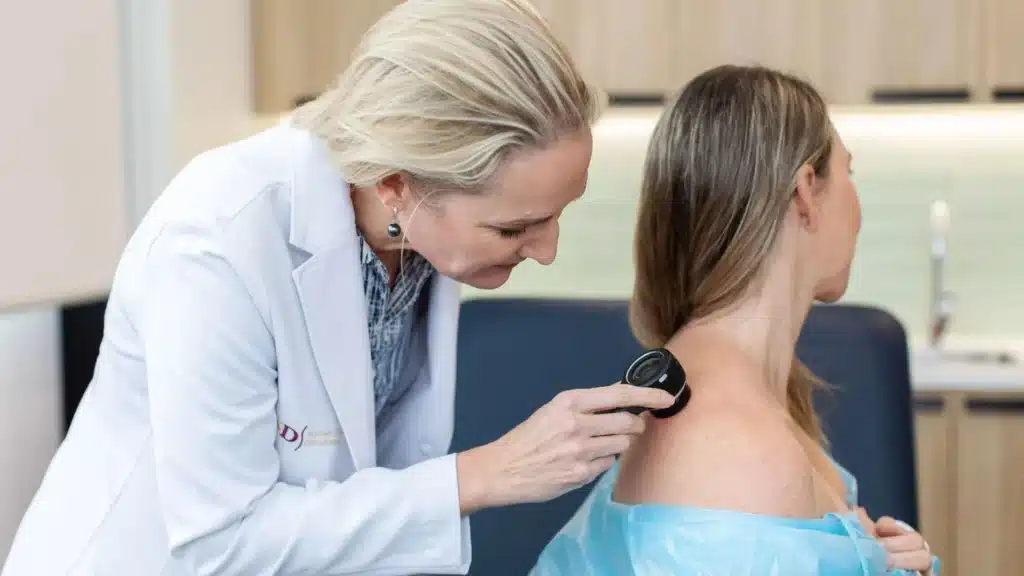
Step 2: Full Skin Examination
Next, a full skin exam will be performed (Step 2).
A thorough skin exam enables the doctor to check your entire skin surface, from the head to the toes.
Typical areas to be studied:
- Face
- Neck
- Chest
- Back
- Arms
- Hands
- Legs
- Feet
- Scalp (if appropriate)
The exam is typically brief and harmless.
Step 3: Dermoscopy
Dermoscopy is one of the most useful diagnostic tools to have.
A dermatoscope is a special magnifying instrument that enables doctors to view structures under the skin that cannot be seen by the naked eye.
This significantly enhances the diagnostic accuracy.
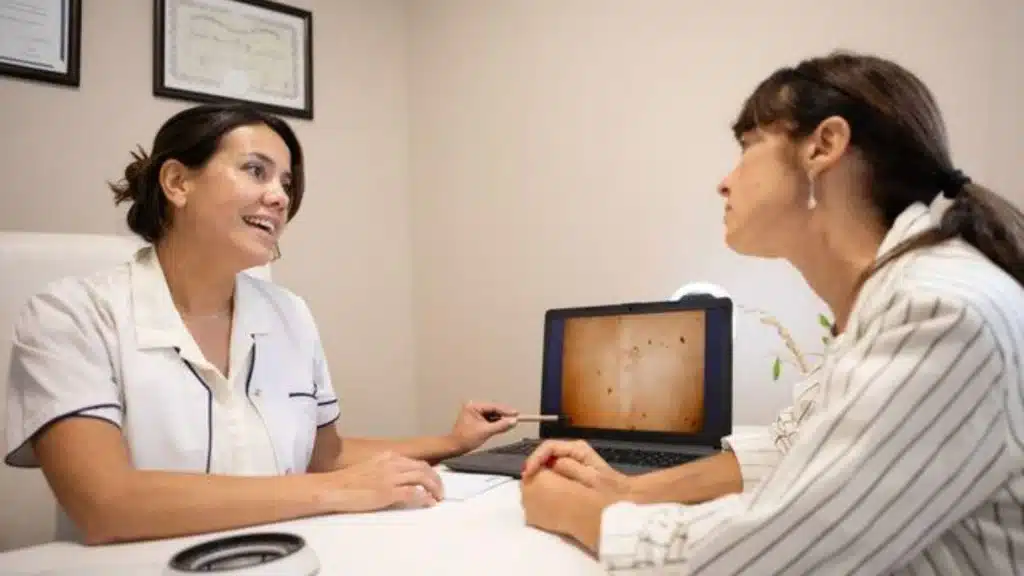
Step 4: Digital Monitoring
There are some lesions that need not be removed immediately.
Rather, your doctor might suggest long-term monitoring with clinical photographs or digital imaging technology.
This can help identify any slight changes that signal if treatment is required.
Step 5: Biopsy
In cases where a lesion is suspect, a biopsy might be advised.
Local anaesthetic is used to remove a small amount—or sometimes all—the lesion.
This tissue is then taken to a pathology lab for close inspection.
Step 6: Pathology Results
The tissue is sent to a specialist pathologist for examination in the lab under a microscope.
The report identifies:
- If cancer exists or not
- The type of skin cancer that is present.
- Tumour depth
- Margins
- Additional microscopic features
These results help determine the next step in treatment.
How Long Does Diagnosis Take?

The clinical examination is usually completed within one appointment.
If a biopsy is required, pathology results are commonly available within several days, although timing may vary.
Your doctor will explain the findings and discuss any recommended treatment.
Warning Signs You Should Never Ignore
When it comes to finding a great deal on a home, there are warning signs you should never overlook.
If you observe:
- A mole changing in shape
- Uneven colouring
- Increasing size
- Persistent bleeding
- Sore that continues to bleed.
- A sore that will not heal.
- New lumps
- Crusting lesions
- Persistent itching
Appearance is not always the most important thing.
The ABCDE Rule for Melanoma
A good method to use in determining if a mole is suspicious is the ABCDE rule.
- A — Asymmetry
One half is different from the other. - B — Border
There are no sharp edges or bad edges. - C — Colour
Several tones of brown, black, red, white or blue. - D — Diameter
They are bigger than about 6 mm although smaller melanomas are possible. - E — Evolving
Change in appearance if any over time.
Should a mole exhibit any of the above traits, plan for a professional examination.
Can Skin Cancer Be Diagnosed Without a Biopsy?
Dermoscopy is a skills based tool that experienced clinicians can use to often identify many skin cancers during examination.
A biopsy is the only certain way to diagnose cancer, though, when cancer is suspected.
How Often Should You Have Your Skin Checked?
No one schedule fits all.
Frequency will vary with each person’s risk factors.
Your doctor may recommend:
- These are routine exams to check for average-risk adults.
- Frequent review of high-risk persons.
- Ongoing surveillance following cancer of the skin treatment
Personalised follow-up helps ensure any new lesions are detected early.
Preparing for Your Appointment
For the best appointment:
- Remove makeup and nail polish if practical
- Wear comfortable clothing
- Bring previous biopsy reports if available
- Note any changing lesions
- Tell your doctor about family history
- Mention medications and medical conditions
You can make simple changes to enhance your assessment.
Can Skin Cancer Be Prevented?
While not all cases can be prevented, you can greatly minimise your risk by avoiding as much exposure to UV radiation as possible.
To protect skin:
- Wearing SPF 50+ sunscreen
- Wearing protective clothing
- Using wide-brimmed hats
- Wearing sunglasses
- Seeking shade
- Preventing overexposure to the heat of day light.
- Monitoring the daily U.V. Index
- Performing monthly self-examinations
The prevention and early diagnosis of skin cancer are interdependent in lowering the burden of skin cancer.
Choosing a Skin Cancer Clinic in Canberra
Choosing a skin cancer clinic canberra that has a wealth of experience in the treatment of skin cancer is a crucial step in maintaining skin health.
When selecting a clinic, take into account:
- Experienced doctors
- Comprehensive skin examinations
- Dermoscopy technology
- Digital skin monitoring
- Biopsy services
- Ongoing follow-up care
- Patient-centred communication
If treatment is needed, a clinic that offers full assessment and management can offer continuity of care.
Why Regular Skin Checks Are Worth It
Earlier identification of many skin cancers leads to very effective treatment.
Regular skin exams can find:
- Early melanomas
- Basal cell carcinomas
- Squamous cell carcinomas
- Precancerous lesions
- Non-cancerous moles that need to be watched.
While a skin that looks fine may be fine, regular professional examinations give you peace of mind and increase the chances of early detection.
Frequently Asked Questions
Q1. Is a skin cancer diagnosis painful?
No. A skin examination is painless. If a biopsy is required, local anaesthetic is used to minimise discomfort.
Q2. How long does a skin cancer check take?
Most appointments take around 15–30 minutes, depending on whether a full-body examination or additional procedures are required.
Q3. Do all suspicious moles require removal?
No. Some lesions only require monitoring. Your doctor will recommend the most appropriate approach based on their clinical assessment.
Q4. Can younger people develop skin cancer?
Yes. Although the risk increases with age, skin cancer can occur in younger adults, especially those with significant UV exposure, fair skin, or a family history of melanoma.
Q5. Is skin cancer always visible?
Not always. Some skin cancers can resemble harmless spots or develop in areas that are difficult to see, making regular professional skin examinations important.
Book Your Skin Cancer Check Today
Schedule your comprehensive skin cancer check at Canberra Skin Cancer Clinic today. Our experienced team provides thorough skin examinations, accurate diagnosis, and personalised care to help protect your long-term skin health. Book your appointment and take the first step towards early detection and peace of mind.