Moles, freckles and spots are part of everyday life to a majority of Australians. From childhood sun exposure to years spent outdoors, our skin tells a story and, sometimes, that story changes. Here: The difficulty of being able to determine when it is a mole that might not be a threat and when it may require medical attention.
Many people notice a spot and wonder: Stereotypes and Social Inequity Has it always looked like that? Is it changing going forward or am I just imagining it? Should I wait and see?
Understanding changing moles skin cancer and recognizing the early sign of skin cancer can make a difference between early treatment and delayed diagnosis. This guide explains what’s normal and what’s not and when it’s time to book in for a professional skin check.
Why Clair Looking at Moles is Important
Australia has some of the highest rates of skin cancer anywhere in the world. In Canberra where we have high UV levels, high outdoor activity as well as cumulative sun exposure, skin changes should never be ignored.
While many moles are perfectly harmless, skin cancer is often a small change at first and a threat that people can be easily stopped. It is really good when early detected as we keep in mind that melanoma if detected early has very good outcomes.
Frequent check-ups with a GP or other medical practitioner together with skin self-examination are the best line of defence.
What Is a Mole, Exactly?
A mole (also known as a naevus) occurs when pigment producing (melanocytes) grow in groups. Most people have between 10 and 40 moles and many happen during childhood or adolescence.
Common Types of Moles
- Congenital mole – present at birth
- Acquired moles – develop over time
- Atypical (dysplastic) moles – irregularly shaped or coloured
- Raised moles- Normally harmless but still need to be watched
Most moles are harmless. The concern arises when there is a mole which is starting to change.
Focus Topic: Changing Moles
On the Information Highway, What Does Changing Really Mean?
Changing moles don’t always change dramatically overnight. Sometimes the changes are subtle and slow, that’s the reason why many people miss them.
A mole may be said to be changing when it:
- Grows in size
- Alters shape or border
- Changes colour or develops a number of colours
- Becomes itchy, pain and tenderness
- Bleeds, crusts, or oozes
- Is require that you different from your other moles
Even one of these changes is worth checking out.
The ABCDE Rule: A Screening Tool
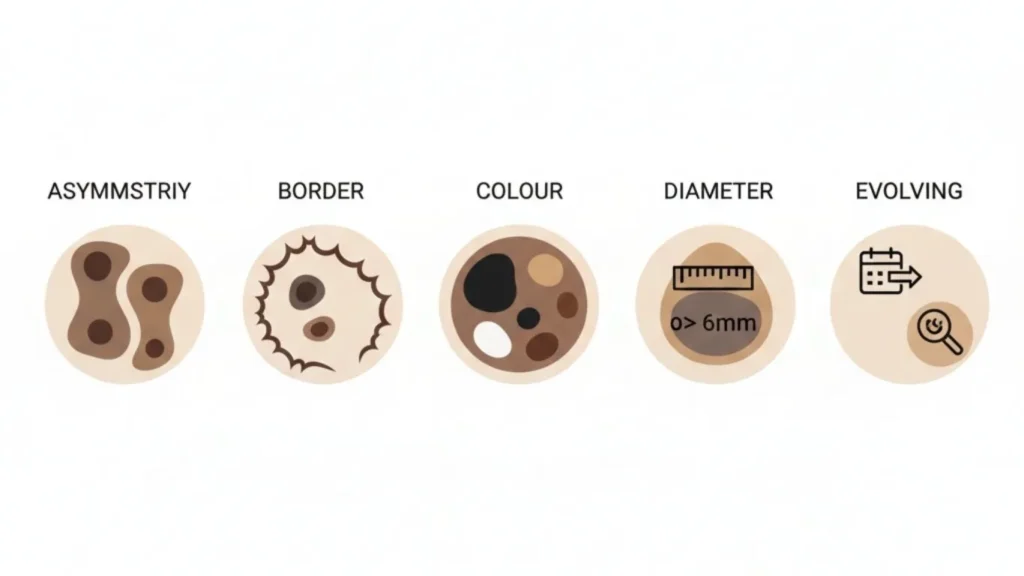
Dermatologists recommend the use of the ABCDE rule to assist in evaluation of suspicious moles. This is an easy method to be done at home.
A – Asymmetry
One half doesn’t go together with the other half.
B – Border
Edges are not sharp, blurred, or jagged.
C – Color
Uneven colour or shade or darkening.
D – Diameter
Bigger than 6mm (similar to a pencil eraser).
E – Evolving
Any change in size, shape, colour or feeling.
If any of these signs is found in a mole it then should be evaluated by a professional.
Early Signs of Skin Cancer to Be Aware Of
All is not said to be like skin cancer when it comes to weight: not all skin cancers look very similar. Some come in the form of moles and others may be in the form of sores, scaly patches or new growths.
Common Early Warning Signs
- A new spot that appears different than others
- A mole that changes in a matter of weeks or months
- A sore that doesn’t heal
- A spot that bleeds easily
- Lasting itching/tenderness
Our guide to the early signs of skin cancer describes the kinds of changes that should be ignored at no cost.
Should I Wait and See If a Spot Changes?
This one is one of the most common and most risky largely because of questions that we are conducting this risk by.
Why “Wait and See” is Sometimes a Bad Idea
Skin cancer does not always produce any discomfort or pain in the early stage. Waiting on a spot to “become obvious” can cause time to elapse for progression.
You should not wait if:
- The spot has a different appearance relative to others
- You’ve Observed Recent Changes
- The mole was a sudden appearance in the adult phase
- You have a personal or family history of skin cancer
When in doubt, you are always safer letting a professional do the checking.
Who Is at Higher Risk?
Anyone can get skin cancer, but risk is higher if you:
- Have fair skin or light eyes
- Burn easily in the sun
- Have many moles
- Have atypical moles
- Spent outside without the protection of their skin
- Live in areas of high UV rays, such as Canberra
- Have a Family History of Melanoma
People who are at high risk should have regular professional examinations of the skin, even if nothing seems to be wrong.
Areas People Easily Miss Some Areas That Rubber Stamping
Enormous numbers of honest people might easily forget to examine themselves during their self checks.
Skin Cancers Don’t Modeling Just Show Up on Skin Areas That Are Part of How Sunlight.
Common places that are usually neglected are:
- Scalp and hairline
- Behind the ears
- Back and shoulders
- Soles of the feet
- Between toes
- Under nails
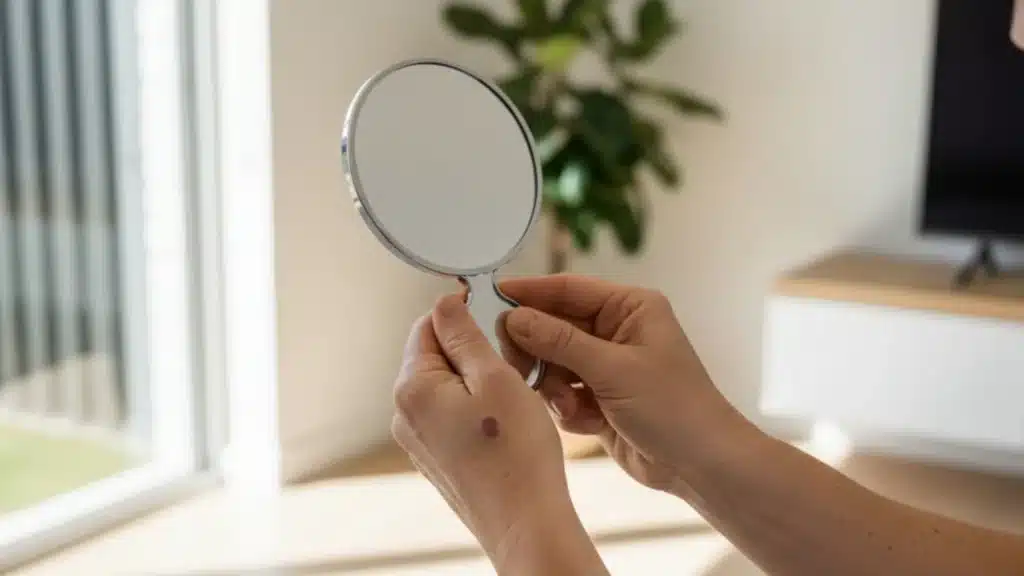
Using mirrors or asking a partner can be used to do some thorough checks.
How Often Should You Examine Your Skin?
Self-Checks
- Once a month
- Use good lighting and use mirrors
- Look for spots that are new or changing
Professional Skin Checks
- Annually for most adults
- Every 6 months for High Risk Patient
- Right away if you notice concerning
Perfection over consistency is not as important.
What Is Involved in a Professional Skin Check?
The professional skin examination is quick, non-invasive and painlessly carried out.
What to Expect
- Full-body visual inspection
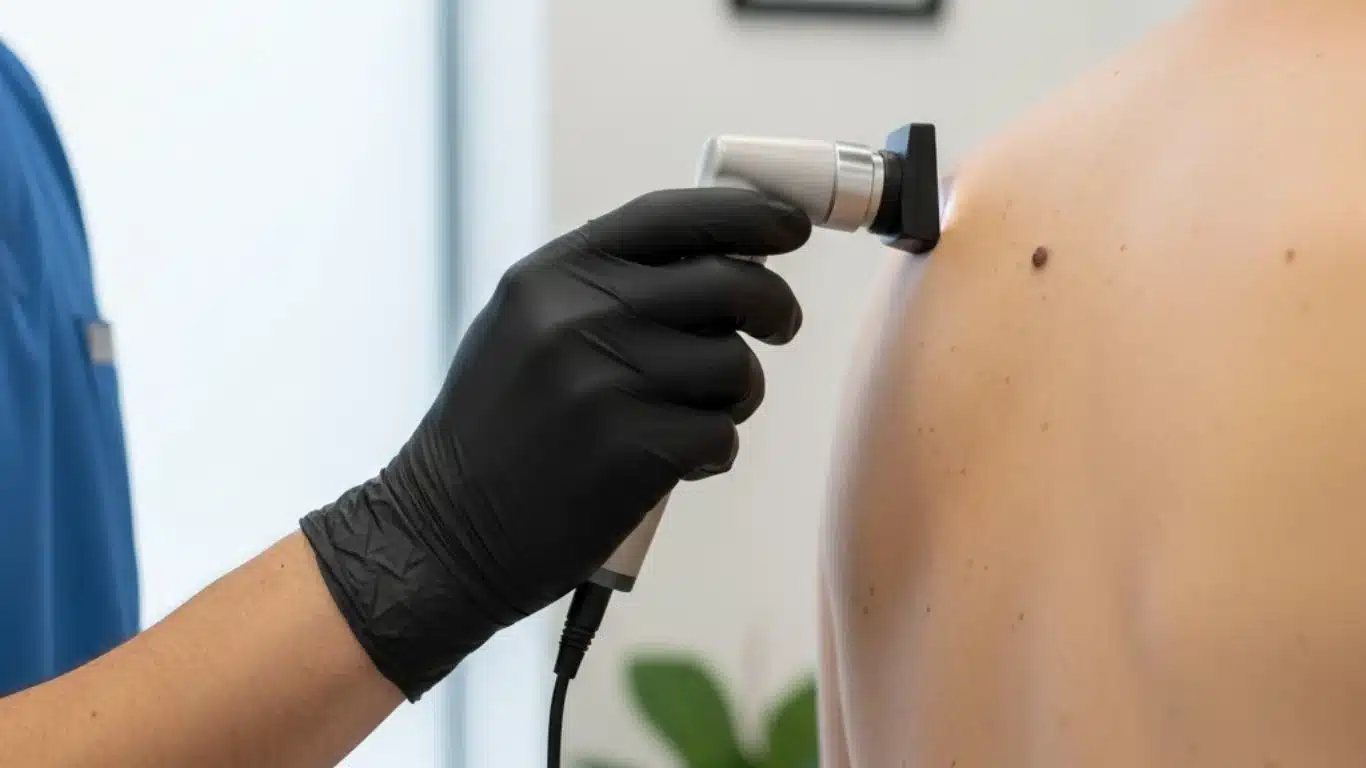
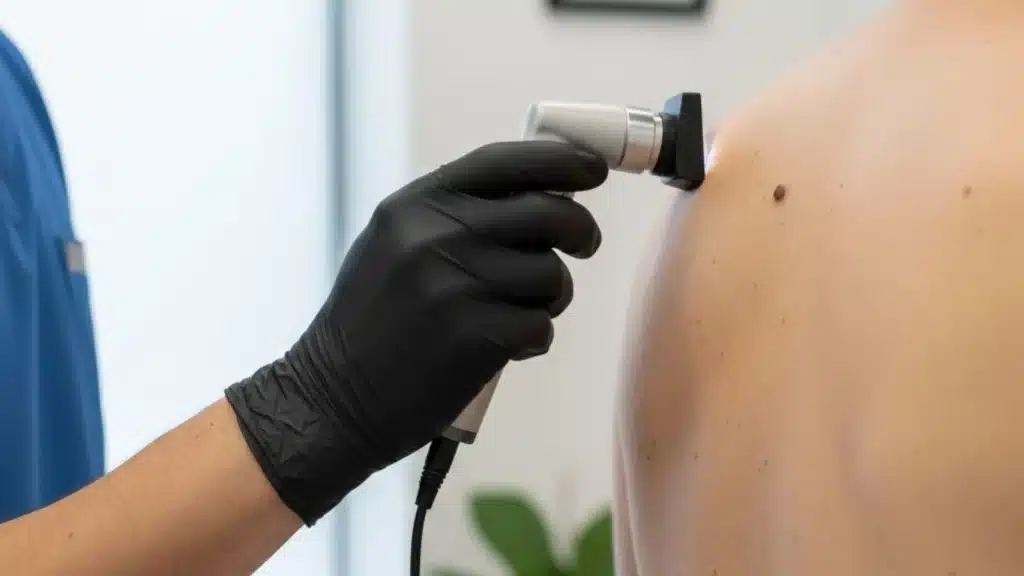
- Examination of suspicious spots using the Dermatoscope
- Skin mapping with a dermatological conventionally depends on dermatology photography if necessary
- Unambiguous explanation of findings
- Biopsy or referral if necessary
Early checks are usually reassuring and that peace of mind is worth it.
When a Mole Isn’t a Mole
Some skin cancers don’t have the appearance of the moles at all.
Other Warning Signs
- Pearly or translucent bumps
- Red, scaly patches
- Wart-like growths
- Flat, scar-like areas
Anything new, persistent or unusual needs to be paid attention to.
Prevention Still Matters
While not all skin cancers could be prevented, there are ways in which risk could be lessened.
Smart Skin Habits
Smart Skin Habits
- Use broad-spectrum SPF 50+ daily
- Wear hats and protective clothing
- Avoid peak UV hours
- Seek shade when possible
- Never use tanning beds
Sun protection works best when it’s routine, not occasional.
Why Canberra Residents should be Extra Vigilant
Canberra’s climate promotes being outdoors all year round meaning cumulative exposure to UV radiation is fast. For example, even the coolest of days can include high UV levels of rays.
Regular skin sludge is a pragmatic setting aside of defensive healthcare in the ACT – just like a dental or eye test.
When to Make an Appointment Right Away
Don’t delay if you notice:
- Rapid changes in a mole
- Bleeding without injury
- A spot that looks different from others
- A lesion that won’t heal
- Sudden appearance of a dark spot
Primitive evaluation is always the safest bet.
FAQs
1. Are changing moles always cancerous?
No, many changing moles are benign. However, changes are an important warning sign, which is why it is important to be assessed professionally. A doctor capable of identifying a skin problem can make the distinction between a benign and an unfortunate alteration.
2. Does skin cancer occur when one does not use the sun?
Yes. While UV exposure is the most prominent risk factor, skin cancer can also occur in areas that are less exposed to the sun and people who practice extreme caution when it comes to protecting themselves from the sun.
3. Is Itching Skin Cancer a Sign of Skin Cancer?
It can be. Persistent itching, tenderness or pain in a mole may be an indication of changes that should be checked, especially if they are used in conjunction with visual changes.
4. Do flat moles need checking?
Absolutely. Flat moles can still change their colours, size or shape. Melanoma commonly starts out as a flattened lesion.
5. How quickly can a mole change?
Some of the changes occur slowly over periods of months, while others occur rapidly. Any significant change found in a short period of time (a few weeks) should be evaluated.
6. Is it enough that one skin is checked for their life?
No. novae lesions may be developed from time to time Regular ongoing checks are vital, especially in high UV locations.
Take the Guesswork out of Skin Changes
If you’re asking yourself if a mole is normal or not, then this is surely reason enough for you to look at professional opinion about the topic. Changing moles should never be overlooked, and early evaluation can avoid serious consequences.
At Canberra Skin Cancer Clinic, there are expert practitioners who will give comprehensive skin examinations and help with early detection as well as being able to provide clear advice — no guesswork needed.
Book your skin check today with Canberra Skin Cancer Clinic
Early detection saves lives. Your skin is worth checking.
| Canberra Skin Cancer Clinic- Green Way | Canberra Skin Cancer Clinic- Molonglo Valley |
| Phone: (02) 6100 9956 | Phone: (02) 5110 3155 |
| Email: reception@greenwaymedicalcentre.com.au | Email: reception@greenwaymedicalcentre.com.au |
| Address: Unit 6/175 Anketell Street, Greenway ACT 2900 | Address: 110 Woodberry Ave Coombs ACT 2611 |
| Website: https://canberraskincancerclinic.com.au/ | Website: https://canberraskincancerclinic.com.au/ |