

Skin Cancer Detection Canberra: Living in Canberra means finding open skies, fresh air and a fun physical lifestyle. From weekend walks around Mount Ainslie, to school sports, gardening and time spent in the sun for work, a large proportion of locals are out in the sun for extended periods.
While this lifestyle is one of the great benefits of living in the ACT, it means that there is higher exposure to ultraviolet (UV) radiation. Over time that exposure leads to an increased risk for the development of skin cancer.
One of the problems that many people have is that early warning signs of skin cancer are often ignored. In fact, many of the skin cancers are hard to spot. This is why the professional detection of skin cancer plays such an important role in the protection of long-term health.
Understanding why these cancers can be difficult to spot on your own helps understand why regular skin checks are recommended, even when nothing seems wrong.
Why Skin cancer is Commonly Overlooked
Early Changes Can Be Very Subtle
In their early stages, it is possible for skin cancer to appear as:
- A small flat patch
- A slightly pink or red area
- A spot that appears like dry skin
- A very small scab that fails to heal completely
- A mole that changes very slowly
These changes can be very indefinite making them blend in with normal skin. They may not hurt, they may not itch and they may not bleed. Because there is often no feeling there is always the assumption that everything is fine.
Unlike other diseases in the human body that can cause obvious symptoms, in the early stages of skin cancer it can be quiet and quiet.
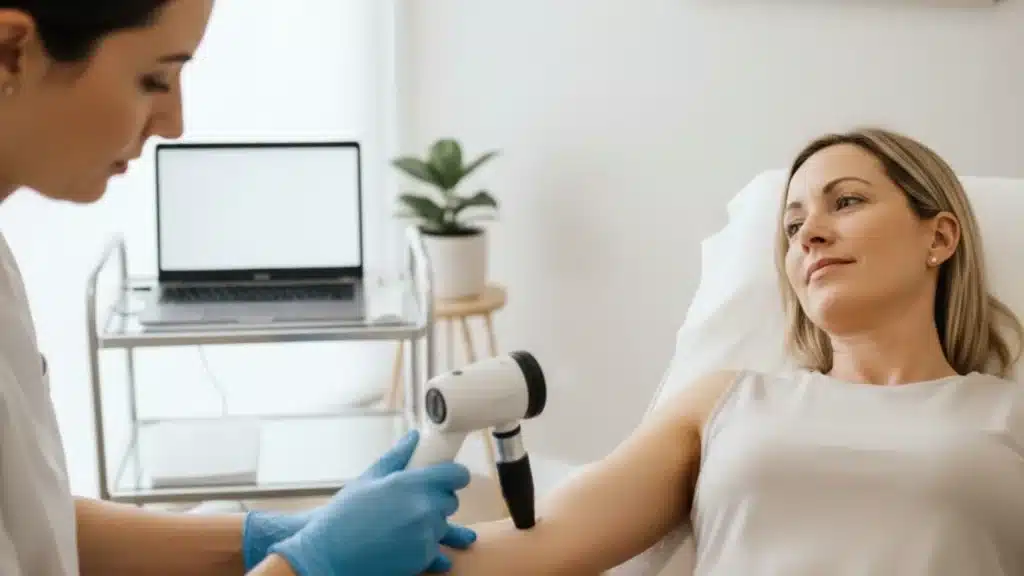
Many Lesions Resemble Harmless Spots
Australia has a high prevalence of freckles and sunspots, even without having melanoma because UV rays hit Australia year-long. In Canberra especially long summers and high UV levels contribute to:
- Solar keratoses
- Age spots
- Pigmented freckles
- Benign moles
Distinguishing between whether it is normal sun damage or something which needs to be addressed is not always easy to do without training and specialised equipment.
Changes Can Occur Slowly
Some skin cancers grow extremely slowly, over a period of months or even over several years. But the change is very gradual, so people get accustomed to seeing the change and stop noticing it.
A spot that appeared slightly different last year may appear now only “normal” because you are just adapted to it.
This insidious and slow progression means professional skin cancer detection Canberra is of particular importance with clinicians comparing nominal differences over time.
Why Self-checks are Important; Not Enough
Doing self-examination is encouraged. This helps people to get to know their own skin and can be aware of any new or changes in spots.
There are shortcomings to the use of self-checks, however.
Common Issues with Self-Exams
- Funny we can’t seem to see the scalp or back
- Poor lighting at home
- Uncertainty as to what is the “normal”
- Resistance of overlooking spots in less visible areas
- Mistaking innocent changes as feelings of concern
Many people only pay attention to moles but not all skin cancers start out as moles. Some take the form of small red patches or scaly areas, and pearly bumps.
Without medical training the distinctions of these can be quite hard to confidently evaluate.
What Role Should done by a professional screening
Professional screening means a comprehensive examination by a trained professional with the implementation of special equipment.
A skin cancer specialist is trained to recognise small patterns and changes which are not so readily noticeable to the untrained eye.
What’s So Different About Professional Assessment?
Dermoscopic Examination
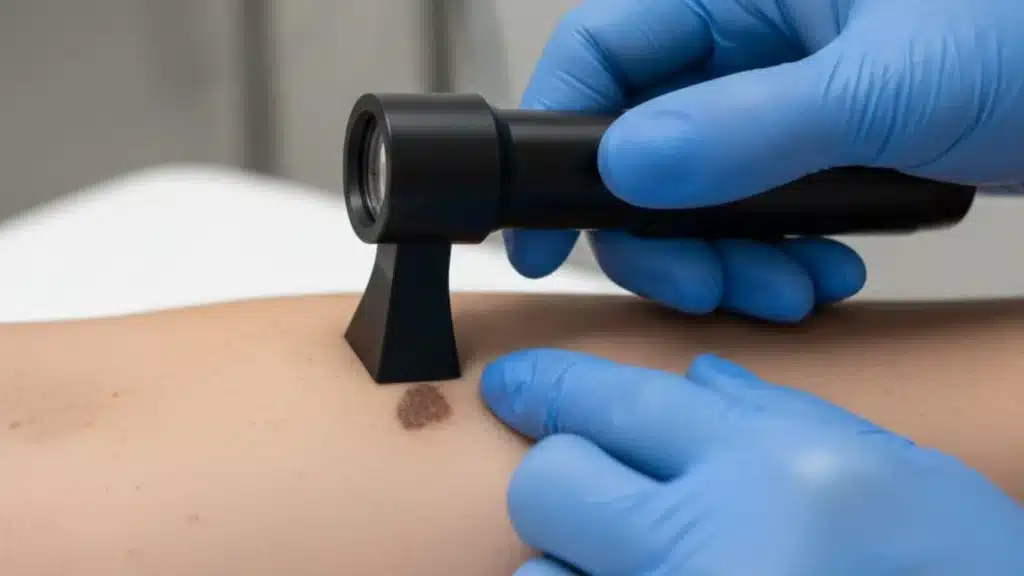
Clinicians use a handheld tool called dermatoscope which. This tool:
- Magnifies the skin
- Uses polarised light
- Uncovers structures that are hidden underneath
Many of the early cancers have specific patterns under magnification that can not be observed under normal lighting.
Full-Body Examination
A professional check involves areas that people seem to rarely check themselves:
- Scalp
- Behind the ears
- Soles of the feet
- Between toes
- Back and shoulders
In the sunny climate of Canberra, these areas can suffer a cumulative damage over the years, and in particular, in outdoor workers.
Experience with Patterns
Clinicians form experience in the recognition of:
- Suspicious variations in colour
- Irregular borders
- Subtle asymmetry
- Abnormal vascular patterns
These are often very fine distinctions that patients cannot pick out by themselves.
Unique Risk Factors of Canberra
High UV Levels in the ACT
Canberra has high levels of UV radiation for most of the year.
Even during cool or cloudy days, UV levels can be high. Many people living in these communities are surprised by this fact: UV exposure is not directly related to the temperature.
This means:
- Winter Prevention Still Matters
- Overcast days are not without risk
- Short time spent outdoors does mount up over time
Outdoor Lifestyle
Frequent stereotyping by ACT residents includes:
- Bushwalking
- Cycling
- School sports
- Outdoor trades
- Gardening
The accumulative exposure to sun over a period of decades, means that the chances of subsequent development of suspicious lesions are much higher.
Long Term Positive Sun Damage In Australia
Many adults in Canberra grew up during the pre-campaign era for sun safety. As a result, some people were suffering:
- Childhood sunburns
- Limited sunscreen use
- Unpleasant environmental conditions: inconsistent protective clothing 1.
Skin damage from many previous decades may only become apparent many years later.
Why Some Skin Cancers Won’t Look “Textbook”
Health campaigns like to say observe the ABCDE rule of moles:
- Asymmetry
- Border irregularity
- Colour variation
- Diameter
- Evolving changes
While this guide is helpful, not all skin cancers have this characteristic.
Other Avoidable Presentation
Some lesions may:
- Parallel veins remain in position, especially when it is necessary to distinguish them from crossed venules similar to capillaries.
- Look like a pimple that will not heal
- Appears as a small scaly patch
- Form a persistent crust
These are variations easy enough to readily shrug off, especially if they are painless.
Professional screening is beneficial in terms of catching the less obvious forms at an early stage.
The Significance of Monitoring Over a Period of Time
One of the most important benefits of visiting a skin cancer specialist is regular patient monitoring.
Why Tracking Matters
Skin changes usually are better appreciated over a period of time.
Clinicians may:
- Photograph specific spots
- Record measurements
- Make review alerts for the appointments
- Compare previous findings
This systematic way helps to increase the accuracy and decrease the number of unnecessary procedures.
For a full look at how to spot skin cancer and how to monitor it for any changes on an ongoing basis, check out our full guide to skin cancer checks in Canberra.
What to Expect During a Professional Skin Check
Understanding the process can help relieve anxiety.
Step 1: Medical History
You may be asked about:
- Personal history (personal history of skin cancer)
- Family history
- Occupational sun exposure
- Previous sunburns
- Changes you’ve noticed
This is used to help find your own individual level of risk.
Step 2: Full Skin Examination
You will be asked to shift into a gown.
The clinician will carefully examine:
- Face and neck
- Torso
- Arms and legs
- Hands and feet
- Scalp
Privacy and comfort are highly considered in the process.
Step 3: Dermoscopic Review
Suspicious spots are viewed with greater detail with magnification.
Should a lesion be of an unusual appearance, the clinician will make fully clear the next steps taken in a clear and calm way.
Step 4: Follow-Up Plan
Depending on findings you may be advised to:
- Return annually
- Arrange shorter reviews intervals
- Monitor a particular lesion
- Undertake further testing where needed
Unless medically necessary, there is no pressure or urgency.
Common Misconceptions held by Canberra Residents
“If It Doesn’t Hurt, It’s Fine”
Most of the early skin cancers are painless.
Waiting for discomfort is not a good way to go.
“It’s Just a Freckle”
Freckles commonly are found in Australia. However, any spots that change in size, colour or shape are worth taking note of.
“I Just Have to Check Exposed Areas”
Skin cancer can occur in places uncommon from exposure to direct sun including:
- The scalp
- Under nails
- Soles of feet
A complete examination is important.
“Winter Means No Risk”
UV radiation is therefore still an important issue in Canberra during winter months.
Damage is sustained throughout the year.
Who Is More at Risk in the ACT?
While anyone is at risk of developing skin cancer, at higher risk groups we have:
- Outdoor workers
- People with fair skin
- Individuals with many moles
- Those who have a history of severe sunburn
- Adults over 40
- People that have a family history of skin cancer
Even so, low-risk people are not supposed to overlook suspicious changes.

Why Early Assessment Is Important
Early evaluation:
- Provides reassurance against benign spots
- Allows more simplistic treatment should it be necessary
- Decreases anxiety of the unknown changes
- Confers Benefits Over the Long-Term for Skin Health
Professional detection of skin cancer is about trying to spot the concerns early when the management will usually be more straightforward.
What to Be on the Lookout for in Between Appointments
While it is vital to have items checked by a professional, awareness is beneficial to keep up all fortitude.
Monitor for:
- New spots
- Sores that don’t heal
- Changes in existing moles
- Persistent redness
- Unusual texture changes
If something feels different or if it seems worrying, it’s reasonable to have it checked.
Choosing Care in Canberra
When you want local care, consider:
Experience and Training
A clinician who is familiar with the examination of skin will be more likely to recognise some of the subtle patterns.
Thoroughness
A full body, thorough examination not rushed is important.
Continuity of Care
Continued observation helps to get to know or get accustomed to your skin over the years.
Clear Communication
You should be able to ask questions and be comfortable when making recommendations.
Key Takeaways
Skin cancer is hard to detect without professional knowledge.
This happens because the early signs of skin cancer are often missed and painless and easy to overlook.
Canberra’s great UV exposure and outdoor culture add up to risk over time.
Self-tests are good, but they do not substitute a good professional referral.
Regular screening provides reassurance, compares regular monitoring and provides early evaluation where necessary.
Staying informed and proactive is important to maintaining long-term skin health for individuals and families across the ACT.
Frequently Asked Questions
1. How frequently should skin checks be performed on people in Canberra?
Most adult patients within Canberra find a professional skin check every 12 months is of benefit. Those who have more risk factors, fair skin, outdoor jobs or already have skin cancer, may need more frequent reviews. Your clinician can suggest a schedule based on your personal history and sun exposure.
2. Are Skin checks necessary in the tribe in winter ACT?
Yes. UV radiation is still around in Canberra even in winter, but even when it is cool or cloudy. The appearance of skin changes may occur at any time of the year. Scheduling a check outside of peak time during the summer season is sometimes also convenient to make the time an appointment and ensure that the check-up is carried out year-round.
3. What if something potentially suspicious is found?
If a spot looks unusual, your health care provider will explain the findings clearly. In some cases it may be necessary to do monitoring. In others, further assessment such as a small biopsy may be discussed. Decisions are considered and you will have time to ask questions and know your options.
4. How long does it take you to check for a full skin check?
A thorough evaluation typically takes about 15 to 30 minutes, depending upon the number of spots that need to be investigated more closely. First time presentations may take slightly longer to enable the discussion of medical history and risk factors relevant to Canberra residents.
5. Who is considered higher at risk in Canberra?
People with fair skin, light eyes, large numbers of moles or a history of severe sunburn are at a higher risk. Outdoor workers, those that take part in sport and those that have lived in Australia prior to major messages about sun safety may also have experienced increased exposure over their lifetime. It is important that this risk is managed responsibly by regular monitoring.
Book your skin check today with Canberra Skin Cancer Clinic
Early detection saves lives. Your skin is worth checking.
| Canberra Skin Cancer Clinic- Green Way | Canberra Skin Cancer Clinic- Molonglo Valley |
| Phone: (02) 6100 9956 | Phone: (02) 5110 3155 |
| Email: reception@greenwaymedicalcentre.com.au | Email: reception@greenwaymedicalcentre.com.au |
| Address: Unit 6/175 Anketell Street, Greenway ACT 2900 | Address: 110 Woodberry Ave Coombs ACT 2611 |
| Website: https://canberraskincancerclinic.com.au/ | Website: https://canberraskincancerclinic.com.au/ |