
Skin cancer is one of the most common cancers worldwide, and its numbers continue to rise each year. Despite this, many people still assume that skin cancer is something they will notice only when it “looks serious” or becomes painful. In reality, most early skin cancers show very subtle signs, often so minor that they are easy to overlook without trained eyes. This is exactly why regular skin cancer spot checks play such an important role in early detection.
Waiting for symptoms to appear is not only risky, but it often means the cancer has already progressed. The safest and most effective approach is proactive screening, where changes are caught early, long before they become dangerous. This article takes an in-depth look at why spot checks matter, what they involve, and how they protect your long-term skin health.
Why Early Detection Matters
Skin cancer develops when abnormal cells grow uncontrollably in the layers of the skin. These changes often happen gradually, and in many cases, they begin long before they are visible to the untrained eye. Early detection is crucial because:
- Early-stage skin cancers are easier to remove
- Treatment is less invasive
- There is a significantly higher chance of complete recovery
- It can prevent cancer from spreading to deeper tissues
Many patients are surprised to learn that early skin cancers can appear as tiny, harmless-looking marks. They may resemble a new mole, a freckle, or a small patch of rough skin. Without regular checks, these early warnings can go unnoticed for months or even years.
The Problem With Waiting for Symptoms
People often assume that skin cancer will show clear signs, such as bleeding, pain, or dramatic changes. But most skin cancers do not behave this way in the early stages.
For example:
- Melanoma may begin as a small, flat spot with subtle irregularities
- Squamous cell carcinoma may start as a rough patch that seems like dry skin
- Basal cell carcinoma often looks like a simple bump or a non-healing sore
These early signs can easily blend in with everyday skin issues. By the time the symptoms become obvious, the cancer may have already developed to a more serious stage.
Read Also: What Happens When You Are Referred To One Of Our Specialists
What Are Skin Cancer Spot Checks?
A spot check is a focused, clinical examination of a specific mole, spot, or patch of skin you are concerned about. Unlike a full-body skin examination, spot checks are quick, targeted, and designed to assess a particular area.
Common reasons people request spot checks include:
- A mole that has changed shape, size, or colour
- A new spot that looks unusual
- A patch that keeps coming back or refuses to heal
- A freckle or bump that stands out from the rest
- A mark that seems different, but you can’t explain why
Spot checks are not just for people with obvious symptoms. They are equally valuable for individuals with a family history of skin cancer, fair skin, high sun exposure, or a large number of moles.
What Happens During a Skin Cancer Spot Check?
Spot checks are simple, precise, and completely non-invasive. Here is what you can expect.
1. Discussion About Your Concern
The specialist begins by asking about the spot: when you first noticed it, whether it has changed, and any symptoms you may have observed. This conversation helps guide the assessment.
2. Visual Examination
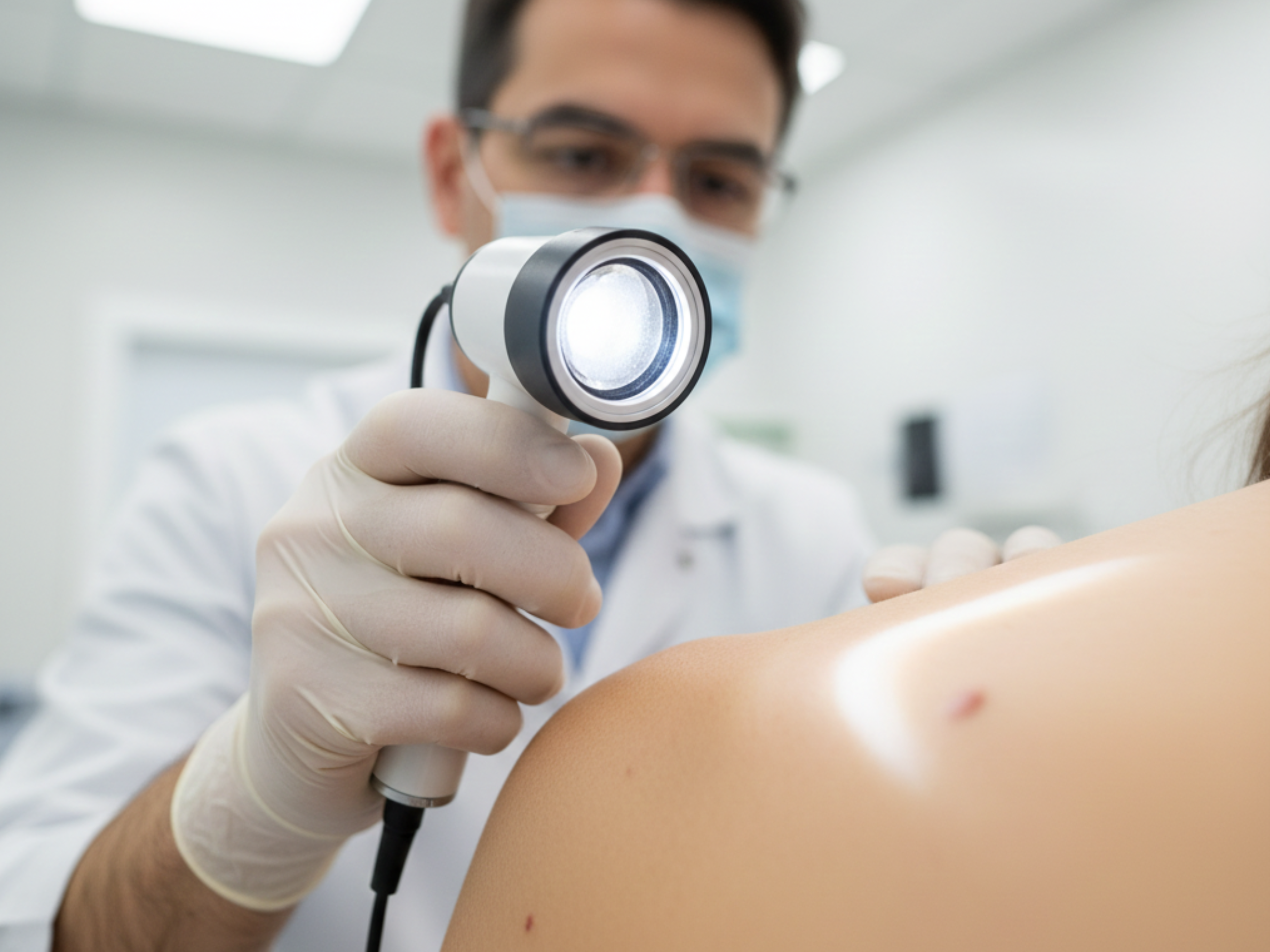
The area is examined under proper lighting to identify any irregularities. The specialist looks for signs relating to shape, border, colour, texture, and overall pattern.
3. Dermatoscopy
Many clinics use a dermatoscope, a handheld tool that magnifies and illuminates the skin. This allows the specialist to see beneath the surface, revealing details invisible to the naked eye. Dermatoscopy significantly improves diagnostic accuracy and helps determine whether the spot is harmless or concerning.
4. Assessment and Advice
After examining the spot, the specialist explains the findings clearly. You’ll be told whether:
- The spot appears benign
- It should be monitored
- Further investigation is recommended
- A biopsy may be necessary
Every step is explained so you understand exactly what is happening and why.
Why Dermatoscopy Makes a Difference
A dermatoscope is one of the most valuable tools in skin cancer detection. It allows specialists to examine pigmentation patterns, vascular structures, and hidden changes that usually cannot be seen without magnification.
This means many cancers can be detected at a stage when they are still extremely small and simple to treat. Without dermatoscopy, these early signs may be missed, delaying diagnosis.
Who Should Consider Regular Spot Checks?
While everyone can benefit from skin cancer spot checks, certain groups are at higher risk and should be more proactive. You should consider regular checks if you:
- Have fair skin that burns easily
- Spend long hours outdoors
- Have many moles or freckles
- Have a family history of melanoma
- Have a history of sunburns
- Are over the age of 40
- Notice new spots appearing frequently
- Have had skin cancer before
Even if you do not fall into one of these categories, any new or changing lesion deserves attention.
The Role of Prevention
Spot checks are a vital part of prevention, but they are not the only factor. Protecting your skin daily also reduces the risk of skin cancer. Essential habits include:
- Using sunscreen with adequate SPF
- Wearing protective clothing in direct sunlight
- Avoiding tanning beds
- Staying in the shade during peak UV hours
- Regularly examining your skin at home
Prevention and early detection work together to keep you safe.
When a Biopsy Is Recommended
If the specialist identifies a concerning area, a biopsy may be advised. This involves removing a small piece of skin under local anaesthetic and sending it for laboratory analysis. A biopsy is the only way to confirm whether a lesion is cancerous.
Although the idea may sound daunting, biopsies are quick and usually take only a few minutes. Most patients return to normal activities immediately.
Why You Should Not Delay
Delaying a spot check can allow a small, manageable lesion to evolve into something more serious. Skin cancer does not always grow rapidly, but it does grow quietly. When caught early:
- Treatment is simpler
- The risk of scarring is reduced
- The chance of full recovery is significantly higher
- There is less likelihood of spread to the surrounding tissue
Many patients look back and realise the only reason they delayed was uncertainty or lack of awareness. Spot checks remove that uncertainty.
The Peace of Mind Spot Checks Provide
One of the most overlooked benefits of spot checks is reassurance. Even if a spot turns out to be harmless, knowing that a specialist has evaluated it brings peace of mind that online searches or self-assessments cannot offer.
Patients often say the relief they feel after a spot check is immediate and valuable. It allows them to move forward with confidence, knowing their skin is being properly monitored.
The Bottom Line
Skin cancer does not always announce itself with pain or obvious symptoms. It often begins quietly, with subtle changes that require trained eyes to detect. Spot checks are a simple yet powerful way to stay ahead of these risks.
By examining concerning areas early, specialists can identify problems long before they become serious. For many people, this early intervention is life-changing.
Waiting for symptoms to appear is never the safest option. Being proactive today can protect your skin and your health for years to come.