
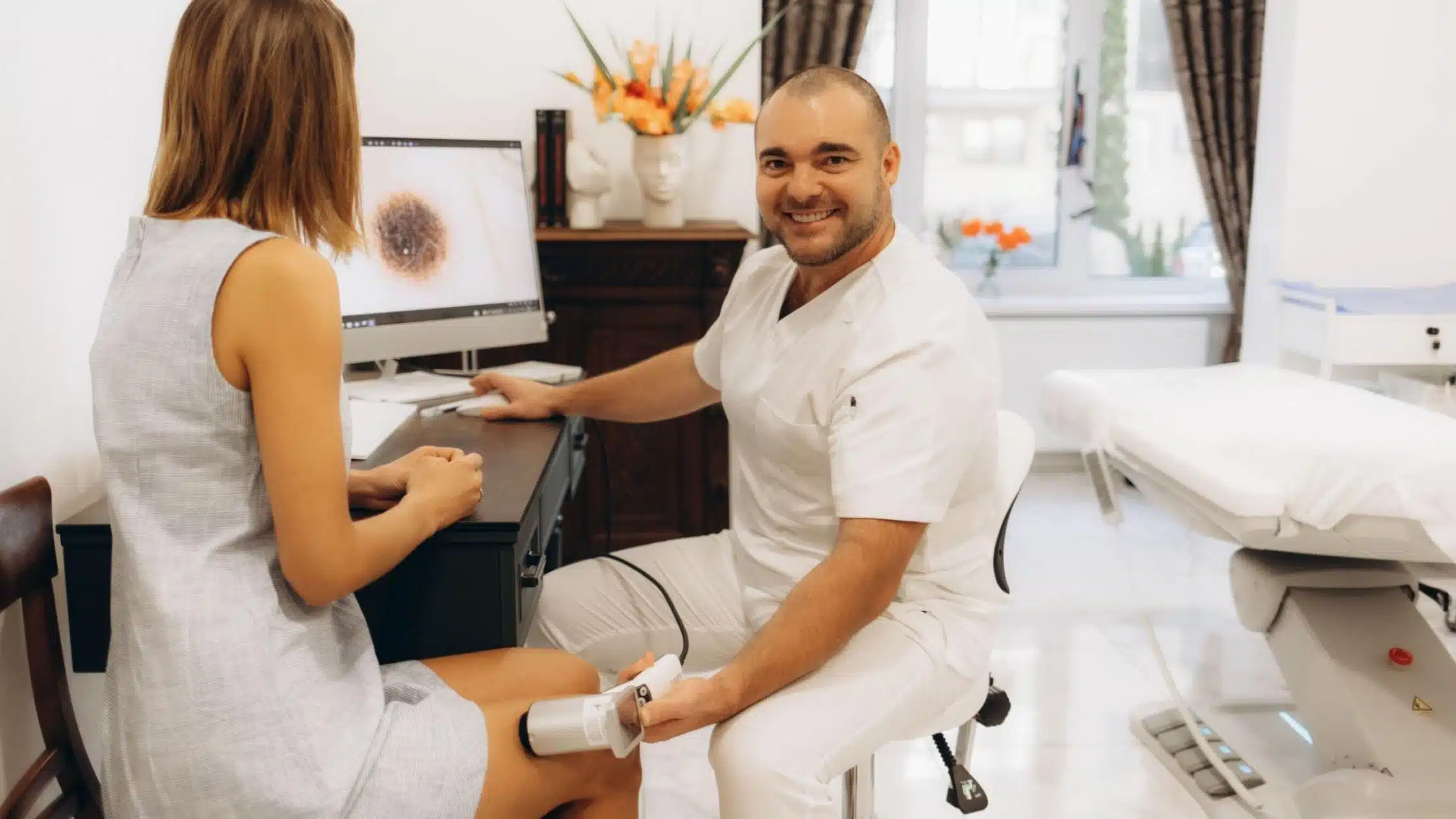
When it comes to protecting your skin, many people are unsure whether they should book a Full Body Skin Cancer Check vs Mole Check. While both examinations play an important role in detecting skin cancer, they are designed for different situations and serve different purposes.
If you’ve noticed a new mole, a spot that has changed in appearance, or simply want reassurance about your skin health, understanding the difference between these two types of skin examinations can help you make an informed decision.
Australia has one of the highest rates of skin cancer in the world, and Canberra residents are regularly exposed to high levels of ultraviolet (UV) radiation. Spending time outdoors, whether for work, sport, or recreation, increases cumulative sun exposure over time. This makes routine skin examinations an important part of preventive healthcare.
In this guide, we’ll explain the difference between a Full Body Skin Cancer Check vs Mole Check, what happens during each appointment, who should book them, and how an experienced skin cancer doctor Canberra can help detect suspicious skin changes early.
Why Regular Skin Checks Matter
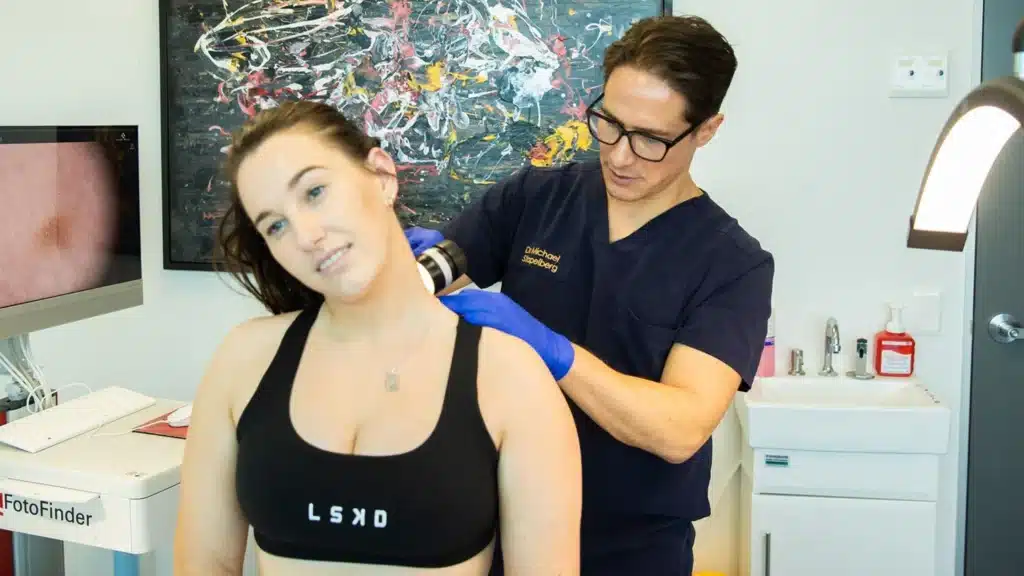
Skin cancer can take time to develop. Most skin cancers do not cause pain, itching or discomfort, and can be hard to find unless properly examined.
Changing moles or small sores, scaly patches, or pearly bumps are the signs of some skin cancers. These changes can be subtle, so it’s important to have regular skin checks to make sure that any suspicious lesions are caught in time before they get worse.
Make sure your skin is checked frequently:
- Detect skin cancer early.
- Monitor existing moles.
- Identify new skin lesions.
- Reduce the need for more extensive treatment.
- Improve treatment outcomes.
- Provide peace of mind.
Timely diagnosis is one of the most important means of increasing the effectiveness of skin cancer treatment.
What is a Full Body Skin Cancer Check?
A Full Body Skin Cancer Check is a complete skin check from head to toe.
Your doctor will review your entire body instead of targeting a specific mole toA look for any other moles or changes in your skin that could suggest skin cancer.
In a test, the following areas are typically reviewed:
- Face
- Scalp
- Ears
- Neck
- Chest
- Abdomen
- Back
- Arms
- Hands
- Fingernails
- Legs
- Feet
- Soles of the feet
- Between the toes
Even if the area does not get a lot of sunlight exposure, it is still checked as sometimes skin cancer can form in unusual places.
A Full Body Skin Cancer Check is ideal for people who:
- Never had a cell check by a professional.
- Have many moles.
- Get plenty of fresh air.
- Have fair skin.
- Have a tendency to get sunburnt easily.
- Have previously had skin cancer.
- Have a family history of melanoma.
- Request to be assured of their overall skin health.
What Is a Mole-Check?
A mole check is a more specific appointment.
The doctor doesn’t examine the whole body, but rather one or more moles or skin lesions that you are worried about.
If you have observed:
- A new mole.
- A mole that is growing.
- Changes in colour.
- Irregular borders.
- Bleeding.
- Itching.
- Crusting.
- Rapid growth.
Your doctor thoroughly evaluates the lesion, sometimes with the help of a dermatoscope to examine structures under the surface of the skin.
They might suggest observation, a biopsy or removal of the lesion if necessary.
Full Body Skin Cancer Check vs Mole Check: What Is the Main Difference?
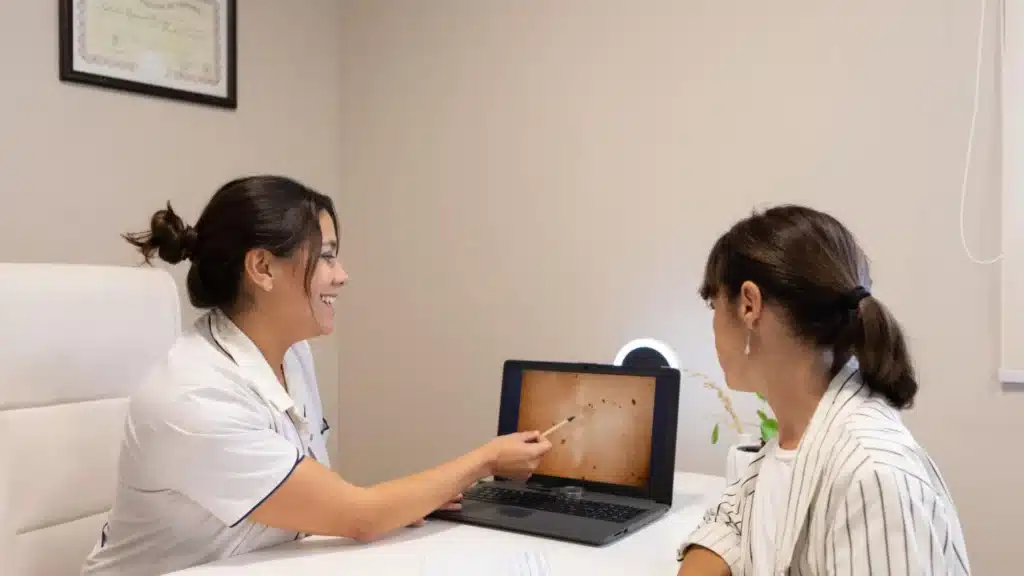
The primary difference between Full Body Skin Cancer Check vs Mole Check is that the full body skin cancer check examines more skin area.
A Full Body Skin Cancer Check examines all of your skin surface so that the doctor can see any abnormalities that you might not be able to.
One mole check is limited to one or a few areas of interest.
A mole check may be helpful if you have a specific mole to evaluate, but it doesn’t necessarily find other suspicious moles that are on your body.
That is why it is important for many patients (particularly those with a higher risk) to have routine, comprehensive skin check-ups.
When Should You Choose a Full Body Skin Cancer Check?
A Full Body Skin Cancer Check is recommended if:
- Never had a professional skin exam.
- There are a lot of moles on your property.
- You have fair skin.
- You spend a lot of time outdoors.
- Had multiple sunburns.
- There is a personal history of melanoma in your family.
- You’ve previously had skin cancer.
- You’re over 40 years of age.
- All you want is some assurance about your skin wellness.
Your doctor can spot abnormal growths if they appear on your skin, and a thorough examination can help prevent such growths from being overlooked.
When Is a Mole Check the Better Option?
If you think you may have a mole problem, a mole check might be appropriate:
- There is one mole that you suspect.
- Recently a particular location has been altered.
- A lesion has started bleeding.
- You have an itchy or crusting mole.
- It was recommended that a specific lesion be monitored.
If the doctor finds more suspicious areas during the consultation, they may suggest having a Full Body Skin Cancer Check to get a more thorough examination.
What Happens During a Full Body Skin Cancer Check?
An extensive examination typically starts with a medical history discussion.
Your doctor may ask about your:
- Previous skin cancers.
- Family history.
- Outdoor occupation.
- Sun exposure.
- Changes you’ve noticed.
- Current medications.
You will then be requested to dress appropriately, and your privacy respected during your appointment.
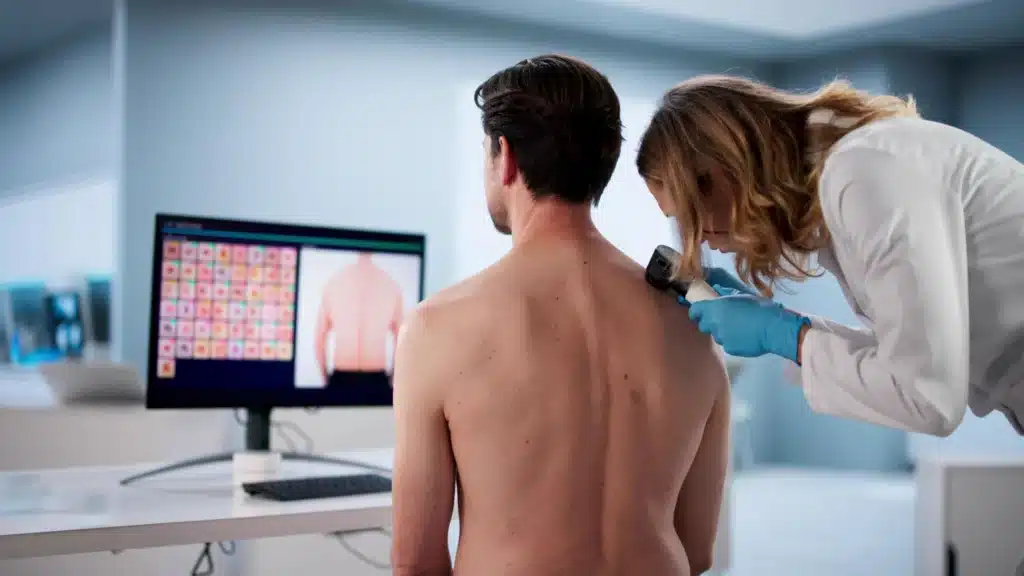
The doctor thoroughly inspects you, both visually and/or dermoscopically (where applicable) from head to toe.
It is painless, and typically lasts 15-30 minutes.
What Happens During a Mole Check?
A mole check will typically not require as long as a complete body check.
Your doctor will:
- Ask about the mole.
- Examine it closely.
- Use a dermatoscope if necessary.
- Determine if it looks normal or abnormal.
- Explain the findings.
- Recommend monitoring or treatment if necessary.
If you have any other questions about other skin areas, your doctor may suggest a full check-up.
Which Appointment takes longer?
The Full Body Skin Cancer Check takes longer than the mole check as it covers the entire skin surface.
Most full exams will last about 15-30 minutes.
Sometimes the mole check can be done in less time since it is done on one or a couple of specific lesions.
Both appointments are meant to be in-depth, relaxed and personalized.
Can a Mole Check Miss Other Skin Cancers?
Yes.
A mole check has one drawback: It only checks for those moles that you or your doctor can see.
Skin cancer can form on any part of the body, even parts you can’t see, including:
- Your back.
- Scalp.
- Behind the ears.
- Soles of the feet.
- Between the toes.
A Full Body Skin Cancer Check reduces the risk of detecting suspicious areas in such less visible places.
Full body skin cancer check benefits include:
A Full Body Skin Cancer Check offers much more than simply looking for skin cancer. It is a thorough evaluation of your skin’s health and helps your doctor detect skin changes that might not be apparent.
Some of the key benefits include:
- Early detection of potentially troublesome moles.
- Prevention of the development of symptoms for skin cancers.
- Long-term observation of existing moles.
- The ability to recognize new skin lesions.
- Providing reassurance when your skin is healthy.
- Preventing further treatment later.
The exam puts extra pressure on your body and makes it more likely that you will find any skin cancers that you may not check on your own.
Benefits of a Mole Check
While the mole check is more targeted, it is a vital service that patients feel is relevant to their concern.
A mole check can:
- Seeing a new or changing mole.
- Recognise that a lesion may appear suspicious or not.
- Decide whether or not to have a biopsy.
- Familiarize someone with a specific location.
- Help monitor previously identified lesions.
If you have seen a mole that has recently changed colour, size or shape, it’s always best to have it checked out by a mole man as soon as possible.
Which Option Is Right for You?
There isn’t a right or wrong answer for whether to have a Full Body Skin Cancer Check or a Mole Check, it depends on each person.
A Full Body Skin Cancer Check is a better option if:
- You’ve never had a professional skin examination.
- There are a lot of moles.
- You’re out in the sun for a lot of time.
- You have fair skin.
- You’ve previously experienced sunburn.
- Your family history includes a history of melanoma.
- You previously had skin cancer.
- It’s been more than a year since your last skin examination.
If any of the following occur, a mole check may be warranted:
- You’ve a mole that is worrying you.
- You’ve noticed a one type of skin lesion that is changing.
- Follow-up evaluation of a mole previously monitored is necessary.
- Your doctor has recommended reviewing one particular lesion.
If you cannot decide which appointment you are best suited to, it is best to speak to a knowledgeable skin cancer doctor canberra who can give you a better idea of where you may go.
What Happens If a Suspicious Spot Is Found?
If you find a suspicious area at one of your appointments, it doesn’t necessarily mean you have skin cancer.
Your doctor will share what they are seeing and discuss the best actions or treatments to take next.
The following recommendations may be made, depending on the nature of the lesion:
- Monitoring the lesion.
- Clinical photography.
- Digital mole mapping.
- Skin biopsy.
- Removal of the lesion.
- Follow-up appointments.
These recommendations are given to allow as early a possible assessment of any changes of concern.
Can You Perform Skin Checks at Home?
Once a month, self-examinations are encouraged and can help you to get to know your skin.
In inspecting your skin, look for:
- New moles.
- Changes in existing moles.
- Irregular borders.
- The presence of more than one color in a single mole.
- Bleeding or crusting.
- Persistent sores.
- Rapidly growing skin lesions.
Examine hard to see spots with both full length and handheld mirrors.
Self-examinations are a good idea, but they shouldn’t be a substitute for a skin cancer examination at a Canberra skin cancer clinic.
Common Myths About Skin Cancer Checks
Myth #1: I only need a skin check if I find a mole.
There are many skin cancers that do not show any clear signs.
Properly done by an expert, suspicious lesions can be detected long before they are visible to the unaided eye.
Myth 2: Any Mole Check is a full body skin cancer check.
Both appointments evaluate skin lesions, but they’re not the same.
A Full Body Skin Cancer Check checks the whole surface of your body, whereas a mole check looks at a single or a few lesions.
Myth #3: Skin cancer always looks dark.
Dark moles are not the only types of skin cancer.
Some appear as:
- Pink patches.
- Pearly bumps.
- Scaly areas.
- Persistent sores.
Which is why professional assessment is crucial.
Myth #4: Skin checks are painful.
A skin examination by a professional is painless.
When a further investigation (biopsy) is suggested, which is to reduce discomfort, local anaesthetic is used.
Myth 5: Young People Don’t Need Skin Checks.
While older people are at higher risk for skin cancer, younger adults also can get skin cancer.
It’s important for anyone with a lot of time in the sun to be mindful of their skin health.
Why Choose Canberra Skin Cancer Clinic?
A Canberra skin cancer clinic that has substantial experience will assure you that your skin is being examined thoroughly.
A great clinic will provide:
- Comprehensive Full Body Skin Cancer Checks.
- Experienced clinicians.
- Detailed skin assessment using dermoscopy.
- Skin biopsies (if necessary).
- Personalised treatment recommendations.
- Continuous surveillance of patients at risk.
Most importantly, your doctor has time to respond to your questions and to get you up-to-speed on the information.
Frequently Asked Questions
Q1. Is a Full Body Skin Cancer Check better than a Mole Check?
Neither examination is universally better—it depends on your needs. A Full Body Skin Cancer Check is ideal for assessing your entire skin, while a mole check is suitable for one or two specific lesions.
Q2.How long does each appointment take?
A Full Body Skin Cancer Check usually takes around 15 to 30 minutes.
A mole check is generally shorter because only one or a few lesions are examined.
Q3. Do I need a referral?
In most cases, no referral is required.
You can usually book directly with a Canberra Skin Cancer Clinic.
Q4. What if my doctor finds skin cancer?
If a suspicious lesion is identified, your doctor will discuss the next steps.
This may include monitoring, biopsy, or appropriate treatment depending on the diagnosis.
Q5. How often should I have a Full Body Skin Cancer Check?
The frequency depends on your individual risk factors.
Your doctor will recommend an appropriate schedule based on your age, skin type, family history, and previous skin cancers.
Ready to Book Your Skin Check?
Book your Full Body Skin Cancer Check at Canberra Skin Cancer Clinic and receive a thorough skin examination from experienced doctors committed to early skin cancer detection and personalised care.
| Canberra Skin Cancer Clinic- Green Way | Canberra Skin Cancer Clinic- Molonglo Valley |
| Phone: (02) 51046409 | Phone: (02) 51046409 |
| Email: reception@greenwaymedicalcentre.com.au | Email: reception@greenwaymedicalcentre.com.au |
| Address: Unit 6/175 Anketell Street, Greenway ACT 2900 | Address: 110 Woodberry Ave Coombs ACT 2611 |
| Website: https://canberraskincancerclinic.com.au/ | Website: https://canberraskincancerclinic.com.au/ |