
Australia has one of the highest rates of skin cancer in the world, and Canberra residents are no exception. With high UV levels throughout much of the year and many people enjoying outdoor activities, regular skin checks have become an important part of maintaining long-term health.
Many skin cancers develop gradually and may not cause pain or obvious symptoms during the early stages. A small spot, mole, or patch of skin can change slowly over time without attracting attention. This is why Skin Cancer Screening in Canberra plays such an important role in detecting suspicious lesions before they become more serious.
A professional skin examination allows experienced doctors to assess your skin, identify unusual changes, and recommend further investigation or treatment if necessary. Early detection often provides more treatment options and can reduce the likelihood of more complex procedures later.
Whether you’ve noticed a changing mole or simply want peace of mind, understanding the screening process can help you make informed decisions about your skin health.
In this guide, we’ll explain everything you need to know about Skin Cancer Screening in Canberra, including who should be screened, what happens during an appointment, warning signs to watch for, treatment options, and how regular skin checks help protect your health.
Why Skin Cancer Screening Matters
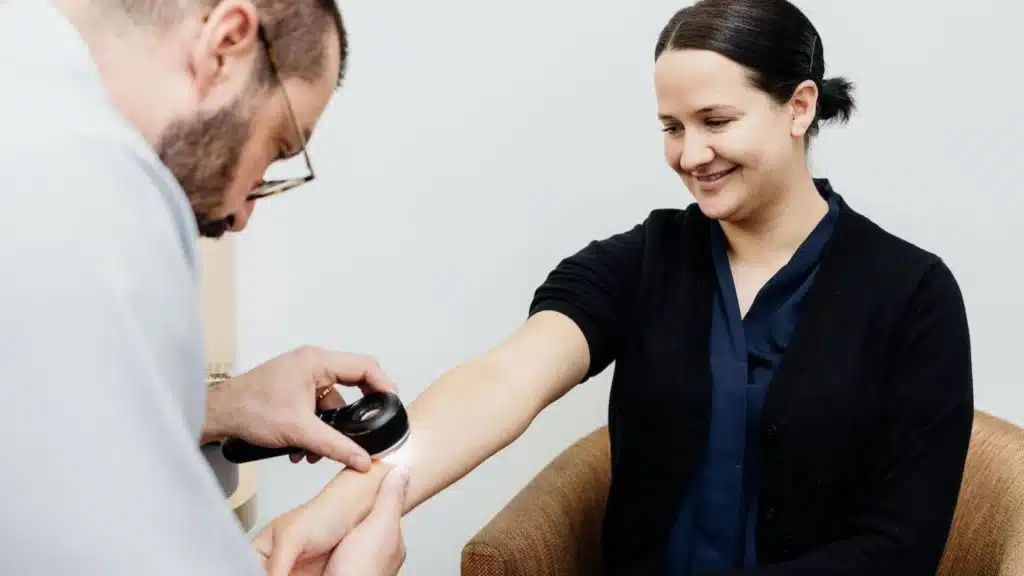
When the growth of abnormal skin cells becomes out of control, this causes skin cancer. Although sun exposure is the main cause, genetics, age, immune system problems and past sun damage are other causes of skin cancer.
There are three most frequently used types, they are:
- Basal Cell Carcinoma (BCC) is the most commonly occurring type of skin cancer.
- Squamous Cell Carcinoma (SCC) is the most common type of skin cancer.
- Melanoma
They all act differently, but the good news is that they all need to be caught early.
Most skin cancers start as a small spot that looks like an ordinary freckle or mole or as an age spot. It may be a challenge to detect which lesions need further investigation, without professional evaluation.
skin check Canberra appointments give you the opportunity to find suspicious skin lesions before they get bigger and deeper into surrounding tissue.
Why Canberra Residents Should Prioritise Skin Checks
Considerable exposure to UV is common in Canberra throughout the year. Ultraviolet radiation is potent enough to cause damage to the skin even during the cooler months.
Neighbourhood members frequently spend time:
- Walking
- Gardening
- Playing sports
- Hiking
- Cycling
- Working outdoors
Sun exposure over time is cumulative. Severe sunburn can happen decades ago, but the damage to the skin can still continue to worsen under the skin.
The damage caused by UV exposure accumulates slowly and it’s not until years after that many realize that the skin is changing.
Regular Skin Cancer Screening in Canberra can aid in the early detection of these changes.
What is Skin Cancer Screening?
Skin cancer screening is a thorough check of the skin by a qualified healthcare provider.
In the exam, your doctor will examine your skin from head to foot, checking for:
- New moles
- Changing moles
- Unusual pigmentation
- Scaly patches
- Non-healing sores
- Bleeding lesions
- Raised bumps
- Irregular skin growths
The aim is to detect lesions that could need to be watched, biopsied or treated.
Professional screening relies on clinical expertise and specialist testing methods to work out skin changes better than self-examinations at home.
What Happens During a Skin Cancer Screening?
Many are delayed to see a doctor for a skin check due to lack of knowledge about the process.Many put off a skin check appointment because they have no idea what to expect.
However, it’s a simple procedure that only takes about 15 to 30 minutes depending on skin and medical conditions.
Medical History
Your doctor will ask about your:
- Previous skin cancers
- Family history
- Sun exposure
- Outdoor occupation
- Recent skin changes
- Symptoms include itching or bleeding
This information will be used to help decide how much risk you are at for yourself.
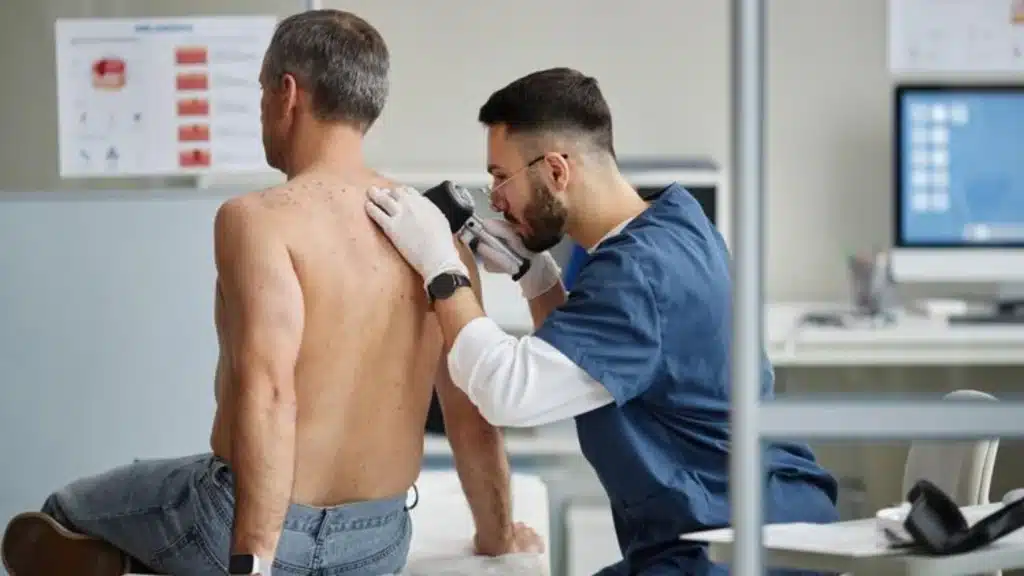
Full Skin Examination
Your doctor checks your skin from head to foot.
This includes checking:
- Face
- Scalp
- Neck
- Ears
- Chest
- Back
- Arms
- Hands
- Legs
- Feet
If warranted, areas that are rarely exposed to the sun can be checked as well, since skin cancer can occur in unusual places.
Assessment of moles and lesions
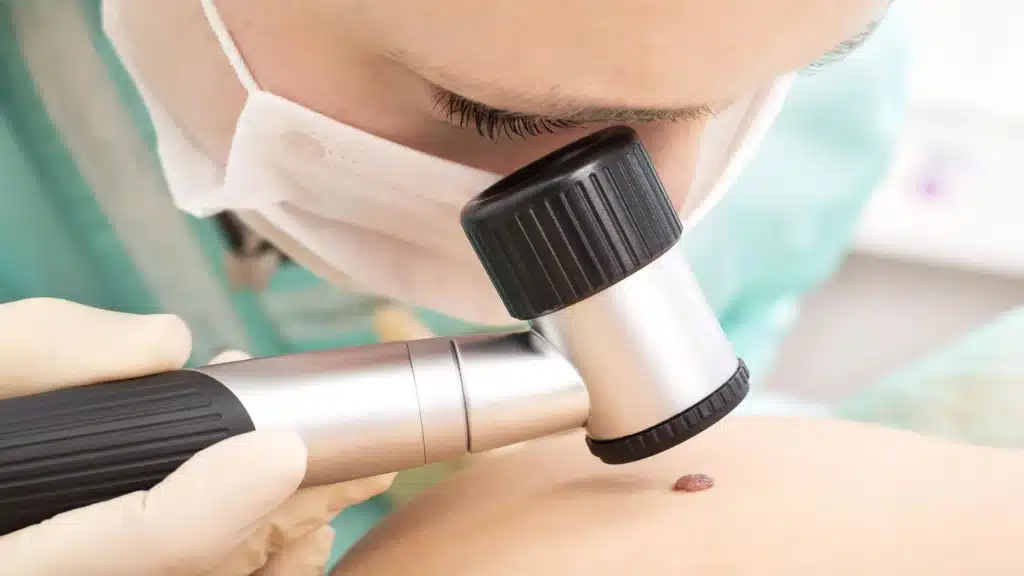
Any areas of concern are thoroughly investigated.
Doctors evaluate the following qualities:
- Size
- Shape
- Border
- Colour
- Symmetry
- Surface texture
These characteristics are important to decide if a lesion is likely to be benign or suspicious.
Recommendations
Your doctor talks to you about the results of your exam.
Depending upon the results, recommendations may include:
- Routine monitoring
- Follow-up appointments
- Photographic monitoring
- Biopsy
- Suspicious lesions have been removed.
- Referrals for further treatment if indicated
Many people walk out of the appointment, thinking their skin is healthy.
Signs You Should Book a Skin Cancer Screening
It’s not necessary to wait for it to be painful.
Many skin cancers have very little symptoms, or no symptoms, at all until they’re more advanced.
If any of the following are observed, you should arrange a skin examination:
A Mole That Changes
Be alert for changes in:
- Size
- Colour
- Shape
- Thickness
- Border
If there is any change that is noticeable, it should be checked medically.
A New Spot That Doesn’t Go Away
If new growth is present after adulthood it should always be assessed, especially if it continues to grow for several weeks.
A Sore That Won’t Heal
Sometimes, the wound will bleed again, crust or not heal, and it should be examined.
Persistent Scaly Patches
Moisture-receptive yet rough, dry patches that still exist after applying moisturizer could be a sign of sun damage or early skin cancer.
Bleeding or Itching Lesions
Itching is a symptom of many harmless skin conditions, but if you have a single spot that continues to itch or bleed, it should be checked.
Dark Pigmented Areas
Any dark spots that are irregular or are constantly shifting should never be overlooked.
Who Should Get Skin Cancer Screening?
While it’s important for all people to know how to care for their skin, certain people may be at greater risk for skin cancer.
Consider regular Skin Cancer Screening in Canberra if you:
- Have fair skin that is easily sunburnt
- Have lots of fun outside!
- Tanned easily before the age of 18
- Have a higher age than 40 (90 points)
- Have many moles
- Be mindful of any alterations in the skin lesions
- A personal history of skin cancer (if they have had skin cancer before).
- Family history of melanoma (cancer of the skin)
- Have a weakened immune system
- Work outdoors regularly
If the individual is at higher risk, even in the younger ages routine skin checks can be beneficial.
How Often Should You Have a Skin Cancer Screening?
The schedule for skin cancer screenings depends on individuals. The optimal frequency varies with age, skin type, medical history, lifestyle and risk factors.
The frequency of skin checks might need to be more frequent for people who are at higher risk for skin cancer than those at no risk. A personalised screening programme can be recommended by your doctor, depending on your individual circumstances.
If you:You might need to have regular Skin Cancer Screening in Canberra:
- Has had at least one skin cancer diagnosis in its past
- Have a close family history of melanoma
- Sit or lie outside for extended time for work or play activities
- Have a lot of moles/freckles
- Burns easily and has fair skin
- Suffered multiple sun burns over the course of your life.
If you consider yourself to be at low risk, it is still important to learn how to examine your skin and make an appointment for a skin assessment by a professional if you notice anything that is unusual.
Common Risk Factors for Skin Cancer
Knowing what increases your risk level can help you make informed decisions with respect to skin health.
Excessive UV Exposure
In Australia, the primary cause of skin cancer is still ultraviolet (UV) radiation. Exposing the skin for extended periods, without protection, causes damage to the cells over time.
The effects are cumulative, that is, damage is accumulated over many years.
Fair Skin
Lighter skin, blonde or red hair, light coloured eyes have less natural protection against the UV radiation.
But, individuals with darkly pigmented skin may also get skin cancer and should not ignore any changes in skin.
Previous Skin Cancer
If you have had one skin cancer, you risk having another in the future. The monitoring should be more regular after treatment.
Family History
If you have a family history of melanoma or other skin cancers, you may be more susceptible to them yourself.
If there is a family history of skin cancer, your doctor may recommend more frequent tests.
Age
While skin cancer may happen at any age, the risk tends to rise as people get older since skin damage by the sun builds up over time.
Outdoor Lifestyle
A lot of people in the Canberra area like to do the following outdoors:
- Walking
- Cycling
- Golf
- Gardening
- Running
- Hiking
- Sporting activities
These activities offer numerous health benefits, but proper sun protection is still very important.
Understanding the Different Types of Skin Cancer
Not every skin cancer is created equal. Understanding the differences can aid in appreciating why it is critical to make an early diagnosis.
Basal Cell Carcinoma (BCC)
The most common form of skin cancer is called Basal Cell Carcinoma (BCC).
Basal Cell Carcinoma is the most frequent type of skin cancer.
It is frequently seen in the form of:
- A pearly bump
- A shiny patch
- A sore that keeps coming back and recurring
- A small pink growth
The growth of BCC is typically slow, and can cause damage to neighboring tissue if not treated.
Squamous Cell Carcinoma (SCC)
Squamous Cell Carcinoma usually forms on the sun-exposed parts of the body.
It may appear as:
- Thick scaly patches
- Firm red lumps
- Crusted sores
- Persistent rough skin
While SCC is typically treatable, it should not be overlooked if it’s not, it can spread.
Melanoma
Melanoma is the least frequent, but most deadly form of skin cancer, as it may metastasize to other organs if not diagnosed early.
The signs may be:
- A new dark mole
- Bottlebrush plant that is in a process of change due to the presence of an existing mole.
- When a lesion contains more than one color.
- Irregular borders
- Rapid growth
It is very important to assess promptly whenever melanoma is suspected.
How Doctors Assess Suspicious Moles
At Skin Cancer Screening in Canberra, doctors will thoroughly examine any mole or skin lesion that is unusual in appearance.
They may assess:
- Colour variation
- Shape
- Border definition
- Diameter
- Symmetry
- Surface texture
- Recent changes
If there are photos or records of earlier exams, your doctor may compare it with your current exam.
Some lesions will need observation and others may require further investigation.
When is a Skin Biopsy Needed?
Your doctor may want to perform a biopsy if a lesion looks suspicious.
Biopsy: The removal of the entire or part of the lesion for microscopic examination.
This will enable experts to find out:
- Determine if cancer cells are present or not
- The exact type of skin cancer
- The depth of the lesion will determine it.
- Whether additional treatments are needed
Biopsy is one of the more reliable methods of diagnosis, but not all unusual moles will need a biopsy.
Skin Cancer Treatment Canberra Options
Treatment for skin cancer will depend on several factors if it is diagnosed, such as:
- Type of skin cancer
- Size of the lesion
- Location
- Depth
- Overall health
Some common treatment options include:
Surgical Removal
There are several types of skin cancer that can be cured with an excision of the damaged skin and a margin of healthy skin.
Cryotherapy
Some abnormal tissue, or precancerous areas, can be treated with the use of ‘cryotherapy’ which freezes the tissue.
Topical Treatments
If you have a few shrivelled areas of the skin that are small and not very deep, your doctor might prescribe a cream that can treat them.
Advanced Surgical Procedures
Specialised surgical techniques may be recommended for larger, deeper or more complex lesions to ensure the lesion is completely removed while at the same time maintaining as much healthy tissue as possible.
Your doctor will talk to you about the best treatment for your particular diagnosis of skin cancer at Skin Cancer Treatment Canberra.
Tips to Help Prevent Skin Cancer
While it is not possible to prevent all skin cancers, reducing exposure to ultraviolet radiation can help to reduce the risk of skin cancer.
Helpful habits include:
- Use sun protection before going outdoors.
- Headwear with a broad brim.
- Wear clothes that cover bare skin.
- Wear UV-protective sunglasses.
- Try to avoid being exposed to direct sunlight between 10 a.m. and 5 p.m.
- Avoid tanning beds.
- Regularly check skin for yourself.
- Make an appointment for skin check Canberra as advised.
Prevention and early detection go hand in hand for maintaining skin health in the long run.
Frequently Asked Questions
Q1.Is skin cancer screening painful?
No. A routine skin cancer screening is a non-invasive examination of your skin. If a biopsy is recommended, a local anaesthetic is typically used to minimise discomfort.
Q2.Do I need symptoms before booking a skin check?
No. Many skin cancers develop without causing pain or obvious symptoms. Regular screening helps identify changes before they become more advanced.
Q3.Can younger adults develop skin cancer?
Yes. While skin cancer becomes more common with age, younger adults can also develop it, particularly if they have significant sun exposure or other risk factors.
Q4.How long does a skin cancer screening appointment take?
Most appointments take between 15 and 30 minutes, depending on the number of lesions being assessed and your medical history.
Q5.Should I monitor my skin between appointments?
Yes. Becoming familiar with your skin makes it easier to notice new or changing spots. If you observe any concerning changes, arrange a professional assessment rather than waiting for your next routine screening.
Book Your Skin Cancer Screening in Canberra Today
Your skin deserves regular attention, especially in Australia’s high-UV environment. If you’ve noticed a changing spot, have concerns about a mole, or it’s time for your routine skin check, don’t delay.
At Canberra Skin Cancer Clinic, our experienced team provides thorough skin assessments, early detection, and personalised care to help identify suspicious lesions as early as possible. Whether you need a routine skin check Canberra or advice about Skin Cancer Treatment Canberra, we’re here to support your skin health.
Book your appointment today and take a proactive step towards protecting your skin and your future.
| Canberra Skin Cancer Clinic- Green Way | Canberra Skin Cancer Clinic- Molonglo Valley |
| Phone: (02) 51046409 | Phone: (02) 51046409 |
| Email: reception@greenwaymedicalcentre.com.au | Email: reception@greenwaymedicalcentre.com.au |
| Address: Unit 6/175 Anketell Street, Greenway ACT 2900 | Address: 110 Woodberry Ave Coombs ACT 2611 |
| Website: https://canberraskincancerclinic.com.au/ | Website: https://canberraskincancerclinic.com.au/ |