
Skin cancer is one of the most common cancers in Australia, and early detection remains one of the most effective ways to achieve successful treatment outcomes. With Canberra experiencing high ultraviolet (UV) radiation levels throughout much of the year, residents are at an increased risk of developing skin cancer due to prolonged sun exposure. Whether you enjoy outdoor activities, work outside, or have experienced sunburn in the past, regular skin checks should be part of your healthcare routine.
Many skin cancers begin as small changes that are easy to overlook. A mole may gradually change in colour, a rough patch may refuse to heal, or a new spot may appear without causing pain. Because these changes often develop slowly, many people do not seek medical attention until the condition has progressed. Professional Skin Cancer Screening in Canberra allows suspicious skin changes to be identified at an early stage, improving the chances of prompt treatment and better long-term outcomes.
Regular screening is not only recommended for people who notice unusual skin changes. It is also valuable for individuals with increased risk factors such as fair skin, frequent sun exposure, multiple moles, or a family history of skin cancer. Even if your skin appears healthy, routine examinations provide reassurance and help establish a baseline for future skin assessments.
In this guide, you’ll learn why early detection is important, what happens during a skin cancer screening appointment, how skin cancer is diagnosed, available treatment options, and practical steps you can take to reduce your risk.
Why Early Detection Is So Important
Skin cancer occurs when the cells in the skin begin to grow out of control. This is usually after years of damage from exposure to the sun’s ultraviolet (UV) radiation. While skin cancer can develop in anyone, Australia has one of the world’s highest rates of skin cancer due to its climate and lifestyle.
There are three major varieties of skin cancer:
- Basal Cell Carcinoma (BCC) is the most prevalent type of skin cancer.
- Squamous Cell Carcinoma (SCC)
- Melanoma
They are all different, but they all can be helped if diagnosed early. Skin cancer treatment and recovery is more likely to be simple and effective when it is detected early, before it spreads or grows deeply into the skin.
Regular Skin Cancer Screening in Canberra can assist doctors in detecting abnormalities early so they can treat the patient before they get worse. Early detection of many skin cancers is extremely effective and often easily treated, and routine skin checks are one of the most important preventative health measures.
Why Canberra Residents Should Prioritise Skin Checks
Skin checks are important for all Canberra residents.
The warm climate in Canberra inspires outdoor pursuits all year round. People walk and bike regularly, garden, hike, play organised sport and attend outdoor events. These activities promote a healthy lifestyle, but also expose you to the sun’s harmful rays.
It’s a common misconception that skin damage can only happen when it’s hot and sunny in the summer, but UV rays are still as strong as they can be on cloudy or cooler days. Sun damage accumulates over time, causing no symptoms to the skin.
Routine skin check canberra is recommended for anyone who has continued sun exposure or other risk factors, for this reason. If the lesions are identified early, they can be evaluated before they worsen.
What is Skin Cancer Screening?
Skin cancer screening is a professional, trained skin check by a qualified health care provider.
The aim of the examination is to reveal:
- New moles
- Changing moles
- Pigmented spots
- Dry, flaky areas.
- Non-healing sores
- Unusual skin growths
- Areas of sun damage
Professional screening is a combination of clinical skill and specific assessment methods to decide if a lesion needs observation, biopsy or treatment, compared to self-examination at home.
The majority of appointments are of the non-invasive, comfortable and quick type.
Who Should Consider Skin Cancer Screening?
While all people should familiarize themselves with their skin, there are some who are more susceptible to skin cancer.
You might need regular Skin Cancer Screening in Canberra if you:
- Tend to have fair skin and a propensity to burn
- Be blonde or have blonde or red hair
- Have long outings outside.
- Have extended outdoor time.
- Suffered from the sunburn more than once
- Be freckle or mole faced
- Be aware that a mole may change in appearance
- Have previously had skin cancer
- Have a close family history of melanoma
- Have a weakened immune system
- Are over the age of 40
- Work outdoors regularly
If he or she has higher-risk factors or concerns about changing skin lesions, older adults can get a professional skin check; the procedure can also benefit younger adults.
Early Signs of Skin Cancer
Most skin cancers grow gradually and don’t initially cause any pain or discomfort. It’s essential to know the signs of trouble that warrant evaluation by a health care expert.
A Mole That Changes
Any enlarging, changing shape, color or edge of an existing mole should be reported.
Watch for a mole when it gets:
- Larger
- Darker
- Uneven
- Raised
- Irregular in shape
If a change in any way is noticed, then it would be best to have it professionally evaluated.
A New Spot Appearing in Adulthood
A new spot has come up in the adult world.
Any new skin growth after the age of 18 and which grows or changes in any way should be checked.
Several of the new spots are just harmless, but a professional evaluation helps to determine if additional evaluation is needed.
A Sore That Doesn’t Heal
If the sore persists and crusts, bleeds or fails to heal for several weeks, it could be a sign of a skin cancer.
These lesions are often on sun exposed surfaces.
Rough or Scaly Skin
Areas which seem rough, dry or scaly can be signs of sun damage or early skin cancer.
If these areas are not improving or expanding, these should be investigated.
Bleeding or Itching Lesions
A skin lesion that frequently bleeds, becomes itchy, or remains tender deserves medical attention, particularly if symptoms continue.
Rapid Changes in Existing Skin Lesions
If a place persists in altering over weeks or months, it needs to be evaluated immediately.
The best chance for successful treatment is provided by early diagnosis.
What Happens During a Skin Cancer Screening?
When you are not used to having a professional skin exam, knowing what to expect can help you feel more comfortable.
The time taken for an appointment for Skin Cancer Screening in Canberra is between 15 minutes to 30 minutes.
Medical History Review
Your doctor will ask questions about things that can increase your risk.
These may include:
- Previous skin cancers
- Family history
- Outdoor occupation
- Sun exposure habits
- History of severe sunburn
- Current skin concerns
- Recent changes you’ve noticed
This information should help focus the examination.
Full Skin Examination
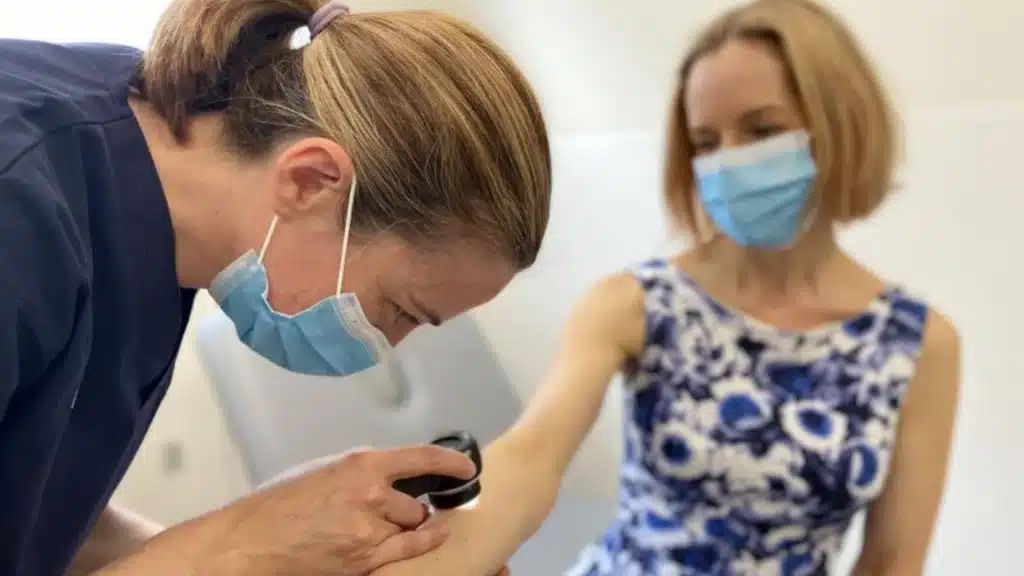
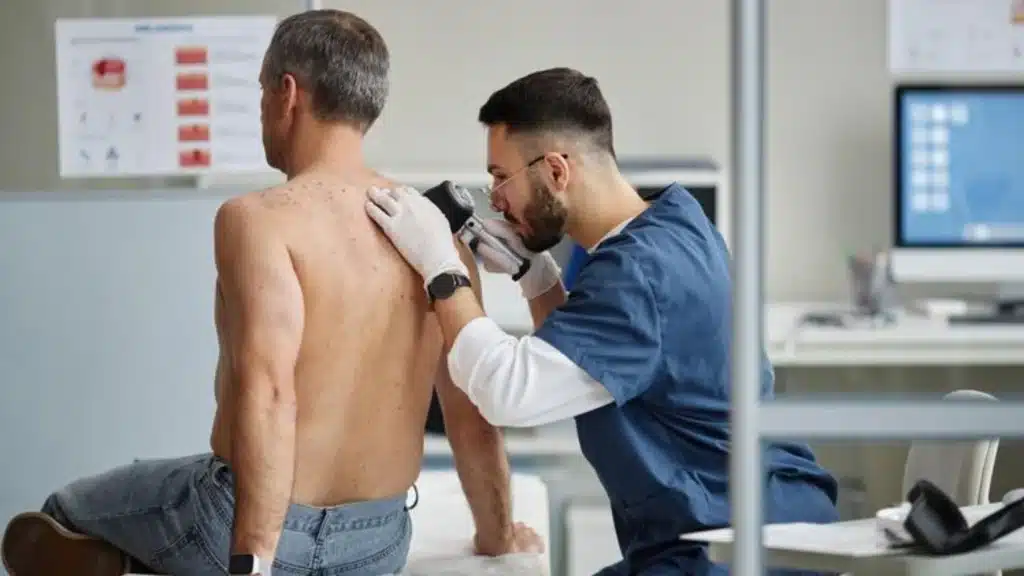
Your doctor will thoroughly inspect your skin from head to foot.
Some areas that are regularly evaluated are:
- Face
- Scalp
- Ears
- Neck
- Chest
- Back
- Arms
- Hands
- Legs
- Feet
Other areas may be investigated, if clinically indicated.
The exam is dignified and conducted in a manner to ensure you are treated with a high degree of privacy and comfort.
Assessment of Suspicious Lesions
All odd-looking moles, patches or growths are carefully examined.
Your doctor evaluates:
- Size
- Shape
- Colour
- Border
- Symmetry
- Surface texture
- Evidence of change
These features help to decide if the lesion is benign or if it needs further evaluation.
Discussion of Findings
Your doctor will discuss the results of the exam and what to do next at the conclusion of the examination.
Based on the results, recommendations could include:
- Routine monitoring
- Regular follow-up appointments
- Clinical photography
- Skin biopsy
- The removal of a suspicious lesion.
- Referral for more care if needed
Many patients come out of the appointment feeling at ease, and others have lesions identified at an early stage which they may have otherwise missed.
How Is Skin Cancer Diagnosed?
If your doctor finds a suspicious lesion at a Skin Cancer Screening in Canberra, they might recommend further tests to determine if it has cancer. While not all unusual places are necessarily skin cancer, the early investigation of these places can lead to a more accurate diagnosis and treatment.
Clinical Assessment
A thorough evaluation of the lesion is the first step. Your doctor will determine its size, colour, border, texture and if there are any changes. They may also be able to make comparisons if there are photographs or records from previous years.
Dermoscopic Examination
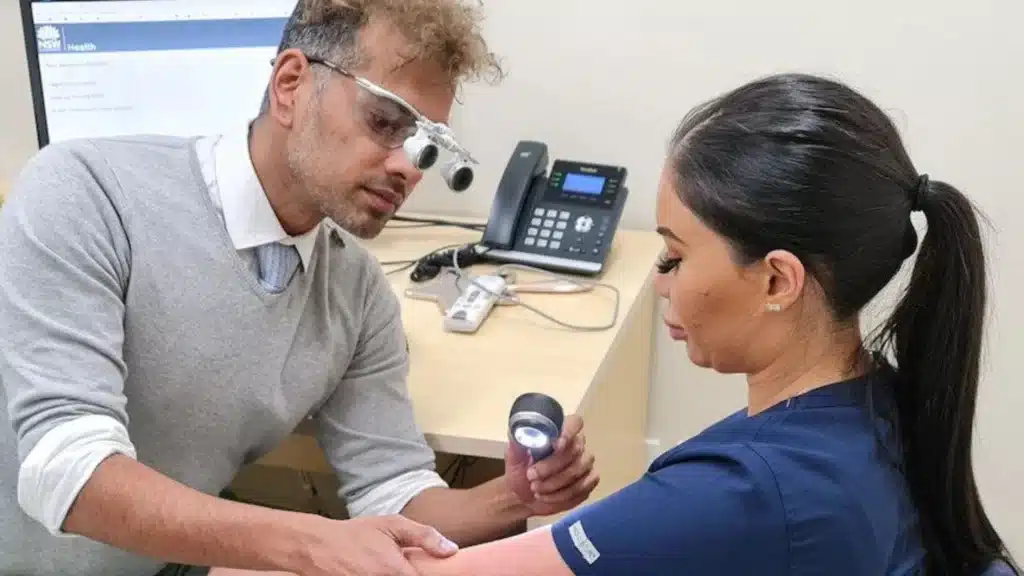
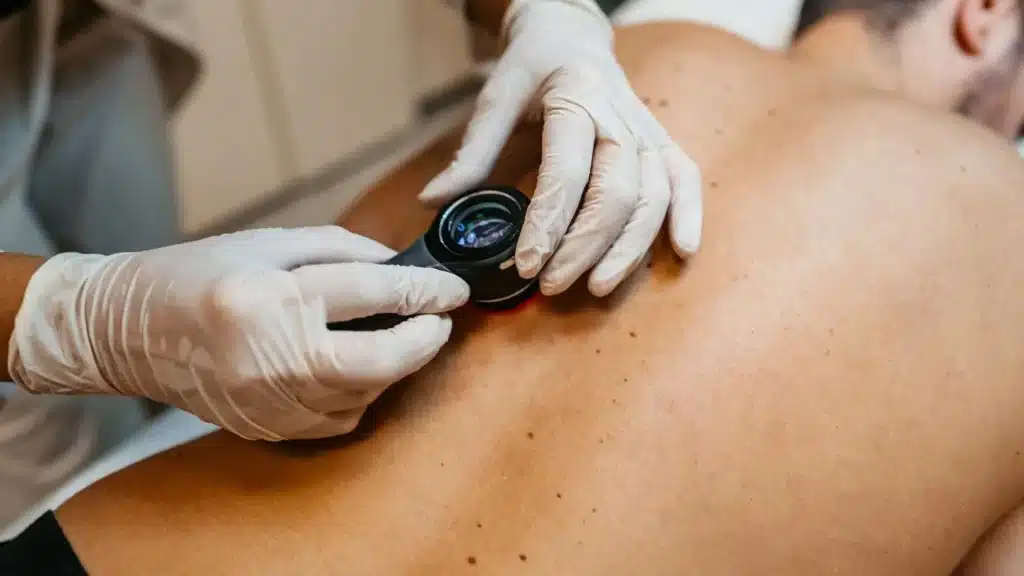
Your doctor may have a special handheld tool called a dermatoscope that will let him see the skin more clearly. It can enlarge the lesion and show features that lie below the skin surface that are not seen with the naked eye.
This exam is useful to differentiate between non-cancerous moles and lesions that might need to be further evaluated.
Skin Biopsy
A skin biopsy might be considered if there is a suspicious looking lesion.
A biopsy is the removal of all or part of the lesion under local anaesthetic. The specimen is then taken to a pathology lab where it is studied with a microscope.
The results contain valuable data such as:
- Determines if cancer cells are found
- The type of skin cancer
- The depth of the lesion
- Whether there is additional treatment that needs to be done.
One of the most accurate ways to make a diagnosis is to have a biopsy.
Understanding the Different Types of Skin Cancer
It is important to know about the different skin cancers.
It is important to be aware of the various types of skin cancer to know why early detection is crucial.
Basal Cell Carcinoma (BCC)
Basal Cell Carcinoma is the most prevalent type of skin cancer. It tends to develop slowly and does not spread to other parts of the body. If not treated, however, it can spread and spread damage to surrounding tissue and skin.
Common signs include:
- A feeling of smoothness and/or shininess of the bump.
- A pink patch
- A wound that healeth and cometh again
- A small growth that has visible blood vessels on it.
A quick diagnosis and early treatment can yield very good results.
Squamous Cell Carcinoma (SCC)
Squamous Cell Carcinoma occurs in the uppermost layers of the skin and is frequently found on parts of the skin that are exposed to the sun frequently.
It may present as:
- Thick, scaly patches
- Firm red lumps
- Crusted sores
- Rough skin that continues to grow
The course of SCC is more likely to spread if treatment is delayed—thus early detection is very important—and the speed of the spread is greater than BCC.
Melanoma
Melanoma is the least common of the three major skin cancers, but is the more serious one because it can spread to other parts of the body if caught late.
Some of the signs may include:
- A new dark mole
- A mole that is growing or becoming discoloured
- Irregular borders
- Several colors in a single growth.
- The quick transformation of one thing to another.
When melanoma is suspected it’s important to make a diagnosis promptly.
Skin Cancer Treatment Canberra
The treatment depends on the type of skin cancer, its size, location and stage when diagnosed.
Your doctor will suggest the best treatment for you.
Surgical Excision: One of the most common therapies for skin cancer is surgical removal. This involves the removal of the cancerous tissue and a margin of healthy skin to help ensure the removal of all the cancer.
Cryotherapy: With cryotherapy, very cold temperatures are applied to remove some abnormal growths that have been harmed by the sun or that are precancerous. It is a fast, non-invasive procedure, which can be applied to certain diseases.
Topical Medications: A few superficial skin cancers and precancerous conditions can be treated using prescription creams that target abnormal skin cells.
Advanced Surgical Procedures: Special surgical methods may be suggested for larger or more complicated skin cancers to remove the cancer while keeping as much healthy tissue as possible. Skin Cancer Screening in Canberra can often help to diagnose skin cancer early, before it’s more advanced.
How to Help Prevent Skin Cancer
In addition to the fact that not all skin cancers can be prevented, there are ways that you can lower your risk for skin cancer by practicing sun-safe habits.
Here are a few simple, but effective, steps for preventing the problem:
- Use broad-spectrum SPF-50+ sun cream before leaving the house.
- Re-apply sunscreen every 2 hours and after swimming or when sweating.
- Wear a broad brimmed hat to protect the face, ears and neck.
- Wear lightweight, light-colored clothes that cover exposed skin.
- Wear sunglasses that provide UV protection.
- Avoid direct sun during high UV times.
- Don’t use tanning beds or expose yourself to artificial UV light.
- Do self checks regularly for any new or changing spots.
- If there is an increased risk factor, get routine skin check canberra.
Sun protection plus regular professional skin exams offer best protection against skin cancer.
Frequently Asked Questions
Q1. Is Skin Cancer Screening painful?
No. A routine skin cancer screening is a non-invasive examination and is generally painless. If a biopsy is needed, a local anaesthetic is used to minimise discomfort.
Q2. How long does a skin cancer screening appointment take?
Most appointments take between 15 and 30 minutes, depending on your medical history and whether any suspicious lesions require closer examination.
Q3. Can skin cancer be treated successfully?
Many skin cancers can be treated successfully when detected early. This is why routine screening and prompt assessment of suspicious skin changes are so important.
Q4. Should I have a skin check if I have no symptoms?
Yes. Many skin cancers do not cause pain or obvious symptoms in their early stages. Regular screening helps identify changes before they become more serious.
Q5. How often should I have my skin checked?
The recommended frequency depends on your personal risk factors, including your skin type, family history, previous skin cancers, and sun exposure. Your doctor can recommend a screening schedule that suits your needs.
Book Your Skin Cancer Screening in Canberra Today
Early detection can make a significant difference to your skin health. If you’ve noticed a new or changing spot, have concerns about a mole, or it’s time for your routine skin check, don’t delay.
Contact At Canberra Skin Cancer Clinic, our experienced team provides comprehensive skin assessments, accurate diagnosis, and personalised treatment plans tailored to your needs. Whether you’re looking for a routine skin check Canberra or expert guidance on Skin Cancer Treatment Canberra, we’re here to help you protect your skin with confidence.
Book your appointment today and take the first step towards early detection and healthier skin.
| Canberra Skin Cancer Clinic- Green Way | Canberra Skin Cancer Clinic- Molonglo Valley |
| Phone: (02) 51046409 | Phone: (02) 51046409 |
| Email: reception@greenwaymedicalcentre.com.au | Email: reception@greenwaymedicalcentre.com.au |
| Address: Unit 6/175 Anketell Street, Greenway ACT 2900 | Address: 110 Woodberry Ave Coombs ACT 2611 |
| Website: https://canberraskincancerclinic.com.au/ | Website: https://canberraskincancerclinic.com.au/ |