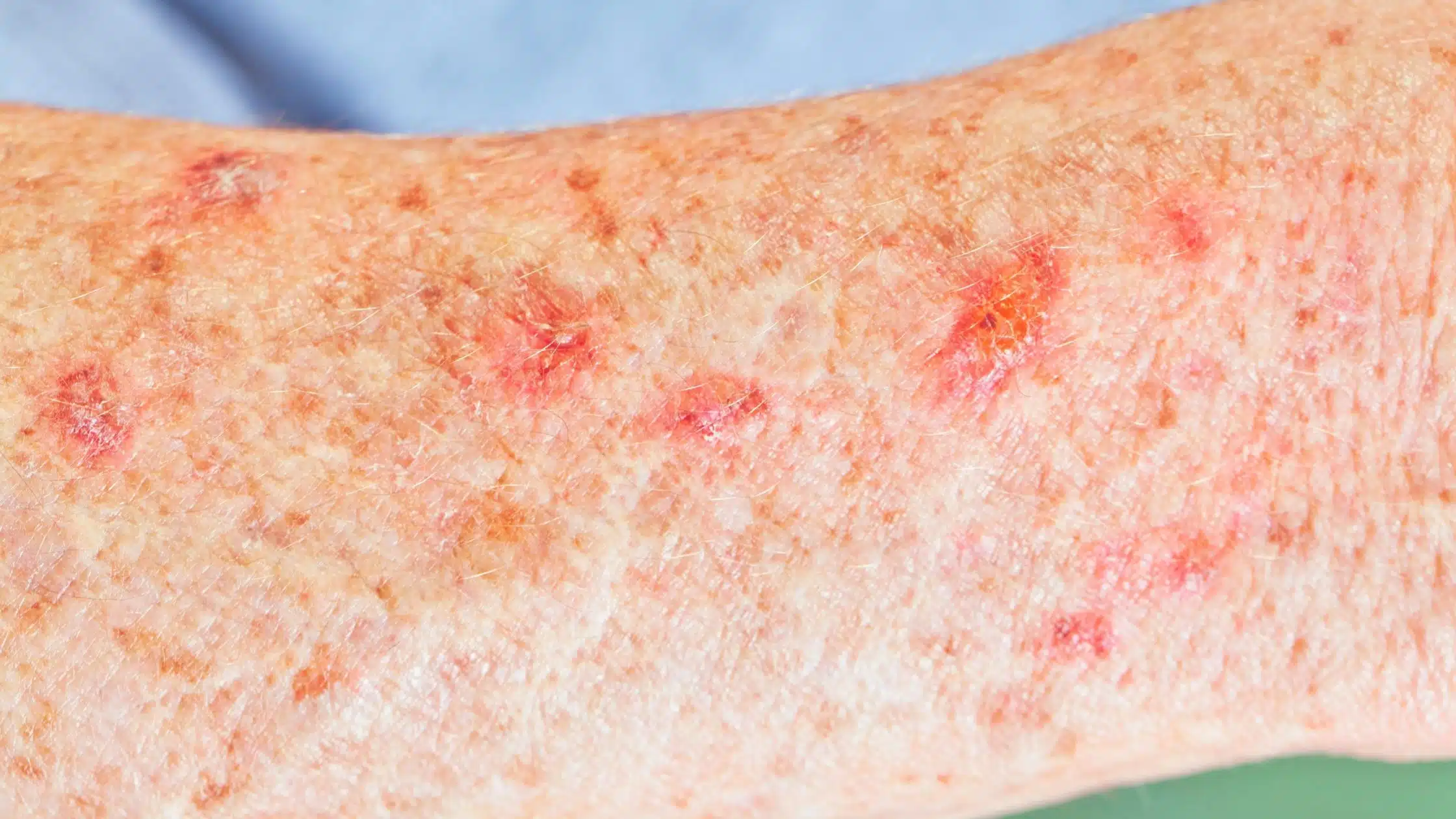
In Canberra, Solar Keratoses (Sun Spots) in Canberra are a common skin change associated with long-term exposure to ultraviolet (UV) radiation. These rough or scaly patches, also known as actinic keratoses, can develop on areas of skin that are frequently exposed to the sun, including the face, ears, scalp, neck, forearms and hands.
A solar keratosis is not a type of skin cancer, but some can progress to squamous cell carcinoma if left untreated. Being aware of the early signs and symptoms is therefore important for timely medical assessment, particularly for people with a history of significant sun exposure.
With regular UV exposure throughout the year, understanding the signs, causes and treatment options for Solar Keratoses can help people recognise changes in their skin and seek appropriate medical evaluation when needed.
What Are Solar Keratoses?
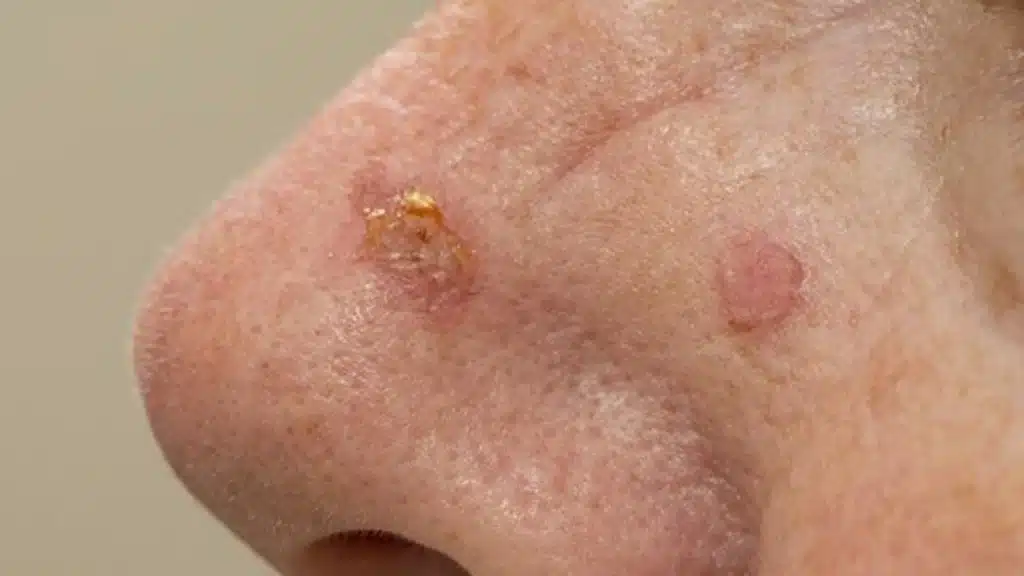
Solar keratoses are damaged patches of skin primarily caused by all of the sun exposure. The destruction will take place over many years, not just one day in the sun.
These can sometimes be noticed as a small rough area that feels different from the rest of the skin. Others are more easily felt than seen, particularly if they are small or on a particular area like the scalp.
It may be in a different colour. It can be skin coloured, pink or red, brown or slightly darker. The surface may be dry, rough/sandpaper. Some lesions stay the same size and others slowly thicken or become more prominent.
Solar keratoses usually are most prevalent in individuals who have spent a lot of time outdoors or had frequent sunburns throughout their life.
Why Are Solar Keratoses Common in Canberra?
These lesions are chiefly caused by UV radiation. Activities like gardening, walking, cycling, sport and recreational activities can lead to regular sun exposure for Canberra’s outdoor lifestyle.
UV exposure can happen even in ‘cool’ temperatures. Therefore, it’s important to not depend solely on how hot or sunny the day feels to determine your need for sun protection.
However, other conditions can also make solar keratoses more likely to happen, such as:
- Increasing age
- Skin type that is fair or sensitive to the sun.
- Frequent sun exposure in the past
- Previous sunburn
- Exposure to the outdoors over an extended period of time.
- Having numerous areas of sun-damaged skin
- A weakened immune system
- Solar keratoses or some skin cancers.
The risk is often higher with repetitive UV exposure over the years, so, for example, years of repeated exposure can be significant to the skin.
Signs of Solar Keratoses to Look For
Knowing what to look for can help you determine when it’s time to seek expert advice.
Rough or Scaly Skin
A scaly, dry or rough patch is one of the most frequently encountered features. When touched, it can feel like fineness sandpaper.
Red or Pink Patches
Pink or red lesions may occur, especially in lighter skin. This color may darken in the sun.
Brown or skin-coloured areas
Solar keratoses may also be brown or be the same colour as the person’s natural skin colour. Sometimes they can be hard to recognize visually.
Persistent Skin Changes
If a patch never clears up and it stays rough or scaly, then it should be looked at, particularly if it’s on an area of the skin that’s exposed to the sun.
Thickening or Increasing Size
If a lesion grows thicker, bigger and more noticeable, please seek the advice of a trained medical expert.
Tenderness or Bleeding
Minor trauma causes some lesions to develop an irritation, be tender or bleed. If the bleeding is persistent, painful, ulcerated or changing rapidly, the subject should be assessed medically.
Please note that not all rough spots are solar keratoses. Other skin conditions, such as eczema, psoriasis, and benign growths can appear similar. A physical exam is required to find out what the probable cause is.
Solar Keratoses and Skin Cancer: Is There a Connection?
Solar keratoses are thought to be pre-cancerous skin changes because some can develop into a squamous cell carcinoma. But just because a person has a solar keratosis, it doesn’t automatically mean that he or she has skin cancer.
The key factor is that these lesions are a sign of prior UV damage. Those who get solar keratoses may also have other skin lesions that are sun damaged or be more susceptible to skin cancer.
This is especially useful for people who have multiple skin lesions or have had extensive sun exposure, for whom continued observation and appropriate Skin Cancer Screening is especially valuable.
If there is any noticeable change in any lesion, the area should be evaluated and not deemed a benign sun spot.
How Are Solar Keratoses Diagnosed?
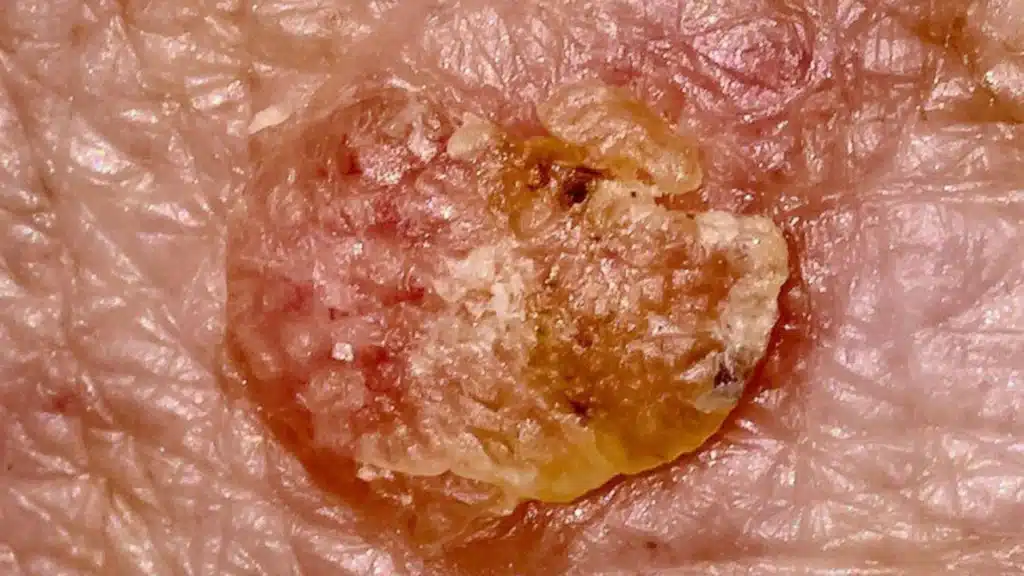
Diagnosis usually starts with a visual examination of the skin. The affected area may be examined in detail by the doctor and its colour, texture, size, location and appearance assessed.
A further evaluation may be suggested if the lesion is of any concern. A biopsy might be necessary if there is doubt about the diagnosis or if the individual is concerned about developing skin cancer.
A biopsy is simply a small tissue sample that is taken to be examined under a microscope. This helps to see if the area is a solar keratosis, another skin condition or a skin cancer.
It may also be advisable to have routine skin checks for those who have more than one suspicious or changing growth, to detect new growths as early as possible.
Treatment Options for Solar Keratoses
Treatment will vary depending on the thickness, number, location, appearance of lesions and general skin condition.
Cryotherapy
Cryotherapy is the controlled freezing of individual lesions. It is often applied to isolated solar keratoses and can be done in an outpatient basis.
The treated area may be red, swollen or blistered before healing. There may also be some temporary colour changes in the skin.
Prescription Creams
Some topical medications are available to treat multiple solar keratoses. Some creams can target more extensive areas of sun damaged skin, rather than just a single visible lesion.
Medicines and period of treatment should be set by a health professional and will vary according to the person.
Curettage and Other Procedures
In some instances, a physician can excise abnormal tissue with a technique. This should be taken into account when the lesion is thick and/or if the lesion is persistent or needs to be examined by a tissue.
Photodynamic Therapy
Selected areas of sun damage may be treated with PDT (photodynamic therapy). It is a procedure of applying a photosensitising agent to the skin that has been affected and then stimulating the agent with the right type of light.
This treatment is only indicated based on clinical assessment and the suitability of the lesion.
Not all treatments are appropriate for all people. A doctor will be able to recommend the best course of action after examining the skin.
Can Solar Keratoses Come Back?
Yes. Treatment can eliminate/remove existing lesions, but can’t undo all absorbed UV damage.
Solar keratoses may recur on the same site or in other locations, especially if further sun exposure occurs. That is why treatment is best used in conjunction with regular monitoring and good sun protection practices.
If one person does have a solar keratosis, it is important to monitor for any new or changing areas of skin.
How to Reduce the Risk of Solar Keratoses
One of the most crucial steps to avoid further damage to the skin is to reduce UV exposure.
Here are some helpful sun protection strategies:
- Use broad-spectrum (SPF 50+), as directed.
- Re-apply sunscreen as needed, especially after swimming or perspiring.
- When outside for longer periods of time, wear protective clothing.
- Wear a wide-brimmed hat to protect the face, ears and neck.
- Wear sunglasses that provide appropriate UV protection.
- Stay in the shade, if possible.
- Minimize unnecessary exposure during high ultraviolet (UV) periods.
- Regularly examine skin for new or developing lesions.
Sun protection should be practised daily, not just when going to a beach or during very hot weather.
When Should You See a Doctor?
If a skin change persists, changes, is painful, bleeding, rapidly growing, or if it is different than the skin around it, a skin change should be medically evaluated.
Professional assessment should also be considered if you have a lot of rough, sun damaged skin, a history of skin cancer, or have had a lot of lifetime exposure to UV.
Solar keratoses often look like the early stages of skin cancer, making it hard to tell the difference. A doctor can evaluate suspicious areas, and decide if more investigation or treatment is needed.
The Importance of Skin Cancer Screening in Canberra
In Canberra, skin cancer screening is a crucial part of medical care.
PTSA can be especially helpful for individuals who frequently get into the sun or have a history of sun-related skin damage.
The doctor may spot lesions that may not seem alarming at home during a professional skin exam. It can also be used to check the general health of the skin instead of a particular mark that can be seen.
Monitoring can be helpful for people who’ve had solar keratoses before, to detect other subtle changes or new lesions earlier.
Skin checks should not be used instead of self-monitoring. Know the usual color and texture of your skin, and tell your doctor if you see any changes.
Solar Keratoses vs Other Types of Sun Spots
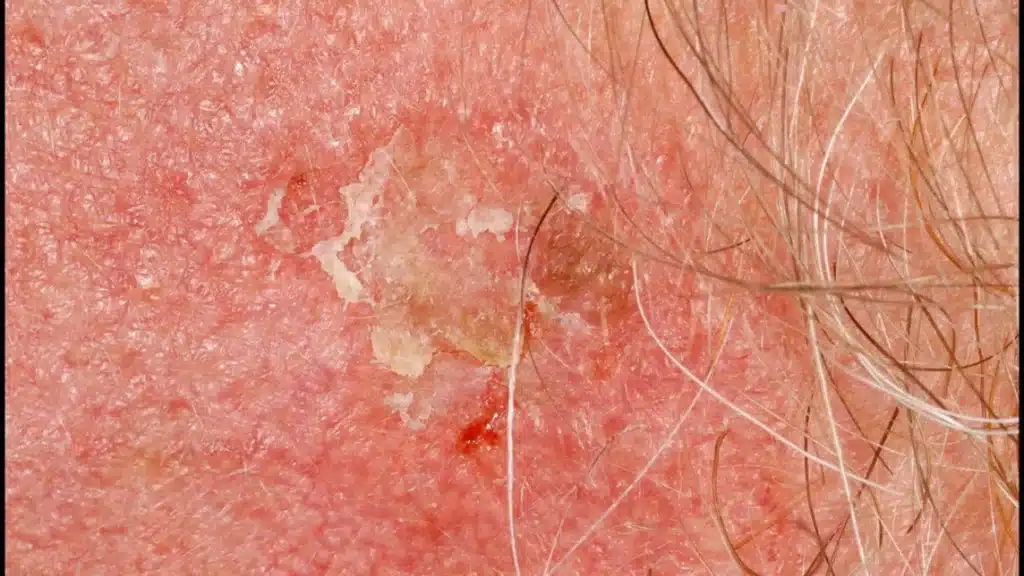
Sun spots is a term sometimes used as a general description for a variety of skin markings that are caused by the sun. Solar keratoses should not be taken for granted as a benign pigmentation like solar lentigines.
Solar keratoses may be rough or scaly due to disruption of the outer layer of skin. Solar lentigines (age spots) are usually flat patches of hyperpigmentation.
The appearance and name of a mark are insufficient to determine a skin condition; it is better to have an unfamiliar or changing mark assessed.
Protecting Your Skin After Treatment
Once treated it is important to keep the treated area as well as the surrounding skin protected from further sun exposure.
Please adhere to the aftercare instructions given by your health care professional. The area may be red, crusted, swollen or sensitive for a short time following treatment as is dependent on the treatment.
Avoid touching healing skin unless told to do so. Once the skin can handle it, continue to use appropriate sun protection.
But most importantly, do not forget that treating solar keratosis does not mean the end of skin monitoring.
Frequently Asked Questions
Q1. Are solar keratoses skin cancer?
Solar keratoses are not the same as skin cancer, but they are considered precancerous changes. Some can progress to squamous cell carcinoma. Professional assessment and appropriate treatment can help manage these lesions and identify suspicious changes.
Q2. Do solar keratoses go away on their own?
Some lesions may become less noticeable, but persistent rough or scaly areas should not simply be ignored. A doctor can determine whether the lesion is a solar keratosis and whether treatment or monitoring is appropriate.
Q3. Can younger people develop solar keratoses?
Yes. Although they are more common with increasing age, younger people can develop them after substantial cumulative UV exposure, particularly if they have experienced repeated sunburn or spend significant time outdoors.
Q4. Should I have a skin check if I have several solar keratoses?
It is sensible to discuss this with a doctor. Multiple solar keratoses can indicate significant sun damage, and a professional examination can assess the affected areas and look for other suspicious skin changes.
Q5. How can I prevent more solar keratoses?
Consistent UV protection is important. Use SPF 50+ sunscreen appropriately, wear protective clothing and hats, seek shade and avoid unnecessary UV exposure. Regularly checking your skin can also help identify new changes.
Final Thoughts
Solar Keratoses (Sun Spots) in Canberra are a visible reminder of cumulative UV-related skin damage. Rough, scaly, persistent or changing patches should not be dismissed simply as ordinary sun spots.
Early assessment can help distinguish solar keratoses from other skin conditions and identify lesions that may require further investigation. Treatment options range from cryotherapy and prescription creams to other procedures, depending on the individual circumstances.
For Canberra residents, combining regular sun protection, self-monitoring and appropriate Skin Cancer Screening is an important part of maintaining long-term skin health. If you notice a new, persistent or changing lesion, arrange a professional skin assessment rather than waiting for it to disappear.
Book Your Skin Check in Canberra
If you notice a rough, scaly or changing sun spot, don’t ignore it. Book a professional skin check in Canberra for timely assessment, early detection and appropriate treatment.
| Canberra Skin Cancer Clinic- Green Way | Canberra Skin Cancer Clinic- Molonglo Valley |
| Phone: (02) 51046409 | Phone: (02) 51046409 |
| Email: reception@greenwaymedicalcentre.com.au | Email: reception@greenwaymedicalcentre.com.au |
| Address: Unit 6/175 Anketell Street, Greenway ACT 2900 | Address: 110 Woodberry Ave Coombs ACT 2611 |
| Website: https://canberraskincancerclinic.com.au/ | Website: https://canberraskincancerclinic.com.au/ |