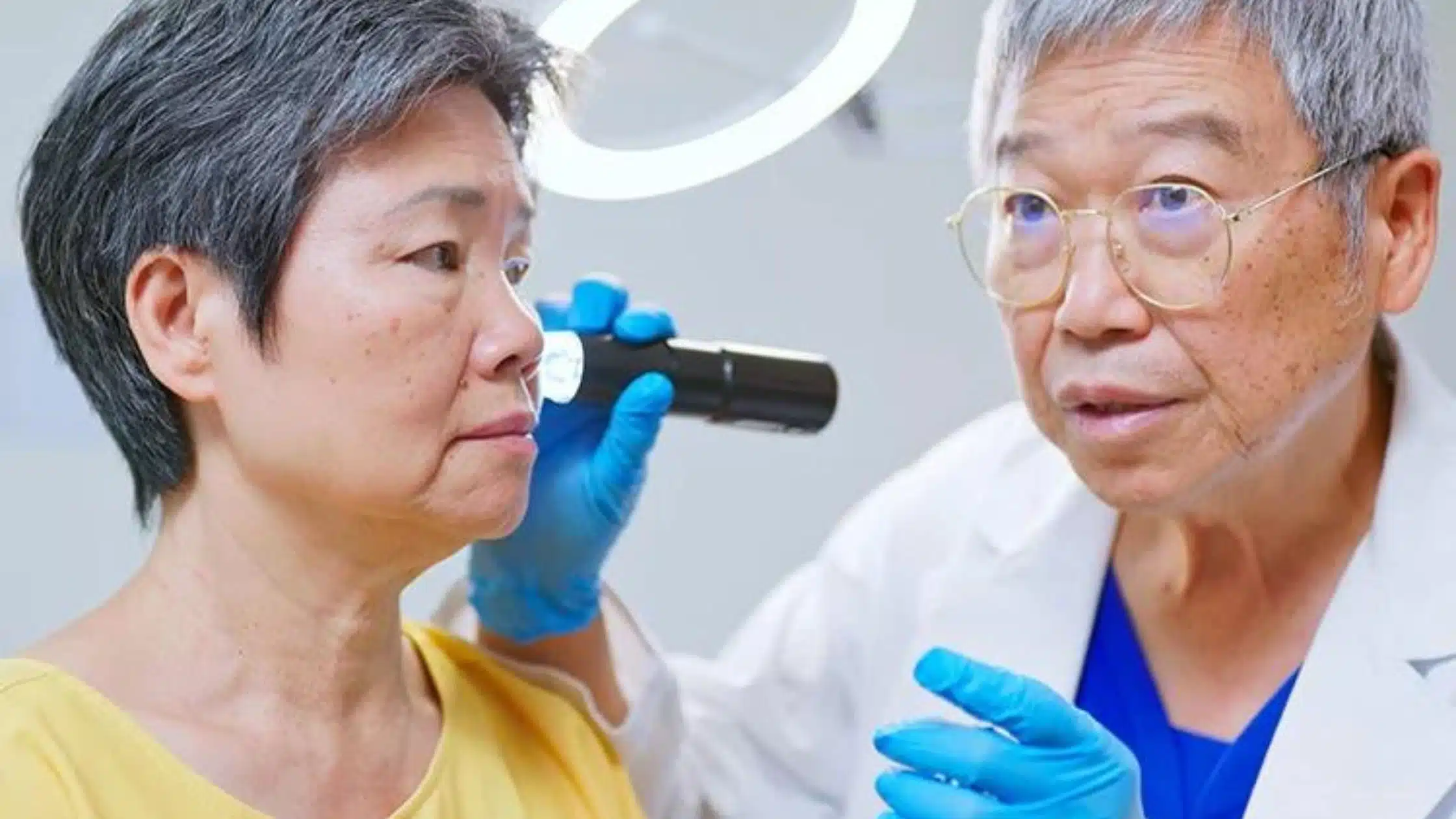
Solar Keratoses (Sun Spots) in Canberra are common signs of long-term sun damage. Also known as actinic keratoses or solar keratoses, they usually appear as rough, scaly or dry patches on areas of skin that receive regular ultraviolet (UV) exposure. Common locations include the face, ears, scalp, neck, hands and forearms.
These spots are not the same as invasive skin cancer, but they indicate that the skin has experienced significant UV damage. Some solar keratoses can develop into squamous cell carcinoma, which is why recognising early changes and arranging appropriate medical assessment is important.
For people living in Canberra, understanding the early signs can make it easier to notice unusual skin changes. Regular outdoor activities, such as walking, cycling, gardening and sport, can contribute to cumulative sun exposure. Learning what to look for, protecting the skin and considering appropriate screening Canberra services can all support early detection.
What Are Solar Keratoses?
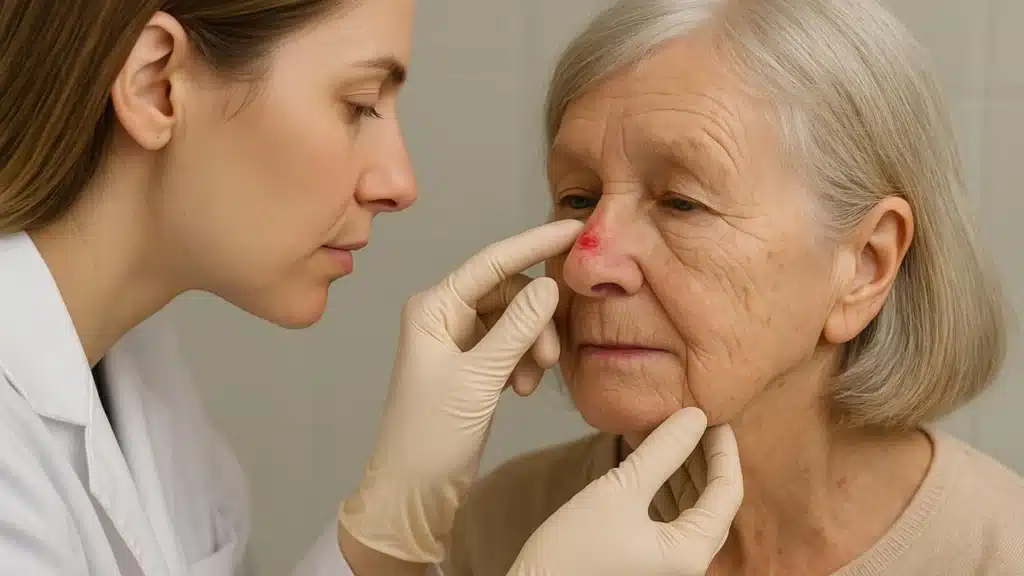
Solar keratoses are also patches of abnormal skin changes, primarily resulting from the repeated exposure to UV radiation. Damage is a slow process over time, due to UV damage to skin cells’ DNA.
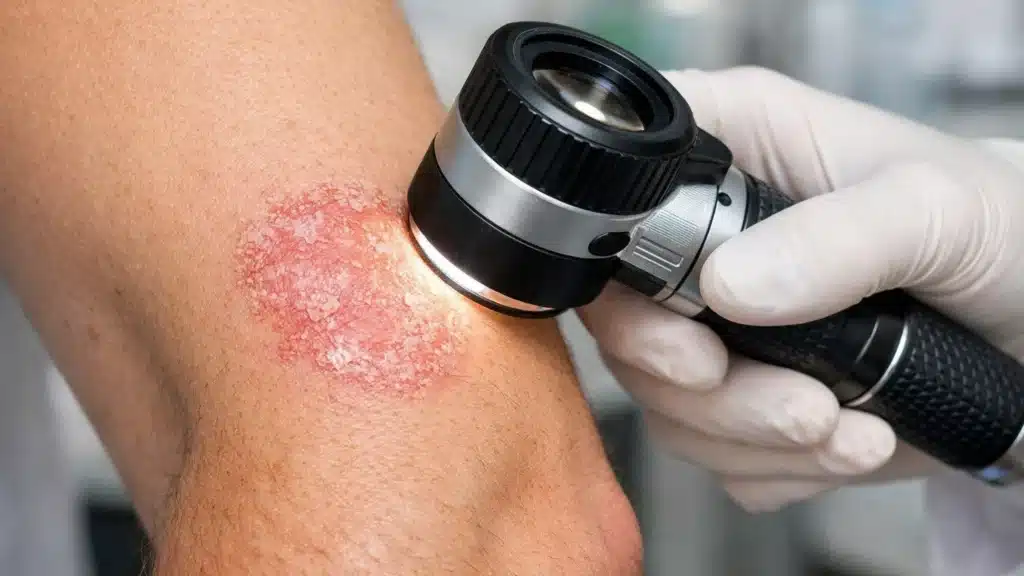
A solar keratosis can start off as a very small area which is harder to see than to feel. When running a finger across the area it can feel rough or gritty. As it grows it can start to get more prominent and the surface can get scaly, crusty or thicker.
The look may be quite diverse. The lesion can have a skin-coloured, pink, red, white, yellow, brown or darker skin colour than the surrounding skin. Some are raised or thickened, others are flat. When the skin around the lesion has been heavily sun damaged, more than one lesion may develop in the same area.
Why Do Solar Keratoses Develop?
Its main cause is the accumulation of UV exposure. Over time, exposure can cause damage to the cells of the skin and raise the risk of developing solar keratoses.
There are multiple risk factors such as:
- Being outdoors for extended periods of time.
- Frequent sun exposure
- Previous sunburn
- Sensitive skin or fair skin
- Increasing age
- An extensive history of severe sun damage
- Having multiple previous solar keratoses
- A weakened immune system
Solar keratoses may occur on any type of skin but are more frequent in people with fair skin and a history of significant sun exposure.
Importantly, it isn’t just very hot summer days that are at risk of UV exposure. Everyday sun protection is important as it can build up over the years.
Early Signs of Solar Keratoses
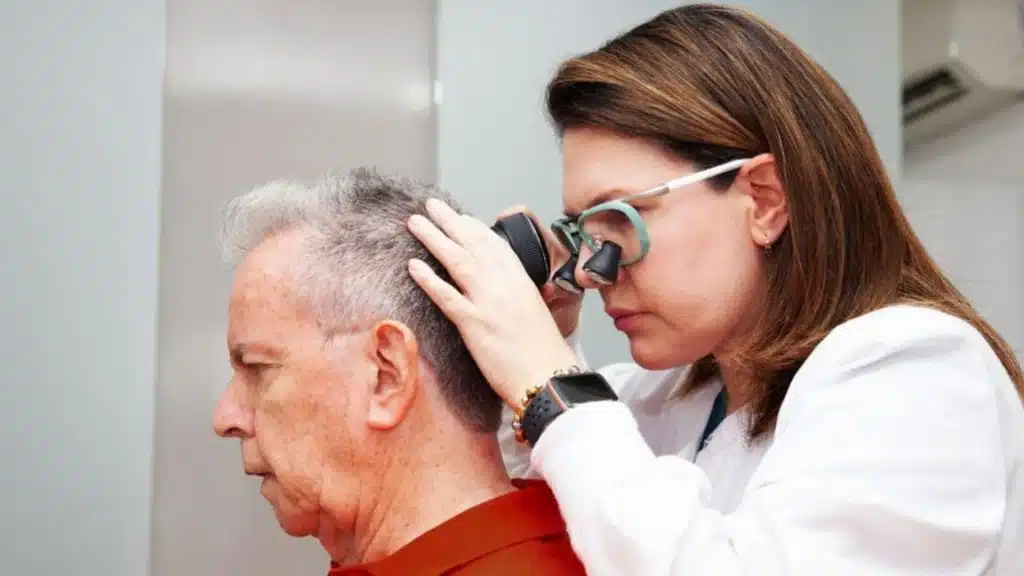
One of the best things you can do is to identify early changes. Not all solar keratoses are easy to see. Sometimes, however, the texture of the skin will give the first clue.
1. Rough or Gritty Skin
One of the first symptoms may be a rough or gritty area.
You might see a small area that feels different to the skin – like fine sandpaper. It can cause a slight change in colour in the beginning, which may not be noticeable.
If the roughness stays in the same spot, particularly if the spot is exposed to the sun often, it should be closely watched and discussed with a doctor if it doesn’t go away.
2. Dry or Scaly Patches
Solar keratoses tend to get dry or scaly. The scale can be very fine initially, and is more noticeable over time.
The patch may appear to have a white, yellowish or flaky surface. Scale removal or picking won’t correct the skin change and will only cause further skin irritation if the lesions are persistent, they should be assessed by a professional.
3. Pink or Red Areas
Patches of pink or red are some early signs. They can be small and have a level appearance which makes them easy to miss.
It is important to recognise that a persistent red area on a sun-exposed area of body does not just equate to irritation and may be associated with roughening or scaling, not necessarily signs of irritation.
4. Skin-Coloured Spots
Not all solar keratoses are red or distinctly discoloured. Several are near to the individual’s natural skin tone.
That’s why it’s helpful to know how the skin feels on the self-check. A patch that is rough or gritty in texture but has not been seen could require assessment.
5. Thickened Skin
A solar keratosis can slowly increase in thickness and/or height.
It is noteworthy to increase thickness since a thick, tender, enlarging or ulcerated lesion may need additional investigation to rule out squamous cell carcinoma.
6. Tenderness or Sensitivity
Some solar keratoses do not cause any symptoms, but others may feel tender, sore or sensitive.
Any unnoticed area that becomes painful and/or becomes more sensitive should be checked, particularly if the area is also thickening and/or changing in appearance.
7. A Persistent Rough Spot
A mark that remains for weeks or months deserves attention rather than being dismissed as temporary dryness.
Not every persistent rough patch is a solar keratosis. Conditions such as eczema, psoriasis, benign growths and skin cancers can sometimes produce similar changes. A professional assessment can help establish the likely cause.
Where Do Solar Keratoses Usually Appear?
Solar keratoses tend to develop in areas that are repeatedly exposed to the sun. Common locations include:
- Face
- Nose
- Forehead
- Ears
- The balding part of the scalp and balding hair
- Neck
- Back of the hands
- Forearms
- Legs
The face and hands are exposed to the sun on a frequent basis with regular outdoor activities, and the scalp and ears can also be exposed to a lot of UV without sufficient protection.
In checking your skin, be sure not to just look at the parts of your skin that are easiest to see. Look for any other places, including the back of the neck, ears and scalp, in the mirror or by having someone else check.
Solar Keratoses and Skin Cancer Risk
Solar keratoses are an indicator of sun damaged skin and can be linked to a higher risk of developing skin cancer. Sometimes they can develop into a skin cancer called cutaneous squamous cell carcinoma.
This is not to say that all solar keratoses will develop into cancer. But some changes warrant immediate medical intervention.
Be particularly aware of a lesion that:
- Becomes noticeably thicker
- Grows quickly
- Becomes painful or tender
- Bleeds repeatedly
- Develops an ulcer
- Changes significantly in appearance
- Does not heal
A thickened, red, scaly lesion or a sore that will not heal should not be assumed to be a solar keratosis and may indicate the presence of squamous cell carcinoma.
In comparison, Solar keratoses are bigger and more numerous than ordinary sun spots.
The term sun spot can sometimes be confusing as it can mean various forms of pigmentation.
Usually solar keratoses are accompanied by rough, scaly or gritty skin. Solar lentigines, also known as age spots, are typically flat brown patches and don’t have the rough texture.
Skin diseases can look alike, so it is often difficult to recognize a skin lesion at home.
When a spot is new, changing, unusual or worrisome, a doctor can check to see if there is a need for further investigation. Cancer Council Australia also advises that medical advice be sought if you have any concerns regarding a skin mark or growth.
Solar Keratoses vs Ordinary Sun Spots
The phrase “sun spot” can sometimes cause confusion because it may refer to different types of pigmentation.
Solar keratoses are usually associated with rough, scaly or gritty skin. Age spots, also called solar lentigines, are generally flat areas of pigmentation and do not have the same rough texture.
Because skin conditions can overlap in appearance, it is not always possible to identify a lesion accurately by looking at it at home.
If a spot is new, changing, unusual or concerning, a doctor can examine it and determine whether further investigation is required. Cancer Council Australia also recommends seeking medical advice when you are concerned about a skin mark or growth.
How Are Solar Keratoses Diagnosed?
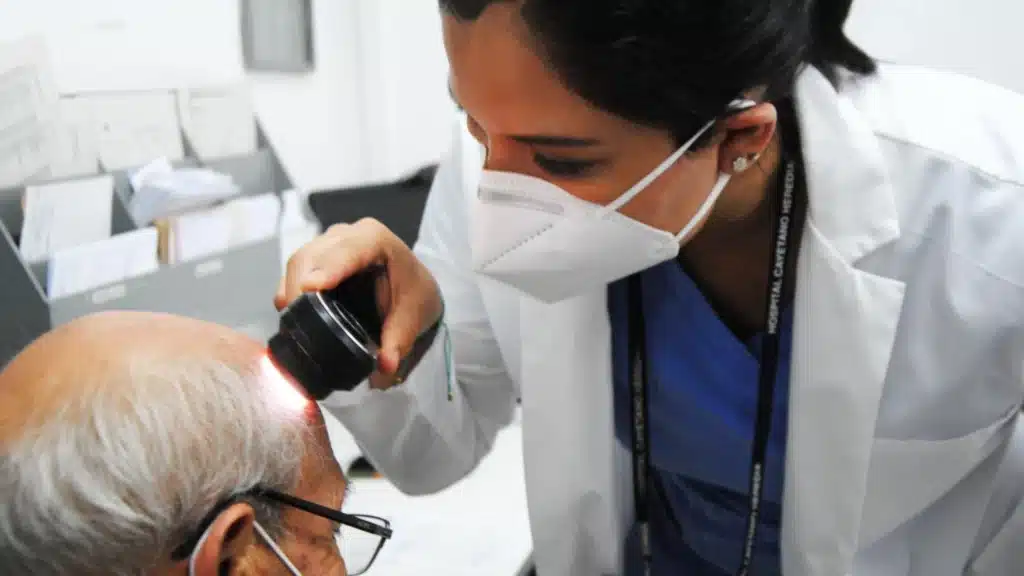
A doctor can often identify a solar keratosis by examining its appearance and texture. A dermatoscope may be used to look at the lesion more closely.
If the diagnosis is uncertain, or if the lesion has features that could indicate skin cancer, a biopsy may be recommended. A biopsy involves taking a sample of the affected tissue for laboratory examination.
This is particularly important when a lesion is thick, rapidly changing, ulcerated or otherwise unusual.
Early assessment can help distinguish solar keratoses from other skin conditions and identify lesions that require additional investigation.
When Should You Arrange a Cancer Skin Check?
A cancer skin check can be useful when you notice new or changing areas of skin, particularly if you have significant sun exposure or a history of skin damage.
You should consider arranging an assessment if you notice a persistent rough patch, a changing spot, an unusual growth or an area that repeatedly bleeds or fails to heal.
Regular self-checks are also important. Cancer Council Australia recommends becoming familiar with your skin and checking for new or changing spots.
A professional assessment is particularly valuable when a spot is difficult to see or when you are unsure whether a change is simply sun damage.
Skin Screening in Canberra
For people looking for screening Canberra services, understanding the purpose of a skin examination is important.
A skin examination can assess suspicious areas and provide an opportunity to identify other sun-related changes. This can be especially relevant for people with multiple solar keratoses or a history of substantial outdoor exposure.
A skin check should not replace regular self-monitoring. Instead, professional assessment and awareness of your own skin can work together.
During a self-check, examine your body in good lighting and use a full-length mirror. A handheld mirror or another person’s help can make difficult-to-see areas easier to examine.
How to Protect Your Skin
Sun protection remains important whether or not you already have solar keratoses.
Practical measures include:
- Use broad-spectrum SPF 50+ sunscreen appropriately.
- Reapply sunscreen as directed.
- Wear a broad-brimmed hat outdoors.
- Choose sun-protective clothing where practical.
- Use sunglasses with appropriate UV protection.
- Seek shade when possible.
- Avoid unnecessary UV exposure.
- Check your skin regularly.
Consistent protection can help reduce further UV damage and is an important part of long-term skin health.
Treatment for Solar Keratoses
If a solar keratosis is diagnosed, treatment depends on factors such as its appearance, thickness, location and number of lesions.
Cryotherapy, which uses liquid nitrogen to freeze the lesion, is one commonly used option. Other treatments may include prescription creams, curettage and photodynamic therapy. The most appropriate treatment depends on the individual lesion and clinical assessment.
Some lesions may require biopsy or removal when there is concern about possible skin cancer.
Treatment does not remove the history of UV damage, so ongoing skin monitoring remains important.
Can Solar Keratoses Return?
Yes. New lesions can develop even after existing solar keratoses have been treated.
This happens because treatment addresses the identified lesion but does not erase all previous UV damage from the surrounding skin. People who have had solar keratoses may therefore continue to develop new areas of sun damage.
For this reason, continue checking your skin and follow any monitoring recommendations provided by your doctor.
Final Thoughts
Solar Keratoses (Sun Spots) in Canberra can begin as subtle changes that are easy to overlook. A rough patch, fine scale, unusual colour or persistent area of irritated skin may be an early sign of sun-related damage.
Although solar keratoses are not the same as invasive skin cancer, they are an important marker of cumulative UV exposure and can sometimes progress to squamous cell carcinoma.
Knowing the early signs, protecting your skin and arranging a professional cancer skin check when you notice something unusual can support earlier assessment.
If you notice a new, persistent, thickened, painful, bleeding or changing spot, do not assume it is simply a sun spot. Arrange an appropriate skin assessment so the area can be properly evaluated.
Book a Skin Cancer Check in Canberra
Noticed a rough, scaly or changing sun spot? Don’t ignore early skin changes. Book a professional skin cancer check in Canberra for timely assessment and appropriate care.
| Canberra Skin Cancer Clinic- Green Way | Canberra Skin Cancer Clinic- Molonglo Valley |
| Phone: (02) 51046409 | Phone: (02) 51046409 |
| Email: reception@greenwaymedicalcentre.com.au | Email: reception@greenwaymedicalcentre.com.au |
| Address: Unit 6/175 Anketell Street, Greenway ACT 2900 | Address: 110 Woodberry Ave Coombs ACT 2611 |
| Website: https://canberraskincancerclinic.com.au/ | Website: https://canberraskincancerclinic.com.au/ |