
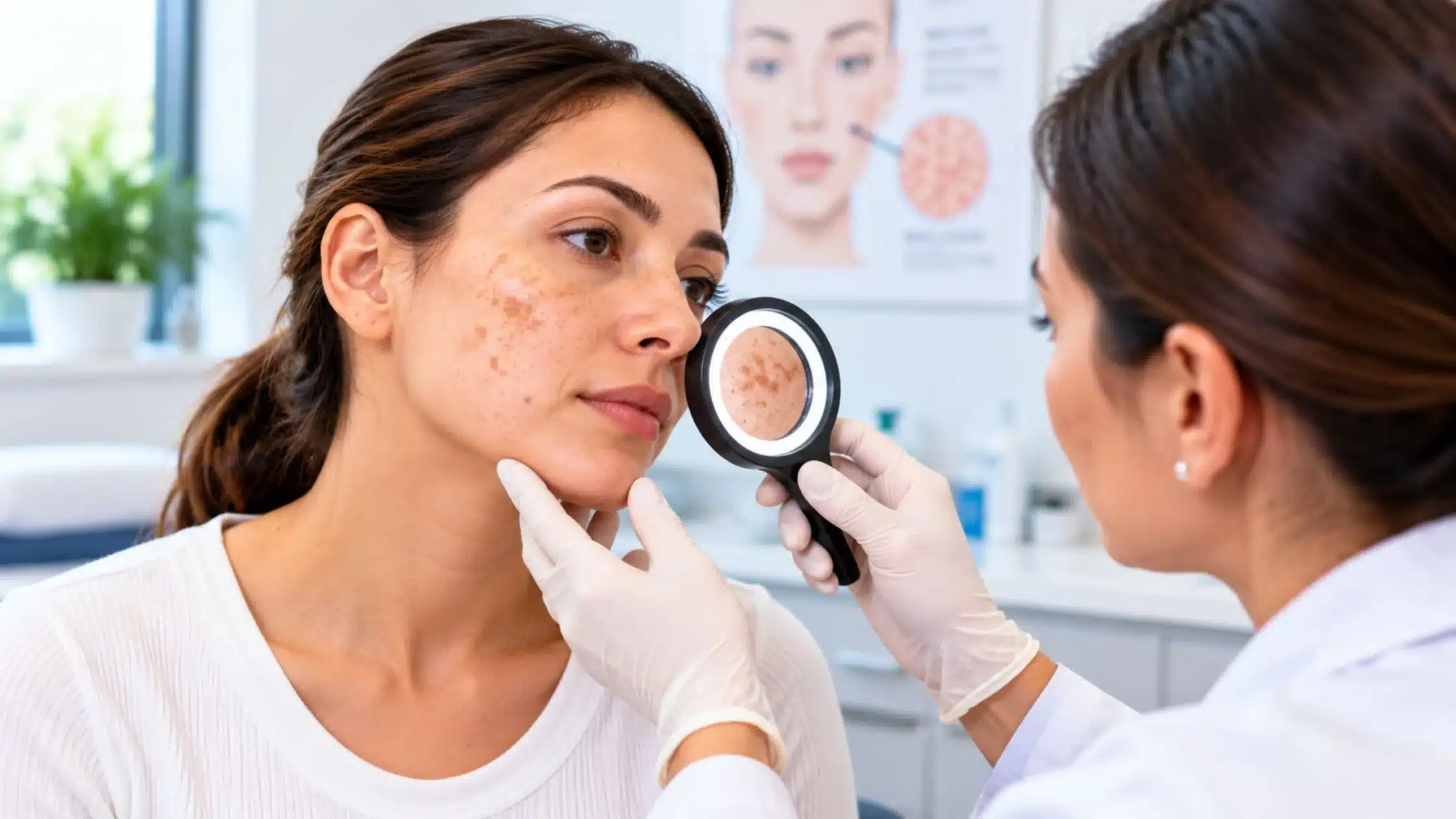
Spots and Blemishes in Canberra: When to Check Your Skin is an important topic for anyone who wants to stay aware of changes in their skin. Spots, moles, freckles, pigmentation and other blemishes are common and are often harmless. However, some skin changes can require professional assessment, particularly when a spot is new, changing or different from other marks on the skin.
Canberra’s outdoor lifestyle means many people spend time walking, cycling, gardening, exercising and participating in sport. Regular exposure to ultraviolet (UV) radiation can contribute to cumulative sun damage and increase the risk of certain skin conditions.
Knowing what is normal for your skin can help you recognise changes sooner. Regular self-checks, appropriate sun protection and professional skin assessments can all play a role in maintaining skin health.
What Are Spots and Blemishes?
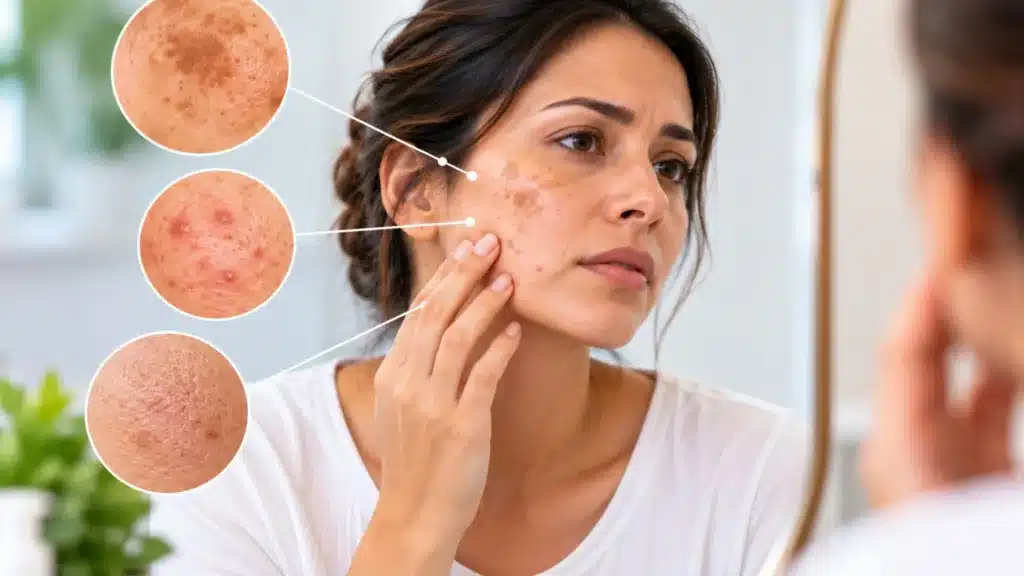
Spots and blemishes are general terms that refer to the changes that can be seen on the skin. They can include freckles, moles, pigmentation, acne marks, solar keratoses, skin tags and other lesions.
These can be either flat or raised and can be skin-coloured, pink, red, brown or black. Some do not change for many years and others can change or develop over a shorter amount of time.
Having a lesion is not sufficient to determine the cause of the lesion. An unloving lesion might appear unusual and a skin cancer might appear to be an ordinary mole or blemish.
It’s important to keep an eye on your skin and consult your doctor if a mole looks different or starts to change.
Why Should You Check Your Skin?
By doing this, it will help you to be familiar with your skin. This will help to identify new marks or changes in the existing marks.
Sometimes, skin changes are not noticeable. A lesion may get darker, larger and more irregular over time without being painful or producing any other apparent symptoms.
Inspecting the skin doesn’t imply that every spot is suspicious. However, it’s not about noticing changes, but knowing when it’s time for professional evaluation.
Individuals who have had extensive sun exposure, skin cancer before, many moles or other known risk factors might need additional attention to skin monitoring.
Common Spots and Blemishes to look for:
Freckles
Freckles are small, flat patches of hyper pigmentation. They tend to show up on the face, shoulders and arms when they’re exposed to the sun.
Freckles can show up more after exposure to the sun, and fade with reduced exposure. In general, they are harmless but may be a sign of past exposure to UV.
It’s important to evaluate a pigmented mark and not presume it is a freckle if it is not the same as your normal freckles or if it changes in features.
Moles
Moles, or naevi, are common skin lesions which may be flat or raised. They may be light brown, dark brown or black.
There are lots of moles that do not change during a person’s life. A mole that does change in appearance, however, should be noticed.
If the size, shape, border and/or colour change, that’s proof enough to provide an evaluation. Crusted or ongoing irritation or bleeding should also be discussed with a healthcare professional as well.
Sun Spots
Solar lentigines, also known as sun spots, are brown patches on the skin that are a result of chronic sun damage.
Typically they are found on the hands, face, forearms and shoulders. Most are harmless, but if the cause of pigmented lesions is unknown, new or changing lesions should be checked.
Solar Keratoses
Solar keratoses, also called actinic keratoses, are rough and scaly from the chronic effects of the sun.
They can be found anywhere on the body that is exposed to the sun, such as the face, scalp, ears, neck, hands and forearms. Some are harder to feel than to see due to their rough feel.
Solar keratoses are a manifestation of skin damage caused by the sun and they may develop into a squamous cell carcinoma. Those that are rough or scaly should therefore be treated professionally, as they may be a sign of persistent acne.
Acne and Other Temporary Blemishes
Not all areas are associated with sun damage and skin cancer. Any skin irritation, insect bite or acne can cause temporary blemishes.
Sometimes inflammation can also leave red or brown marks after the spot has settled. These marks can fade over time but the time period is different for different people.
Persistent or troublesome acne may warrant medical advice, especially if it results in scarring or significant changes in the skin.
When Should You Check a Spot?
Don’t worry if you see a mark on your skin. But there are some changes that are significant to notice.
When in doubt, use a professional to check a spot when:
- It’s new and bizarre
- It is growing in size.
- It is morphing into a new form
- The border starts to become uneven.
- The border begins to curve.
- Its colour changes
- Multiple colors of lesions appear within the affected area.
- It repeatedly bleeds
- It forms a tenacious crust that doesn’t dissolve.
- It starts to itch and is painful.
- It is itchy and painful continuously.
- It does not heal
- It is perceptibly different than other spots
The features listed do not always mean skin cancer. They are indicators that indicate the need to see the lesion and determine the cause properly.
Understanding the ABCDE Approach
When evaluating pigmented lesions, the ABCDE strategy is a good general rule to follow.
A – Asymmetry – one half of the lesion is different from the other half.
B – Border: The edges are not clearly marked, and seem to be irregular, uneven.
C – Colour: There is a change in colour in the lesion or it is different in colour.
D – Diameter: A lesion increasing in size or apparent change in size.
E – Evolving: appearance, size, shape, colour or symptoms change over time.
The ABCDE approach is a guide and not a diagnostic test. Not all skin cancers have all of these features and some harmless skin growths can have one or more of these features.
If there is a significant change, it is better to have it professionally assessed than to attempt an assessment yourself.
What Does a Skin Cancer Specialist Look For?
Lesions can be evaluated by a skin cancer specialist or a qualified medical practitioner who has the appropriate expertise by using both clinical examination and, if applicable, dermoscopy.
When making a diagnosis, the doctor will ask when you noticed a spot and if it has changed. They also might take into account your personal history, prior skin disorders, sun exposure and other pertinent risks.
Dermoscopy can offer a magnified perspective of the structures of a lesion, which cannot be seen by the naked eye. This may help to decide on monitoring, investigation or treatment of a lesion.
A biopsy might sometimes be required if a lesion cannot be determined by examination. A biopsy consists of obtaining tissue for testing.
This will depend on the lesion and clinical features.
Why Canberra Residents Should Consider UV Exposure
There are plenty of outdoor activities in Canberra. There are walking trails, cycling routes, parks, gardens and sporting facilities, which promote time spent outdoors.
But outside activity can also add up to the UV exposure. Exposure to UV rays can prematurely age the skin, cause pigmentation and skin damage.
Importantly, temperature is not the only factor which affects the UV. UV exposure can still occur on a cool, cloudy day.
Using the right sun protection and understanding the UV Index will help minimize unnecessary exposure.
How to Perform a Skin Check at Home
You can do a simple self-check to get to know your skin.
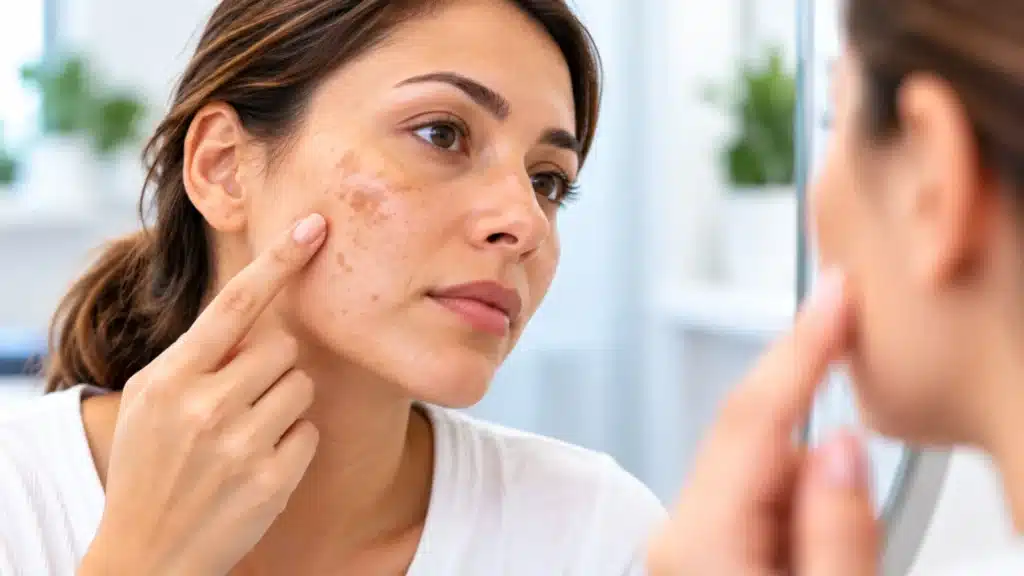
Look in a well-lit area in a room; have a look at your face, neck, chest, arms and legs. Be sure to check areas that are harder to inspect such as the soles of the feet, back, ears and scalp.
Use a hand mirror and full length mirror to see hard-to-reach areas. Include someone you trust in your examination, too, to help you check on things that you can’t inspect on your own.
Search for new growth and/or change in old growth. When you notice something unusual, record the time that you first noticed it.
Photographs may be helpful to compare over time. Nevertheless, photographs are not to be used to diagnose a suspicious area.
Who May Need More Regular Skin Checks?
The need for professional skin assessment varies between individuals.
Those with a history of skin cancer, high sun exposure, many moles, or potentially suspicious moles or family history may have a higher level of concern.
Individuals who are regularly outdoors, such as those who work or are active outdoors, can also be exposed to high amounts of UV over time.
Your healthcare professional can take your personal circumstances into account and recommend if you need regular professional skin checks.
There’s no universal schedule for everyone. The timing of an assessment should depend on the risk of the child and previous assessment results.
What Happens During a Professional Skin Check?
Typically, a skin check by a professional starts with an examination of your own skin condition and any concerns you have had.
Clinicians can examine individual spots or larger areas of skin. If further evaluation is required, a dermoscopic examination can be performed.
If a lesion doesn’t look dangerous, it could be watched. Additional evaluation might be suggested if it shows characteristics that are concerning.
Depending on the situation, this may be follow up assessment, photography, biopsy or treatment.
This goal is to set up a plan that is appropriate for the lesion’s characteristics instead of treating all spots the same.
When Is Urgent Assessment Important?
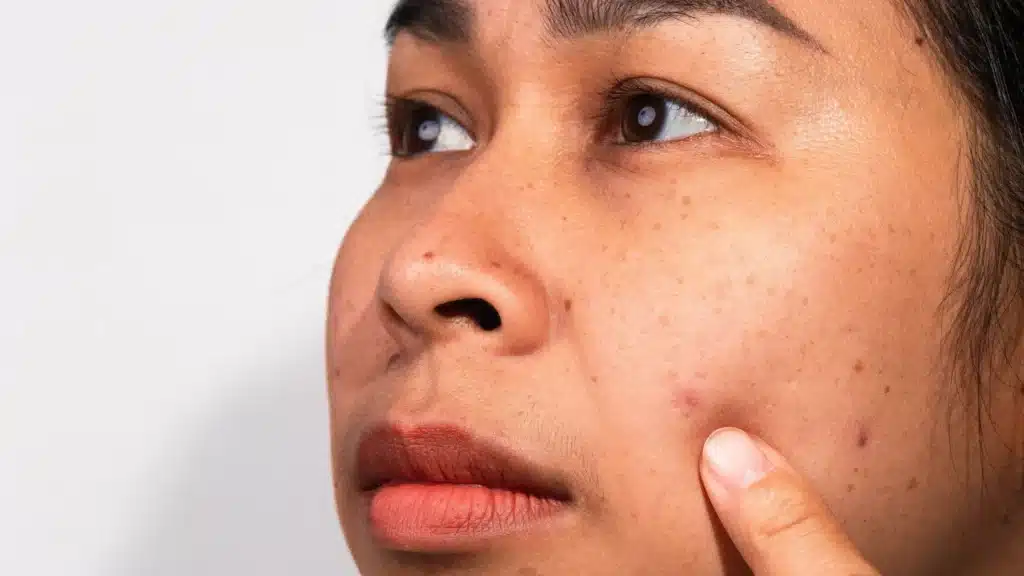
Any lesion that is changing quickly should not be ignored. If a spot starts to change rapidly or frequently bleeds, or if the spot does not heal or develops into a persistent ulceration, seek medical advice.
If any new looking spot is quite unlike the others, try to assess it as well.
Skin cancer does not always cause pain, and if a lesion is changing but doesn’t hurt, it doesn’t mean it is harmless.
When there is uncertainty about a spot, advice from the professional can give a more accurate assessment.
How Can You Protect Your Skin?
UV protection is crucial in the fight to minimise additional UV damage to the skin.
Practical advice if the UV rating is high involves finding cover, wearing appropriate clothing, wearing a broad-brimmed hat and using broad-spectrum sunscreen as per the instructions on the product.
Sunscreen is not the only protection measure and should be applied in conjunction with other protection.
For the Canberra community, a normal part of day-to-day life should be using the sun protection measures as a habit, especially during times of increased UV exposure.
Can Spots and Blemishes Be Prevented?
With some skin spots, prevention is not possible. Many things can affect the way the skin looks, such as genetics, aging and hormonal changes.
Decreasing the amount of unnecessary UV exposure can help to decrease cumulative sun damage. Some changes caused by the sun can also be reduced by protecting the skin from excessive exposure to the sun.
It’s also vital to have good skin awareness. Prevention is not only about not getting any more marks, it is also about identifying change early.
Why Early Assessment Matters
A worrisome area does not necessarily indicate the presence of cancer. A large number of lesions that seem “abnormal” are harmless.
But in some cases skin cancers can be more treatable if they’re caught early. If assessment of a changing lesion is delayed it may be more difficult to assess the duration of the lesion.
Early assessment will be undertaken to determine the cause and determine if monitoring or testing should be undertaken and/or treatment is required.
This is especially important for those who have spotted some new or changing mark that they don’t know if it matters.
Conclusion
Anyone who’s keen to stay in touch with skin changes should think of the following possibilities when dealing with Spots and Blemishes in Canberra.
Common and often harmless freckles, moles, pigmentation, acne marks and solar keratoses. A new or new type lesion should, however, be carefully monitored.
If there is a change in size, shape, colour, border or texture, or bleeding, crusting or not healing, it’s a good time to seek professional evaluation.
In Canberra, UV awareness is particularly important, given the outdoor lifestyle. Regular sun protection, self-checks and appropriate professional assessment can help you take a proactive approach to skin health.
If you find a spot that you think is something different than the rest of your skin or a spot that you’re worried about, talk to a knowledgeable health care provider or skin cancer specialist. With a proper examination we can assess if the lesion can be monitored or further investigated.
Frequently Asked Questions
Q1. How often should I check my skin?
There is no single schedule that suits everyone. Regularly looking over your skin can help you recognise new or changing lesions. People with higher individual risk may be advised to have professional checks at intervals recommended by their healthcare professional.
Q2. What changes should I look for in a mole?
Look for changes in size, shape, border or colour. Also pay attention to bleeding, crusting, persistent itching or tenderness. A mole that becomes noticeably different from your other moles should be professionally assessed.
Q3. Can harmless spots look unusual?
Yes. Some benign lesions can have irregular features or unusual pigmentation. Appearance alone cannot reliably establish whether a lesion is harmless. Professional examination can help determine whether monitoring or further investigation is appropriate.
Q4. Does every new spot need to be removed?
No. Removal is not necessary for every new spot. The appropriate approach depends on the type of lesion, its characteristics and any relevant symptoms or risk factors. Some lesions can simply be monitored.
Q5. Is sun protection important in Canberra?
Yes. UV exposure can contribute to cumulative skin damage, pigmentation, solar keratoses and skin cancer. Using shade, protective clothing, hats and sunscreen when appropriate can help reduce unnecessary UV exposure.
Concerned about Spots and Blemishes in Canberra? Book a professional skin check today and get expert advice on any new or changing skin spots.
| Canberra Skin Cancer Clinic- Green Way | Canberra Skin Cancer Clinic- Molonglo Valley |
| Phone: (02) 51046409 | Phone: (02) 51046409 |
| Email: reception@greenwaymedicalcentre.com.au | Email: reception@greenwaymedicalcentre.com.au |
| Address: Unit 6/175 Anketell Street, Greenway ACT 2900 | Address: 110 Woodberry Ave Coombs ACT 2611 |
| Website: https://canberraskincancerclinic.com.au/ | Website: https://canberraskincancerclinic.com.au/ |