

Spots and Blemishes in Canberra are common skin changes that can develop for many different reasons. Some are linked to normal pigmentation, ageing, blocked pores or minor inflammation, while others can be associated with long-term sun exposure. Most spots are harmless, but a new or changing mark should not be ignored.
Canberra has an active outdoor lifestyle, with many people enjoying walking, cycling, gardening, running and outdoor sport. Regular exposure to ultraviolet (UV) radiation can contribute to visible skin changes over time. Freckles, sun spots, solar keratoses and other pigmented marks may become more noticeable as cumulative sun exposure increases.
Understanding the common types and causes of skin spots can make it easier to recognise changes. It can also help you understand when a professional assessment or cancer skin check may be appropriate.
What Are Spots and Blemishes?
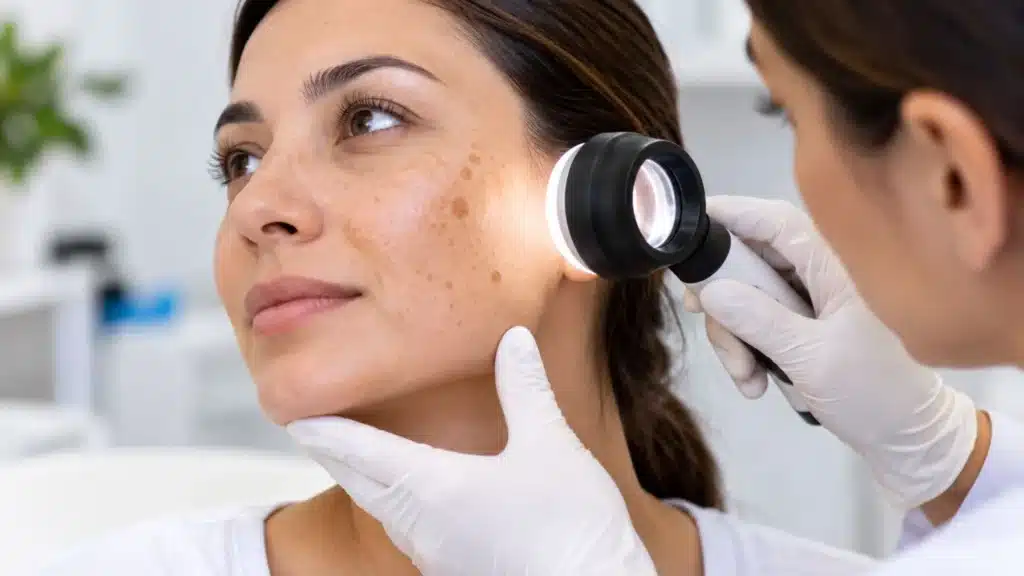
Spots and blemishes are broad terms which describe noticeable changes to the skin. They can look like flat spots, small bumps, raised spots, scaly spots or darker spots.
They are skin coloured, pink, red, brown or black in colour. Some may stay the same for many years, others may develop or change, within a relatively short period of time.
Just because a spot appears doesn’t mean that you know what caused it. There are a number of skin diseases that may be similar, especially in the initial phases. That’s why it’s best to have a health care worker examine a changing or unusual spot, not diagnose it from a picture on the web.
Certain spots are temporary, for example from acne, or irritation. Some other abnormalities, such as moles and pigmentation, can last for years. The important thing to understand is knowing what is normal for skin and seeing significant changes.
Common Types of Spots and Blemishes
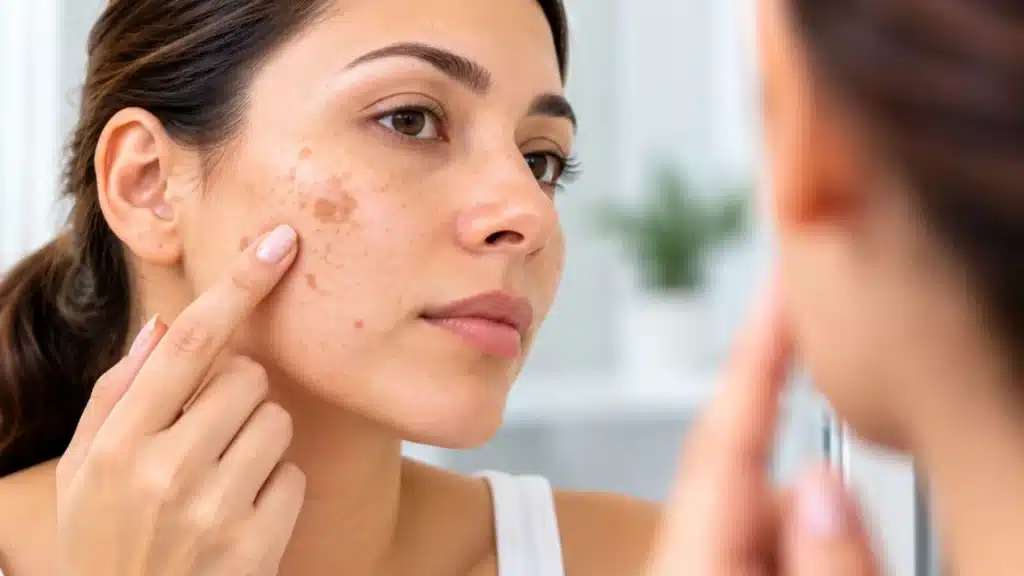
There are many types of skin marks that people may notice during their lifetime. The following are some of the more common examples.
Freckles
Freckles are small, flat areas of increased pigmentation. They are usually light brown or darker brown and commonly occur on areas exposed to sunlight.
Freckles can become more visible after periods of increased sun exposure. They may become less noticeable when UV exposure is reduced.
Freckles are generally harmless. However, having many freckles can indicate a history of considerable sun exposure, so regular skin awareness and sun protection remain important.
Moles
Moles, medically known as naevi, are common skin lesions. They may be flat or raised and can range from light brown to dark brown or black.
Many moles are stable and harmless. However, changes in an existing mole deserve attention.
Changes can include an increase in size, an alteration in shape, uneven borders or changes in colour. Bleeding, crusting, persistent itching or tenderness may also warrant medical assessment.
It can be useful to become familiar with the moles already present on your skin. Knowing what they normally look like makes it easier to notice changes.
Solar Lentigines
Solar lentigines are flat, brown areas of pigmentation associated with cumulative sun exposure. They are often called sun spots or age spots.
They commonly occur on areas such as the face, backs of the hands, shoulders, forearms and other areas that receive regular UV exposure.
Most solar lentigines are benign. However, a new pigmented mark should not automatically be assumed to be an age spot. If it develops an unusual appearance or changes over time, professional assessment can help establish the cause.
Acne and Post-Acne Marks
Acne is another common cause of visible spots and blemishes. It can produce blackheads, whiteheads, inflamed pimples and deeper lesions.
Acne commonly affects the face, chest, shoulders and back. After inflammation settles, red or brown marks may remain.
Some people also develop acne scars, particularly after deeper or persistent acne. Picking and squeezing spots can increase inflammation and the risk of scarring.
If acne is persistent or causing significant skin changes, appropriate medical advice can help determine suitable treatment.
Skin Tags
Skin tags are small, soft growths that commonly develop where skin rubs against skin or clothing. They may occur around the neck, underarms, eyelids or other skin folds.
Most skin tags are harmless. They may remain unchanged for long periods.
A growth that suddenly changes in appearance, bleeds or does not resemble a typical skin tag should be assessed rather than assumed to be harmless.
Solar Keratoses
Solar keratoses, also called actinic keratoses, are rough or scaly areas caused by long-term UV exposure.
They commonly occur on sun-exposed areas such as the face, ears, scalp, neck, forearms and hands. A solar keratosis can sometimes be easier to feel than see because the affected area may feel rough, dry or similar to fine sandpaper.
Solar keratoses are different from ordinary pigmentation. They are a sign of sun-damaged skin and can sometimes progress to squamous cell carcinoma.
For this reason, persistent rough or scaly areas should be assessed by an appropriate medical professional.
Common Causes of Spots and Blemishes in Canberra
The causes of Spots and Blemishes in Canberra can vary from person to person. Several factors may contribute to visible skin changes.
UV Exposure
UV radiation is one of the major environmental factors affecting the skin. Repeated exposure can contribute to freckles, pigmentation, solar lentigines, solar keratoses and skin cancers.
UV damage is cumulative. This means that the effects of years of exposure may become more visible later in life.
People who spend considerable time outdoors should take practical measures to protect their skin. This includes using shade, protective clothing, hats and sunscreen when appropriate.
Ageing
Skin naturally changes as people age. Pigmentation can become more noticeable, and new benign lesions may develop.
However, ageing should not be used as an explanation for every new spot. A new or changing lesion still deserves attention, especially when it has unusual characteristics.
Hormonal Changes
Hormonal changes can influence pigmentation and acne. Some people develop darker areas of pigmentation during particular periods of life.
Hormonal influences can also affect oil production and contribute to acne breakouts.
Persistent or unusual pigmentation should be discussed with a healthcare professional if its cause is uncertain.
Inflammation
Inflammation can leave temporary marks on the skin. Acne, insect bites, irritation and some skin conditions can result in red or brown areas after the original inflammation has settled.
This is often referred to as post-inflammatory pigmentation.
These marks may gradually fade, although the time required can differ between individuals.
Genetics
Genetic factors can influence skin type, pigmentation, freckles and the number and appearance of moles.
Family history can also be relevant when assessing individual skin cancer risk. People with certain risk factors may benefit from regular professional skin assessments.
How Canberra’s Environment Can Affect Skin
Canberra residents may spend significant time outdoors throughout the year. Activities such as gardening, cycling, walking, running and sport can increase cumulative sun exposure.
The cooler temperatures experienced during parts of the year do not necessarily mean UV radiation is low. UV exposure can occur even when the weather does not feel particularly hot.
Sun protection should therefore be based on UV conditions rather than temperature alone.
Regular protection can help reduce additional UV damage and may reduce the development of further sun-related skin changes.
When Could a Spot Be Concerning?
Most skin spots are not cancerous. However, some skin cancers can initially resemble ordinary moles, freckles, blemishes or areas of pigmentation.
A spot may need closer attention if it is new or noticeably different from the surrounding skin.
Warning signs can include:
- A noticeable change in size
- A change in shape
- An irregular or uneven border
- Several colours within the same lesion
- Persistent crusting or scaling
- Unexplained bleeding
- A sore that does not heal
- Persistent itching or tenderness
- A lesion that continues to change
These features do not automatically mean that a spot is cancerous. They indicate that professional assessment may be appropriate.
Spots and Blemishes and Skin Cancer
Some Spots and Blemishes are related to sun damage, while others have no connection with skin cancer.
Skin cancer can develop in several forms. Basal cell carcinoma may appear as a persistent sore, shiny lesion or area that repeatedly crusts. Squamous cell carcinoma may present as a scaly, thickened or crusted lesion. Melanoma may develop within an existing mole or appear as a new pigmented lesion.
Skin cancers do not always follow a single visual pattern. Some may be subtle, especially in their early stages.
This is why a professional examination can be important when a lesion looks unusual or changes over time.
Why a Cancer Skin Check Can Be Important
A cancer skin check involves examining the skin for lesions that may require monitoring, investigation or treatment.
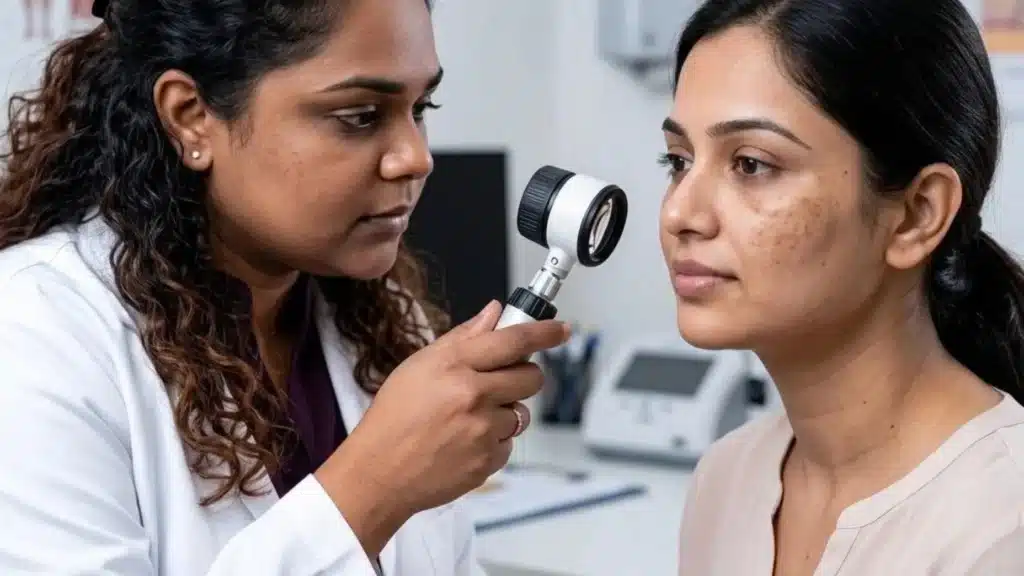
During an examination, a healthcare professional may assess moles, pigmentation, new spots and other lesions. Dermoscopy may be used to examine structures within the skin that are difficult to see with the naked eye.
If a lesion appears suspicious, the next step may involve monitoring or further investigation. A biopsy may be recommended when tissue examination is needed to establish a diagnosis.
The frequency of skin checks varies between individuals. A person’s previous skin cancer history, sun exposure, number of moles, family history and other risk factors may influence how often professional assessment is recommended.
Skin Cancer Clinics in Canberra
People searching for skin cancer clinics in Canberra may find different services and approaches between providers.
Some clinics specialise in skin cancer assessment, while others offer broader medical services alongside skin checks. When considering an assessment, it can be useful to understand what examination and follow-up services are available.
Professional skin assessment can be particularly useful when you have noticed a new or changing lesion and are unsure about its cause.
A skin check should complement, rather than replace, regular awareness of your own skin.
How to Monitor Spots at Home
Regular self-checks can help you become familiar with your skin.
Look at areas that are easy to see, such as the face, neck, arms and legs. Also remember areas that can be overlooked, including the scalp, ears, back, between the toes and the soles of the feet.
A mirror can help you examine difficult areas. You can also ask another person to help check areas that are difficult to see.
If you notice a new or changing lesion, note when you first noticed it. Taking a clear photograph may assist with monitoring changes, but photographs should not replace medical assessment when a lesion appears suspicious.
Protecting Your Skin from UV Damage
Sun protection is an important part of reducing further UV-related skin damage.
Practical measures include seeking shade, wearing protective clothing, using a broad-brimmed hat and applying broad-spectrum sunscreen according to the product directions.
Sunscreen works best as part of a broader sun-protection strategy.
People who spend time outdoors in Canberra should consider sun protection during activities such as gardening, cycling, walking and outdoor sport.
Checking the UV Index can also help you understand when stronger sun protection measures are appropriate.
When Should You Have a Spot Checked?
Consider professional assessment if a spot is new, changing or clearly different from other marks on your skin.
You should also seek advice if a lesion repeatedly bleeds, crusts, becomes persistently itchy, becomes painful or fails to heal.
It is not always possible to identify the cause of a lesion by looking at it yourself. A professional examination can help determine whether the mark is likely to be harmless or whether further investigation is required.
Early assessment does not necessarily mean that a lesion is serious. It simply provides an opportunity to establish what the change represents and decide on the appropriate next step.
Can Spots and Blemishes Be Prevented?
Not every spot or blemish can be prevented because factors such as genetics, ageing and hormonal changes cannot always be controlled.
However, some sun-related skin changes can be reduced by limiting unnecessary UV exposure.
Using shade, protective clothing, hats and sunscreen can help reduce cumulative UV exposure. Avoiding deliberate tanning is also important because tanning represents a response to UV exposure.
Good general skin care can also help reduce irritation and support the skin barrier.
Treatment Depends on the Cause
There is no single treatment for all spots and blemishes. Treatment depends on the underlying cause.
Acne may require topical or prescription treatment. Some pigmentation may simply be monitored, while other benign changes may be treated for medical or cosmetic reasons.
Solar keratoses may require treatment because of their association with sun damage and potential progression. Suspicious lesions may require biopsy or removal depending on the clinical findings.
For this reason, treatment should generally follow an appropriate assessment rather than being selected based only on how a spot looks.
Conclusion
Spots and Blemishes in Canberra can develop for many reasons, including UV exposure, ageing, genetics, hormonal changes, acne, inflammation and normal skin pigmentation.
Many skin marks are harmless, but a new or changing lesion should not be ignored. Changes in size, shape, colour, texture, bleeding or healing can indicate that professional assessment is appropriate.
Canberra’s outdoor lifestyle makes UV awareness especially important. Regular sun protection, familiarity with your skin and appropriate professional checks can all form part of good skin health.
If you notice an unusual or changing spot, consider arranging a professional assessment. A cancer skin check can help identify lesions that may require monitoring or further investigation and can provide a clearer understanding of your skin health.
Frequently Asked Questions
Q1. What are the most common Spots and Blemishes?
Common examples include freckles, moles, solar lentigines, acne marks, skin tags and solar keratoses. Their causes and characteristics differ, so an unusual or changing lesion should be professionally assessed rather than diagnosed from appearance alone.
Q2. Can sun exposure cause spots and blemishes?
Yes. Long-term UV exposure can contribute to freckles, pigmentation, solar lentigines and solar keratoses. Cumulative UV exposure is also an important risk factor for skin cancer, making sun protection an important part of skin care.
Q3. Are all unusual skin spots cancerous?
No. Many unusual-looking spots are benign. However, some skin cancers can resemble harmless marks. A lesion that changes, bleeds, crusts or fails to heal should be assessed by a suitable healthcare professional.
Q4. When should I have a cancer skin check?
A cancer skin check may be appropriate when you notice a new or changing lesion or have recognised risk factors such as previous skin cancer or significant sun exposure. A healthcare professional can recommend an appropriate checking schedule.
Q5. Can Spots and Blemishes disappear naturally?
Some temporary blemishes, particularly those caused by acne or inflammation, may gradually improve. Other marks, such as moles and sun-related pigmentation, may remain stable. Persistent or changing lesions should be assessed when there is uncertainty about their cause.
Concerned about Spots and Blemishes in Canberra? Book a professional skin check today for expert assessment of new or changing skin spots.
| Canberra Skin Cancer Clinic- Green Way | Canberra Skin Cancer Clinic- Molonglo Valley |
| Phone: (02) 51046409 | Phone: (02) 51046409 |
| Email: reception@greenwaymedicalcentre.com.au | Email: reception@greenwaymedicalcentre.com.au |
| Address: Unit 6/175 Anketell Street, Greenway ACT 2900 | Address: 110 Woodberry Ave Coombs ACT 2611 |
| Website: https://canberraskincancerclinic.com.au/ | Website: https://canberraskincancerclinic.com.au/ |