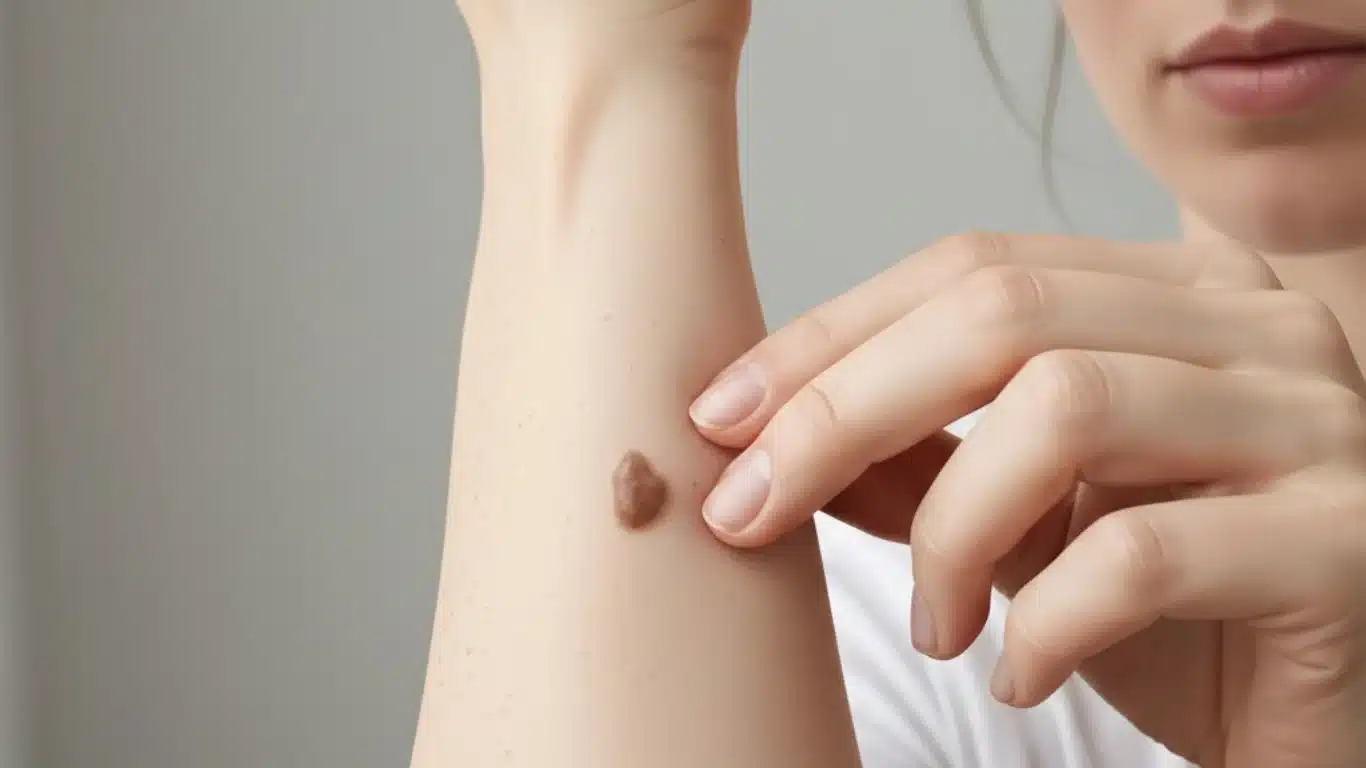
Regular examinations are significant, and there are symptoms which need urgent treatment.
In case there are any abnormal alterations in your skin it is prudent to make an appointment with a professional as early as possible.
Warning signs may include:
- A mole which varies in magnitude, form or colour.
- An area that is bleeding or itchy.
- A sore, which does not get healed in some weeks.
- An appearance of a new mole.
- An irregularly-bordered lesion.
Looking for a skin check cancer around me when I have these symptoms can help me to make sure that I get medical attention as soon as possible.
In early diagnosis, the results of the treatment are highly successful.
Bridesmaids: How to Take Care of Your Skin in the Sun
These preventive measures are significant to the minimization of the risk of skin cancer.
The risk of skin damage can be reduced significantly by taking daily habits of sun protection.
Use Sunscreen Regularly
Use sunscreen of SPF 30 or more when outdoors.
Sunscreen must be applied again after every two hours, particularly where the outdoor activities are long.
Wear Protective Clothing
The clothes give an extra protection against the UV radiation.
Protective measures that may help are:
- Long-sleeved shirts
- UV protective sunglasses
- Wide-brimmed hats
Find Shade on the Sunniest Days
The rays of the sun are greatest in mid-morning time and in mid-afternoon.
When at all possible, find some shade during these periods in order to minimize direct exposure.
Perform Regular Self-Checks
Self-examining enables you to detect the changes in time.
Check new or suspicious spots on such areas as:
- The back
- The scalp
- The neck
- Behind the ears
In case something wrong appears, it may be a good idea to visit one of the skin check clinics around me and get a professional checkup.
The Process of Selecting the Appropriate Skin Cancer Clinic in Canberra
The process of choosing the appropriate clinic entails more than just picking up the closest one.
The quality of care you get depends on a number of things.
In comparison of clinics, the following points should be taken into consideration.
Professional Experience and Qualification
Find clinics with trained and qualified doctors who have been trained in skin cancer detection.
The knowledge of a qualified specialist in skin cancer is sufficient to detect the early signs of the disease.
Diagnostic Technology
The clinics equipped with the latest equipment including the dermatoscopes and digital skin mapping tend to give a more accurate diagnosis.
Patients who are looking skin mapping a clinic may consider selecting clinics that have these technologies.
Range of Services
Detailed clinics provide treatment such as screening, biopsy, and treatment where necessary.
The presence of such services under a single roof helps to provide quicker care and better patient care.
Reviews and Reputation of Patients
Feedbacks on patients can be used to understand quality of care offered by a clinic.
Constant good reviews may mean good service delivery and provision of professional medical services.
Follow-Up and Monitoring
The screening of skin cancer is not a single process. Continuous observation can be used to identify the changes with time.
Clinics with frequent follow up appointments have a better long term care.
Examples of Skin Cancer Doctors Seek
There is no single type of skin cancer.
There are a number of various types and each of them is characterized.
It is possible to understand the typical shapes of skin cancer and this is likely to make the patients appreciate the need to screen themselves frequently.
Melanoma
The most severe type of skin cancer is melanoma.
It grows in the melanocytes which are the cells that make the pigment of the skin.
Even though melanoma is less prevalent compared to other types of skin cancer, it tends to reach other body parts in case of unattended therapy.
The melanoma signs can include:
- Changes in the shape of a mole
- Uneven or irregular borders
- Several colours in a single lesion
- Rapid growth or bleeding
Timely diagnosis can help in the high survival rates. This is the reason screening by a specialist in skin cancer is highly advisable regularly.
Basal Cell Carcinoma
The most prevalent type of skin cancer is basal cell carcinoma.
It normally occurs in places that are often exposed to the sun like on the face, neck or arms.
Common signs include:
- A small pearly or shiny bump
- A persistent red patch
- A sore that does not heal
Though basal cell carcinoma does not spread to other organs extensively, treatment at an early stage remains significant to avoid harming the nearby skin tissue.
Squamous Cell Carcinoma
Squamous cell carcinoma can present in the form of a crusted or scaly lesion and either increase gradually.
This form of cancer may occur on parts of the body that have been subjected to sun like face, ears or hands.
Common symptoms include:
- Rough or scaly patches
- Persistent sores
- Bleeding lesions or crusting lesions
Although it is mostly curable, the squamous cell carcinoma may progress to a serious form when left unattended.
What to Expect When Undergoing a Professional Skin Cancer Examination
Most human beings put off a skin check appointment because they do not know what it entails.
As a matter of fact, the process is simple and does not consume more than half an hour.
Full Body Skin Examination
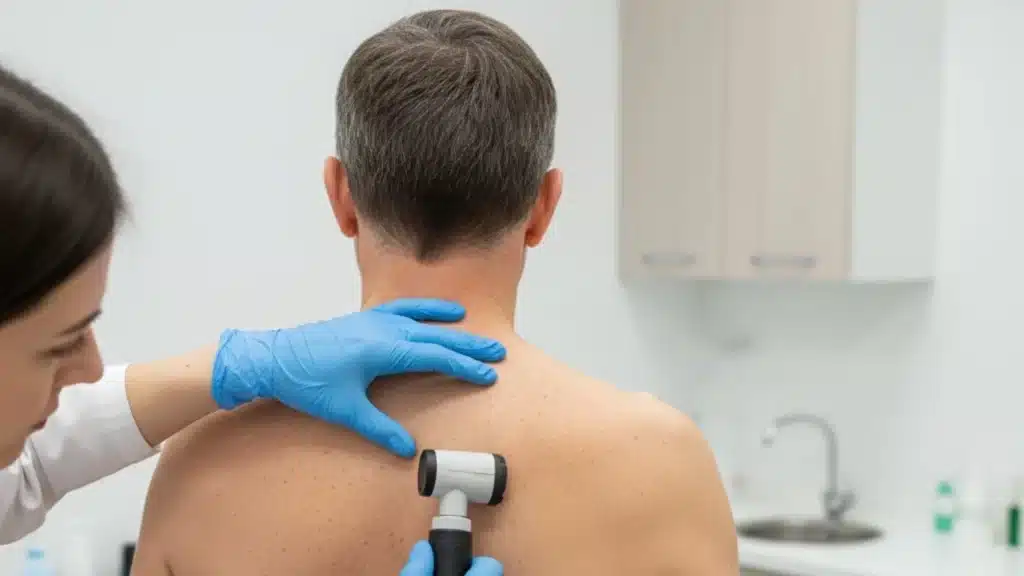
In a professional skin check, the physician does a total examination of the skin beginning at the head to the feet.
The physician also scrutinizes visible points in addition to hard to reach places such as those in the self-checks.
The test will normally involve:
- The scalp
- The back
- Behind the ears
- Between fingers and toes
- The soles of the feet
Physicians seek new moles, abnormal spots, and alterations in the existing lesions.
Digital Dermoscopy
Dermatoscopy is a special procedure employed in numerous clinics of skin cancer.
A dermatoscope is a handheld instrument that enlarges the skin and gives a better perspective on the structures present under the surface.
This enables physicians to observe patterns and colours on a visible mole that cannot be seen under the naked eye.
The digital dermoscopy systems can also take pictures of spots that are considered suspicious that can be compared in future.
Skin Mapping Technology
In other clinics, the complex skin monitoring is available through digital skin mapping technology.
When patients seek to have their skin of interest tracked over a period of time, they look up skin mapping near me.
Skin mapping produces a photographic representation of the whole body. High-resolution images provide details on the location and the look of moles on the skin.
In the subsequent visits, physicians compare new images and past records.
Why Skin Mapping is Helpful in the Detection of Early Changes
Skin mapping is particularly useful to those who have a lot of moles or are those who are at a higher risk of melanoma.
The technology gives the doctors a chance to follow minor changes that may have not been detected before.
The advantages of skin mapping are:
- Early prediction of change in the moles
- Better long term monitoring
- Less chance of missing suspicious spots
- Better reporting of skin condition
This is an extra protection to those people who are worried about the risk of skin cancer.
Should You Be Having a Skin Check Often?
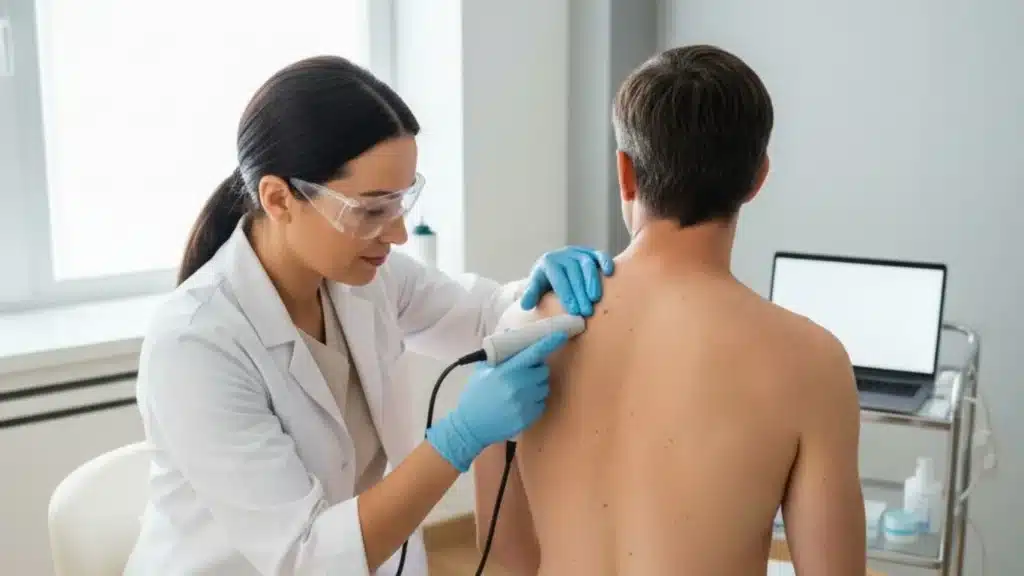
There are risk factors to consider with skin check frequency being recommended based on the personal risk factor.
It makes sense to have a professional check of the skin annually to many adults.
Frequent screening also helps physicians to keep track of the alteration and to identify skin cancer at an early stage.
Individuals at Average Risk
A majority of individuals are lucky enough to have a skin check after every 12 months.
This period enables the physicians to detect slow alterations in moles or skin lesions.
Individuals at Higher Risk
Others might need continued examinations.
The people who may be considered to be at higher risk include:
- Be fair or sensitive to the sun
- Have a large number of moles
- Suffers frequent sunburn
- Family history of melanoma
- Have already been diagnosed with skin cancer
The factors can help a skin cancer expert to prescribe individualized screening schedules.
Symptoms That Your Skin Cancer Specialist Should See
Regular examinations are needed, but there are some symptoms that must be addressed urgently.
When you observe some strange situations in your skin, it is prudent to make an appointment with a professional as soon as you can.
Warning signs may include:
- A mole which varies in size, mould, or colour
- An area that is bleeding or itchy
- A sore which is not healed in a few weeks
- New mole that emerges A sudden appearance
- An irregularly bordered lesion
When these symptoms are noticed, a search of skin cancer check near me would be beneficial in ensuring that medical attention is sought on time.
Timely diagnosis is very important in enhancing success in treatment.
How to Prevent Skin Damage by the Sun
Prevention is significant in the prevention of skin cancer.
The likelihood of skin damage may be reduced considerably by everyday sun protection practices.
Use Sunscreen Regularly
Use a sunscreen of SPF 30 or more when out in the sun.
Reapplication of sunscreen should take place after every two hours particularly in cases of long outdoor activities.
Wear Protective Clothing
Clothes will give an extra protection against UV light.
Assistive protective equipment will consist of:
- Long-sleeved shirts
- UV protective sunglasses
- Wide-brimmed hats
Stay in the Shade During the Hottest Times
The rays of the sun are greatest during mid-morning and mid-afternoon.
During these times, find some shade as much as you can in order to minimize direct exposure.
Perform Regular Self-Checks
Self-examinations will enable you to realize changes at an early stage.
Examine new or peculiar spots on such areas as:
- The back
- The scalp
- The neck
- Behind the ears
In case you see anything suspicious then you can come to one of the skin check clinics around me and give yourself a professional review.
FAQs
Q1. What is the average time of a skin cancer check?
An average skin cancer examination can be conducted by a professional in between 15-30 minutes. Throughout the appointment, the physician will inspect the skin and head to toe and can inspect with specialised equipment like the use of a dermatoscope to see the skin further. The process is painless, and it is easy, giving a physician an opportunity to locate suspicious spots or moles at an early stage.
Q2. Should I be referred before visiting skin cancer clinics?
Mostly, you do not require a referral to attend skin cancer clinics to get a routine skin check. Generally, patients are able to make appointments themselves. Nevertheless, when a general practitioner notices a suspicious lesion, he or she can refer to a specialist in skin cancer that should examine it more thoroughly and potentially treat it.
Q3.What is the distinction between a normal skin examination and skin mapping?
A typical skin examination is the visual inspection of the skin with the help of such equipment as a dermatoscope. High-resolution digital photography is then used in skin mapping to capture the location and appearance of moles on the body. This technology enables the doctors to trace the changes in time more precisely.
Q4.Who ought to make skin cancer screening a regular procedure?
Any person worried about the skin abnormalities should think of seeking professional screening. Individuals of fair skin type, who are regularly exposed to the sunlight or have a familial history of melanoma could use regular examinations with a skin cancer expert. Early screening is particularly of importance to people with numerous moles or a history of skin cancer.
Q5.Is treatment of skin cancer successful once it is diagnosed early?
Yes. The majority of skin cancer can be cured in case it is identified in the early stages. By earlier diagnosis, the doctor will be able to eliminate the cancerous cells before they can develop into other body areas. I visit the skin check clinics frequently in my area to make certain that I identify spots that are considered suspicious and have them treated immediately.
Conclusion
Early diagnosis has a great impact on the success of treatment of skin cancer which is a serious health issue in Australia. Professional screening on a regular basis assists in determining suspicious spots before they pose a threat.
By selecting an optimum best skin cancer clinic in Canberra, you will be able to get the proper examinations, new diagnostic technology and the assurance of quality follow-up treatment.
In case you observes some strange developments in your skin or just want to be convinced about the state of your skin, you might want to appoint a professional skin check with a qualified specialist. Monitoring also can be taken to insure your health and give you a sense of security later.
Book your skin check today with Canberra Skin Cancer Clinic
Early detection saves lives. Your skin is worth checking.
| Canberra Skin Cancer Clinic- Green Way | Canberra Skin Cancer Clinic- Molonglo Valley |
| Phone: (02) 6100 9956 | Phone: (02) 5110 3155 |
| Email: reception@greenwaymedicalcentre.com.au | Email: reception@greenwaymedicalcentre.com.au |
| Address: Unit 6/175 Anketell Street, Greenway ACT 2900 | Address: 110 Woodberry Ave Coombs ACT 2611 |
| Website: https://canberraskincancerclinic.com.au/ | Website: https://canberraskincancerclinic.com.au/ |