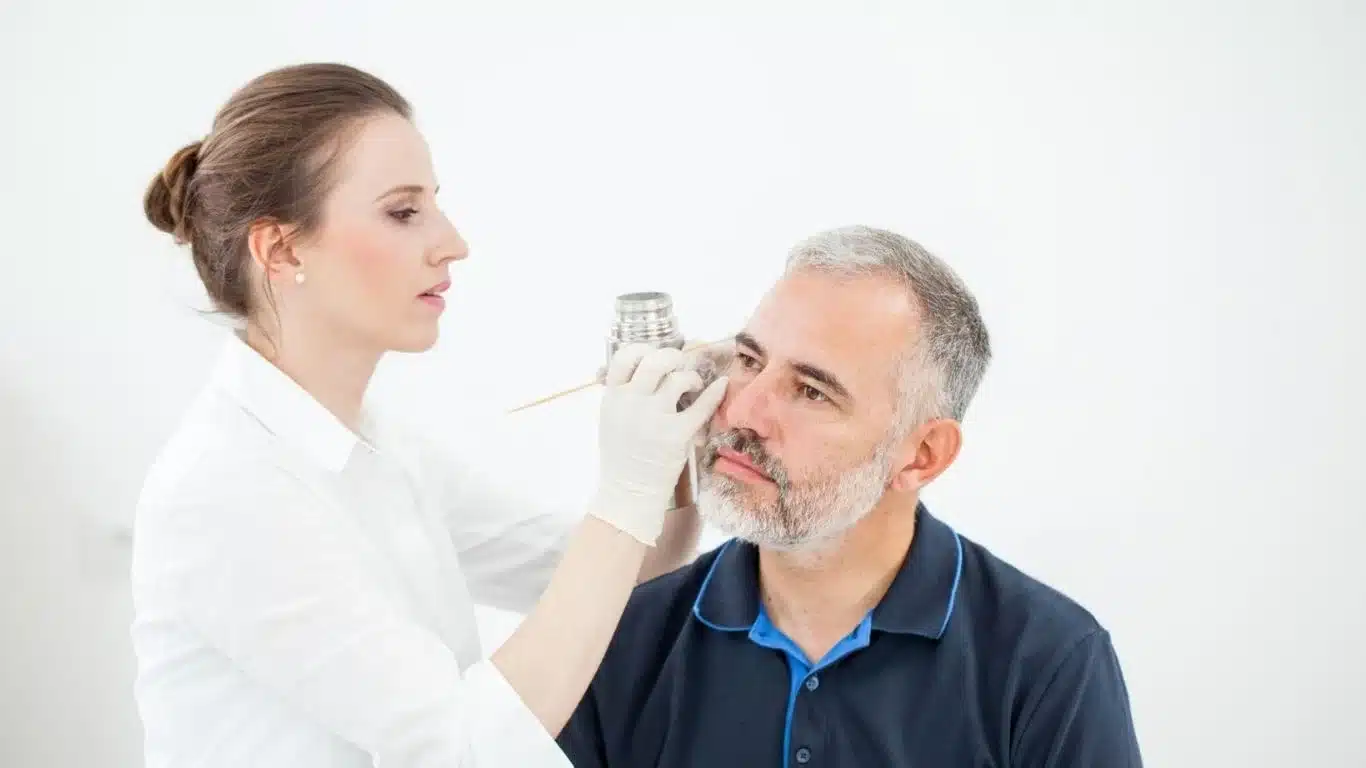
Skin lesions can appear in many forms, including rough patches, scaly spots, warts, benign growths and areas of sun-damaged skin. While many skin lesions are harmless, some can require assessment to determine whether treatment or further investigation is needed. One commonly used treatment for selected skin lesions is cryotherapy.
Cryotherapy Treatment in Canberra uses controlled freezing to destroy certain unwanted or abnormal areas of skin. It is a commonly performed treatment that can be suitable for selected lesions after a medical assessment. Understanding how cryotherapy works, which lesions may be treated, what to expect during recovery and when a cancer skin check may be recommended can help patients make informed decisions about their skin health.
What Is Cryotherapy Treatment?
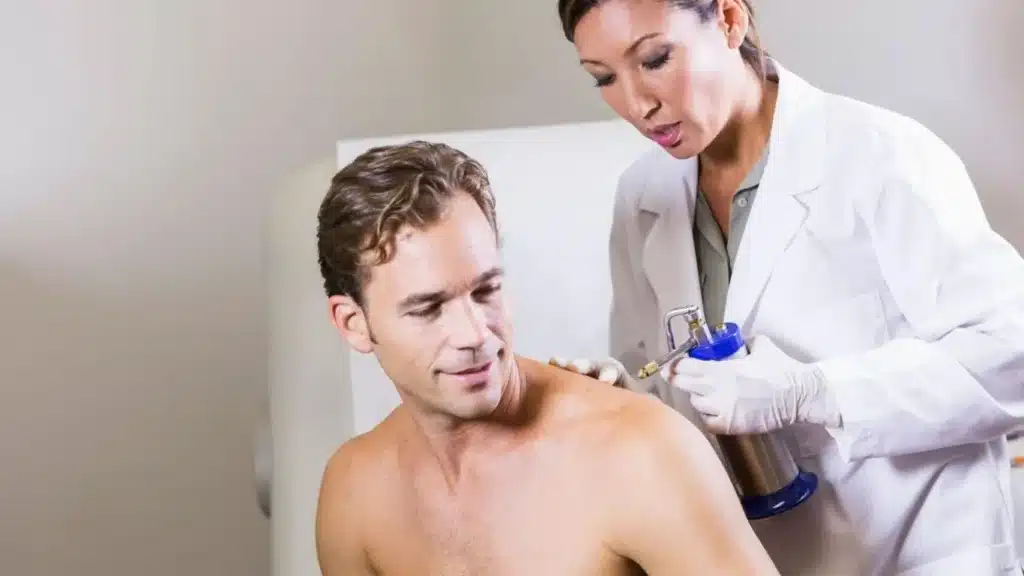
Cryotherapy is a procedure that freezes and damages specific skin tissue with ultra-cold temperatures. A doctor or other health care worker places a freezing agent (usually liquid nitrogen) on the targeted lesion.
The cells are damaged in the treated area. As the tissue becomes damaged, it ultimately dries, creates a crust or blister and then peels away from the rest of the healthy skin as they heal.
The general time for cryotherapy is brief and won’t almost certainly involve a surgical incision. But it’s not suitable for all skin lesions. First, a clinical evaluation of the lesion should be conducted to see if freezing is appropriate.
The approach can vary depending upon the appearance, location, size and characteristics of the lesion.
Which Skin Lesions Can Be Treated With Cryotherapy?
Various skin disorders and lesions can be treated using cryotherapy. The treatment could be indicated for lesions including:
- Certain warts
- A few non-cancerous skin growths
- Selected sun-damaged lesions
- Solar keratoses
- Some superficial lesions considered to be appropriate for freezing
- Some other skin abnormalities, which are not cancerous
Solar keratoses (also known as actinic keratoses or sun spots) are often caused by long-term exposure to UV radiation. They can look like rough, scaly or crusty patches of skin on sun-burnt areas.
Cryotherapy cannot be used to treat all rough or scaly skin lesions. A biopsy or more careful examination and monitoring may be required before treatment is recommended for some lesions.
This is especially significant if a lesion has recently changed, if it bleeds frequently, if it forms a persistent sore or if it has atypical characteristics.
Why Is Skin Assessment Important Before Treatment?
Prior to treatment a skin lesion should be examined to get a clue as to what it may be.
Harmless lesions can look like more serious skin changes. Likewise, a tiny lesion with suspicious qualities could need a deeper evaluation.
A clinical evaluation can take into account:
- The size and shape of the lesion.
- The colour and surface of its shell.
- We are not certain whether it has developed through time or not.
- Whether it bleeds or is painful
- Where the lesion is
- Previous history of skin cancer
- Exposure to the sun and other risk factors
- The general condition of skin around the area.
A clinician may want to further investigate a lesion instead of freezing it immediately if they are unsure.
One reason for regular skin checks and cancer skin checks is that they can be beneficial for people who have a high amount of sun exposure or other risk factors.
Cryotherapy Treatment in Canberra for Sun-Damaged
The UV level is high in Canberra all year round, and individuals who spend a lot of time outdoors may be getting cumulative UV. Long-term sun damage can occur through walking, cycling, gardening, playing sport and working outdoors.
Solar keratoses are a type of change in skin that can happen due to the effects of the sun on the skin. These tend to grow on parts of the face, ears on the scalp, neck, forearms and backs of hands.
If the diagnosis of a suitable solar keratosis is made, a treatment of Cryotherapy Treatment may be considered. Freezing involves creating an abnormal skin layer that is targeted and destroyed, and the area is healed and covered by healthy skin.
Treatments of individual lesions do not eliminate the sun damage history. Monitoring the skin for lesions is important as new lesions may occur in the future.
How Does Cryotherapy Work?
During cryotherapy, the clinician directs a controlled application of extreme cold onto the selected lesion. The freezing temperature causes the targeted cells to become damaged.
The treatment area may initially appear red or swollen. A blister or crust can develop during the following days. This is part of the normal healing response for many patients.
As healing continues, the treated tissue gradually dries and separates. New skin then develops underneath.
The exact response can vary depending on the type, size and location of the lesion. Some lesions may require more than one treatment, while others may respond after a single application.
Your clinician can explain the expected response based on the lesion being treated.
What Happens During Cryotherapy?
Cryotherapy is generally a relatively quick procedure. Before treatment begins, the clinician examines the area and confirms which lesion or lesions are suitable for freezing.
The surrounding skin may be protected as needed. The freezing agent is then applied directly to the targeted area for a controlled period.
You may experience sensations such as:
- Cold or stinging
- Burning
- Mild discomfort
- Temporary tenderness
The level of discomfort varies between individuals and depends on the location and size of the treated area.
After treatment, you can usually leave the clinic without needing a lengthy recovery period. Your clinician will provide instructions about caring for the treated skin.
What Can You Expect After Treatment?
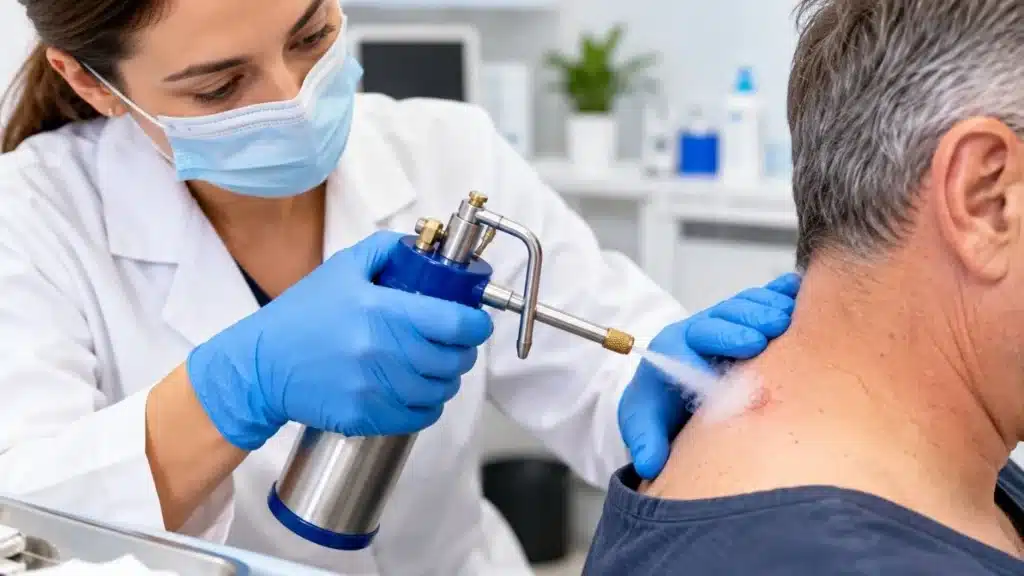
The treated area may look different for several days after cryotherapy. Redness, swelling, tenderness, blistering or crust formation can occur.
These changes do not necessarily mean that something has gone wrong. They can be part of the normal healing process following controlled freezing.
During recovery, it is important to follow the aftercare advice provided by your healthcare professional.
Depending on the treated area, aftercare may include:
- Keeping the area clean
- Avoiding unnecessary irritation
- Protecting the skin from excessive sun exposure
- Avoiding picking or scratching the crust
- Following any dressing instructions provided
- Monitoring the area while it heals
Healing time can vary depending on the individual and the location of treatment.
If you notice unexpected or worsening symptoms, contact your healthcare professional for advice.
Is Cryotherapy Suitable for Every Skin Lesion?
No. Cryotherapy doesn’t work for all skin lesions.
Treatment will vary based on the diagnosis, depth, size, location and appearance of the lesion. Prior to any destructive treatment, some questionable lesions should be checked.
If a lesion has features that suggest it may be skin cancer, for instance, it may not be suitable to just freeze it.
Sometimes, however, a clinician will suggest additional testing, photos, or follow up (usually monitoring or biopsy) if appropriate.
This is why treatment should be determined by assessment and not treating everything that can be “frozen” as a treatment.
Cryotherapy and Skin Cancer Assessment
Cryotherapy and skin cancer assessment serve different purposes.
Cryotherapy is a treatment used for selected lesions. A cancer skin check, on the other hand, is an assessment designed to identify suspicious or changing areas of skin.
People can have many different types of marks, moles and lesions on their skin. Most may not be cancerous, but changes should not be ignored.
Signs that may justify professional assessment include a spot that:
- Changes in size, shape or colour
- Develops an irregular border
- Becomes persistently crusty
- Bleeds without a clear reason
- Does not heal
- Becomes increasingly painful or tender
- Looks noticeably different from surrounding lesions
- Develops a new or unusual appearance
If you notice a changing lesion, it is better to have it assessed before deciding whether cryotherapy is appropriate.
When Should You Consider a Skin Check?
For those who have had a lot of sun exposure or other known risk factors for skin cancer, regular skin examinations may be helpful.
Consult a professional if you have seen any new lesion or change in an existing mole, spot or growth.
When searching for a clinic with assessment and treatment service for skin lesions, you can also consider skin cancer clinic services.
Skin exam can aid in locating lesions that will need monitoring or investigation. It can also be used to decide if a treatment like cryotherapy is suitable or not.
Skin checks may be given at different times to different persons. Your doctor can advise you about an appropriate monitoring schedule based on your skin, medical history and risk factors.
Cryotherapy Compared With Other Skin Treatments
Cryotherapy is one of several approaches that may be used for selected skin lesions.
Depending on the diagnosis, other options can include topical treatments, curettage, excision, biopsy, monitoring or other procedures.
The choice depends on factors such as:
- The confirmed or suspected diagnosis
- The depth of the lesion
- Its size and location
- Number of lesions
- Previous treatment
- The patient’s individual circumstances
For this reason, the goal should not simply be to choose the fastest treatment. The most appropriate approach is the one that matches the clinical assessment and diagnosis.
Sun Protection After Treatment
Sun protection is a vital component of the care of treated and untreated skin.
In addition to being a source of present skin damage, the UV exposure can be a cumulative issue and lessening this unnecessary exposure can help with long term skin health.
These are some of the practical steps you can take when you’re outside to protect yourself from the sun’s harmful rays:
- The application of broad-spectrum sun protection products according to the instructions.
- Wearing protective clothing
- Wearing a wide-brimmed hat
- Finding shade, if possible
- Wearing sunglasses that offer the protection of UV rays.
- Restricting extended exposures in high temperature and high solar radiation days
Sun protection is especially important in Canberra because it can be easy to get a lot of sun exposure over a period of time.
It is not as if past sun damage will not occur if you do not protect your skin. It’s useful for decreasing additional exposure and for implementing a comprehensive skin care program.
Why Ongoing Skin Monitoring Matters
Treatment of a visible lesion can be an important element of skin care, but should not be a substitute for continued monitoring.
Those who have had solar keratoses or other sun damage might continue to get new solar keratoses or areas of sun damage. Monitoring can assist in the early detection of change, and help to decide if additional review is necessary.
Another way of learning about your own skin is to look at it for new or changing spots regularly.
Inspect your skin, covering parts you can’t see, such as the scalp, back, ears and other hidden spots. Have someone you trust help you with areas where you are not able to examine yourself.
If you see that something is amiss, make an appointment for a professional diagnosis rather than trying to diagnose the lesion yourself.
Choosing Cryotherapy Treatment in Canberra
When considering Cryotherapy Treatment in Canberra, the first step should be appropriate clinical assessment.
A suitable clinic should be able to assess the lesion, discuss available treatment options and explain what to expect before and after the procedure.
It is also useful to consider whether the clinic can provide broader skin assessment when required. A lesion may sometimes need investigation rather than immediate treatment, particularly when its appearance is unusual or changing.
This approach helps ensure that treatment decisions are based on the characteristics of the individual lesion rather than appearance alone.
Frequently Asked Questions
Q1. Does cryotherapy hurt?
Cryotherapy can cause temporary stinging, burning, cold or discomfort during and shortly after treatment. The sensation varies depending on the location and size of the lesion. Your clinician can explain what you are likely to experience before treatment.
Q2. How long does cryotherapy take?
The procedure is generally quick, although the exact treatment time depends on the number, size and type of lesions being treated. Your clinician can provide more specific information during your assessment.
Q3. Will cryotherapy leave a mark?
Temporary redness, blistering, crusting or changes in pigmentation can occur after treatment. The final appearance can vary between individuals and depends on factors such as the treatment site and individual healing response.
Q4. Can cryotherapy treat skin cancer?
Cryotherapy may be appropriate for some selected lesions, but it should not be assumed to be a treatment for every skin cancer. Suspicious lesions require appropriate medical assessment, and other treatments may be necessary depending on the diagnosis.
Q5. Should I have a skin check before cryotherapy?
A clinical assessment is important before treating a lesion. If there is uncertainty about its nature, your clinician may recommend further investigation before choosing a treatment.
Take the Next Step With Professional Skin Assessment
Skin lesions can have many different causes, and the right treatment depends on an accurate assessment. Cryotherapy can be an effective option for selected lesions, particularly some superficial and sun-related skin changes.
If you have a new, changing, bleeding or persistent lesion, do not assume that it is harmless. A professional assessment can help determine whether the area requires monitoring, further investigation or treatment.
For people considering Cryotherapy Treatment in Canberra, a comprehensive approach that combines lesion assessment, appropriate treatment and ongoing skin monitoring can support better long-term skin health.
If you are concerned about a spot or skin lesion, consider arranging a professional assessment and discuss whether cryotherapy or another treatment option is appropriate for you.
Have a suspicious spot or sun-damaged skin? Contact Canberra Skin Cancer Clinic to arrange a professional skin assessment and discuss whether Cryotherapy Treatment in Canberra is right for you.
| Canberra Skin Cancer Clinic- Green Way | Canberra Skin Cancer Clinic- Molonglo Valley |
| Phone: (02) 51046409 | Phone: (02) 51046409 |
| Email: reception@greenwaymedicalcentre.com.au | Email: reception@greenwaymedicalcentre.com.au |
| Address: Unit 6/175 Anketell Street, Greenway ACT 2900 | Address: 110 Woodberry Ave Coombs ACT 2611 |
| Website: https://canberraskincancerclinic.com.au/ | Website: https://canberraskincancerclinic.com.au/ |