
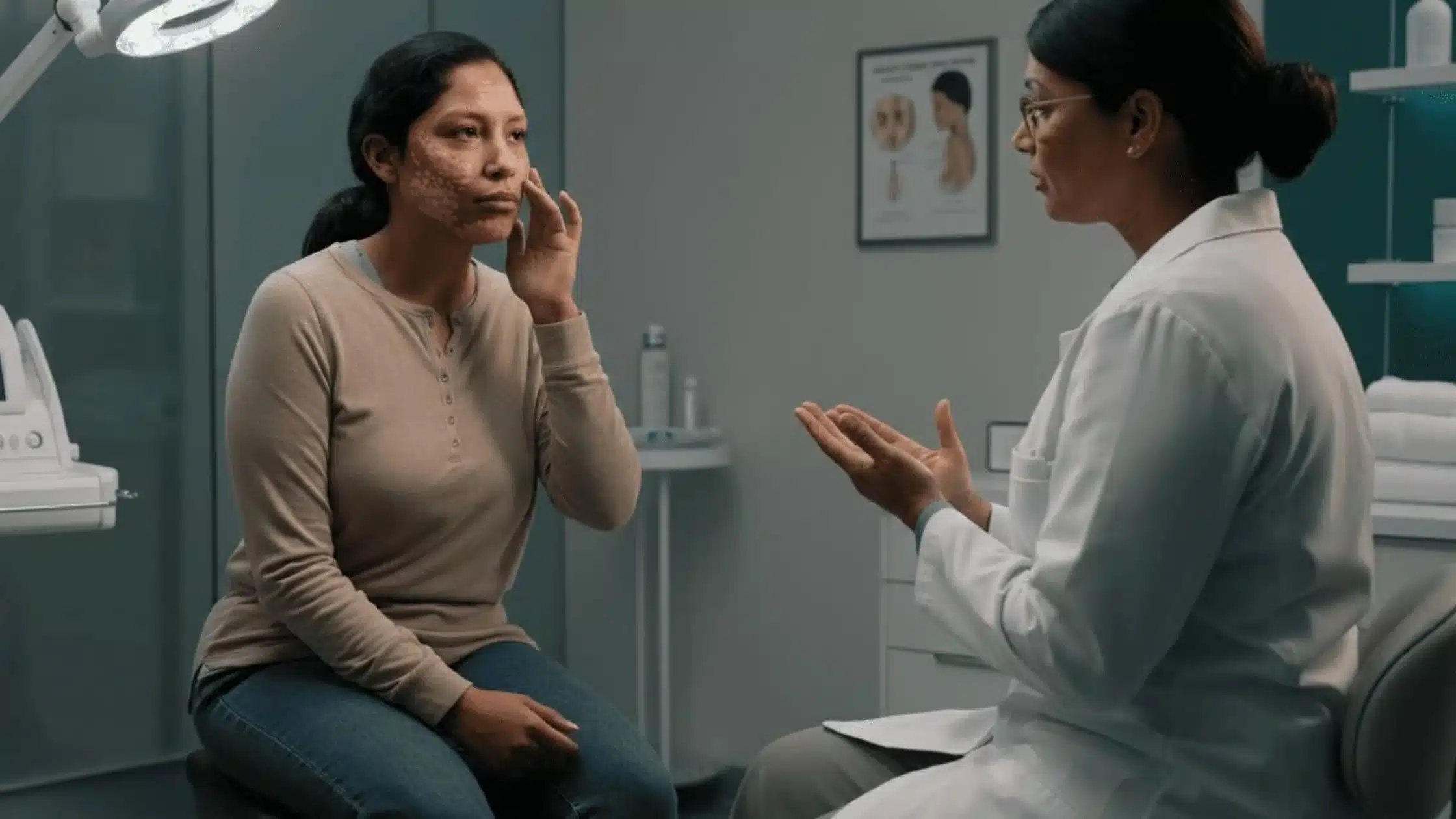
Spots and Blemishes in Canberra are common and can appear on almost any part of the skin. Some are harmless changes caused by sun exposure, ageing, blocked pores or minor skin irritation. Others may need medical assessment, particularly when a spot changes in size, shape, colour or texture.
Canberra residents experience regular sun exposure through outdoor activities such as walking, gardening, cycling and sport. Even when the weather feels cool, ultraviolet (UV) radiation can affect the skin. Over time, repeated UV exposure can contribute to freckles, pigmentation, sun spots and other skin changes.
Understanding the different causes of spots and blemishes can help you recognise changes that deserve attention. If a mark looks unusual or continues to change, professional assessment can help determine what it is and whether treatment is needed.
What Are Spots and Blemishes?

Spots and blemishes are general terms used to describe visible changes on the skin. They may appear as flat marks, raised areas, small bumps, patches or lesions. Their colour can range from pink and red to brown, black or skin-coloured.
Some changes develop gradually, while others can appear within a short period. A spot may remain stable for many years, whereas another may change because of inflammation, infection, sun damage or other skin conditions.
Not every blemish is a sign of a serious problem. However, appearance alone cannot always determine whether a skin change is harmless. A medical examination may be recommended when a spot has unusual features or is changing.
Common Causes of Spots and Blemishes
There are many possible causes of visible skin marks. Identifying the cause usually requires consideration of the spot’s appearance, location, duration and any recent changes.
Sun Exposure and UV Damage
Long-term exposure to UV radiation is a common cause of pigmentation and other visible skin changes. Freckles, solar lentigines and solar keratoses may develop on areas that receive frequent sun exposure.
The face, ears, scalp, neck, forearms and hands are particularly exposed areas. People who spend significant time outdoors may notice more sun-related changes over the years.
Sun damage can accumulate gradually. A spot that appears small or insignificant should still be monitored if it changes over time.
Freckles and Pigmentation
Freckles are small, flat areas of increased pigmentation. They are often more noticeable after sun exposure and may become lighter during periods of reduced exposure.
Age spots, also called solar lentigines, are another common form of pigmentation. They may appear as flat brown or darker patches, particularly on sun-exposed skin.
Although many pigmentation changes are harmless, a new or changing pigmented lesion should not automatically be assumed to be an age spot.
Acne and Blocked Pores
Acne can cause blackheads, whiteheads, pimples and inflamed spots. It commonly affects the face, chest, shoulders and back.
After acne settles, temporary red or brown marks may remain. These marks can sometimes take weeks or months to fade.
Picking or squeezing spots may increase inflammation and can contribute to scarring or prolonged pigmentation. Gentle skin care and appropriate treatment can help reduce ongoing breakouts.
Moles and Other Skin Lesions
Moles are common skin lesions that can be flat or raised and may vary in colour. Many remain unchanged throughout a person’s life.
However, changes in a mole should be assessed. This includes changes in size, shape, colour or border, as well as bleeding, crusting or persistent irritation.
A new lesion that looks different from the surrounding skin can also warrant professional attention.
Solar Keratoses
Solar keratoses, also known as actinic keratoses, are rough or scaly areas caused by long-term UV exposure. They are often found on sun-exposed parts of the body.
They may feel rougher than they look and can range from skin-coloured to pink, red or brown. Solar keratoses are not the same as ordinary pigmentation and should be assessed by an appropriate medical professional.
Because some solar keratoses can progress to squamous cell carcinoma, monitoring and treatment may be recommended.
When Could a Spot Be a Skin Cancer Spot?
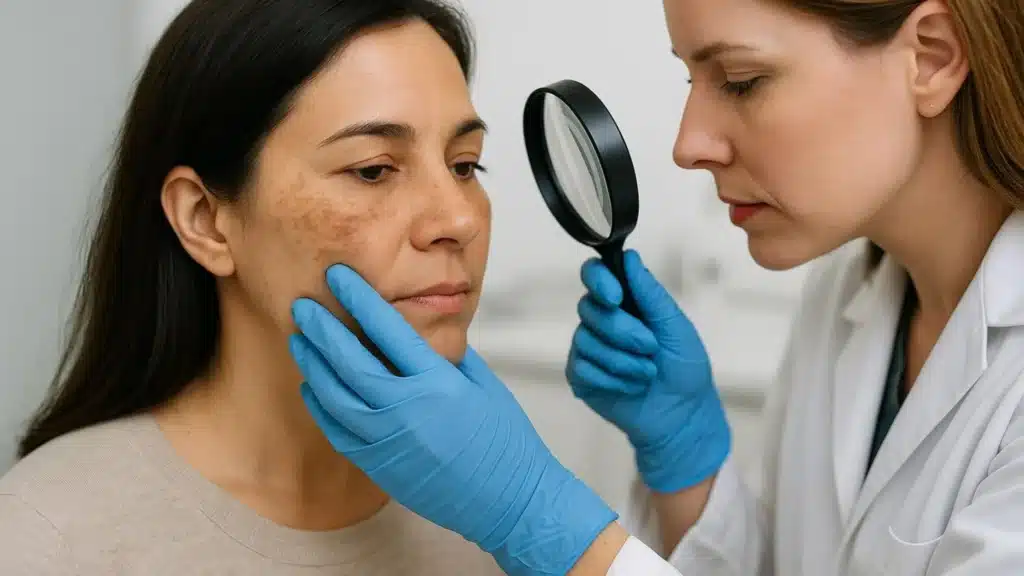
Most skin spots are not skin cancer. However, some skin cancer spots can initially look similar to ordinary blemishes, moles or pigmentation.
Skin cancer may present as a new spot or as a change in an existing lesion. Warning signs can include:
- A spot that changes in size, shape or colour
- An irregular or uneven border
- Several different colours within one lesion
- A sore that does not heal
- Repeated bleeding or crusting
- A lesion that becomes persistently itchy or painful
- A rough or scaly area that continues to develop
- A new spot that looks noticeably different from other marks on the skin
One useful approach is to become familiar with the normal appearance of your skin. This can make it easier to notice a new or changing lesion.
A concerning spot does not necessarily mean cancer, but changes should not be ignored simply because they are small.
Spots and Blemishes in Canberra: Why Skin Checks Matter
Regular skin awareness is particularly relevant in Canberra because UV exposure can occur throughout the year. Outdoor activities may increase cumulative exposure, while previous sun exposure can continue to influence the skin years later.
A skin check allows a qualified medical professional to examine suspicious, changing or unusual areas. Depending on the findings, further assessment may include dermoscopy, monitoring, biopsy or another appropriate investigation.
People with a history of significant sun exposure, previous skin cancers, numerous moles or other recognised risk factors may require more regular assessment.
The appropriate frequency of skin checks varies between individuals. A healthcare professional can advise based on personal risk factors and previous findings.
Diagnosis of Unusual Skin Spots
The first step in assessing a blemish is usually a visual examination. A clinician may ask when the spot appeared, whether it has changed and whether there have been symptoms such as bleeding, itching or tenderness.
Dermoscopy may be used to examine structures within a lesion that are not easily visible to the naked eye. This can help distinguish between different types of skin lesions.
If a lesion requires further investigation, a biopsy may be recommended. A biopsy involves removing a sample of tissue for examination. The appropriate diagnostic approach depends on the type and appearance of the lesion.
Early assessment can be useful because some skin cancers are easier to manage when detected at an earlier stage.
Skin Treatment in Canberra
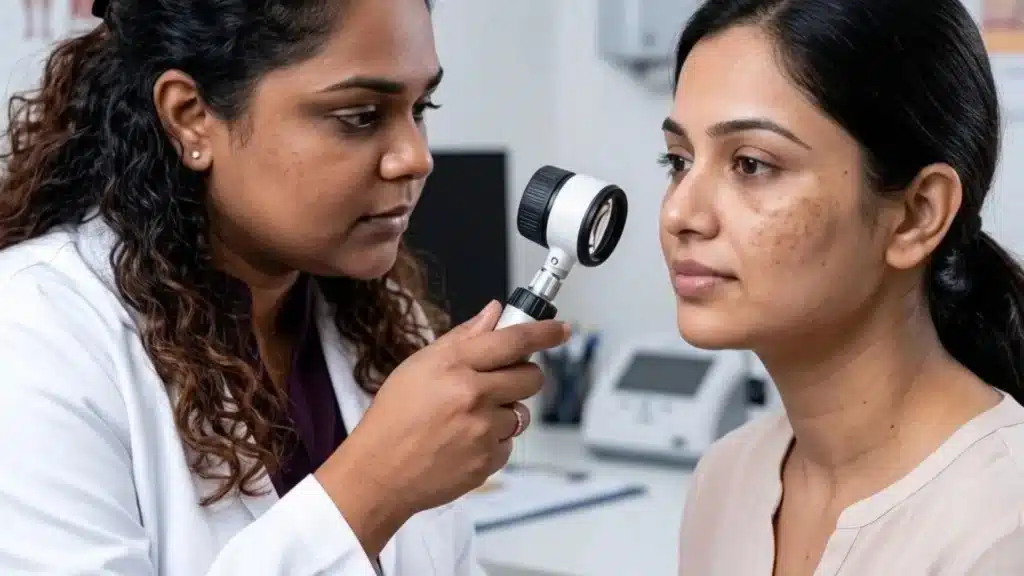
The appropriate Skin Treatment in Canberra depends on the underlying cause of the spot or blemish. Treatment should generally be based on an accurate diagnosis rather than appearance alone.
Treatment for Pigmentation
Some benign pigmentation can be managed with sun protection and, where appropriate, cosmetic or medical treatments. The most suitable option depends on the type of pigmentation and the individual’s skin.
Sun protection remains important because continued UV exposure can contribute to further pigmentation.
Treatment for Acne
Acne treatment can include topical products, prescription medicines or other approaches depending on severity. Persistent or severe acne may benefit from professional assessment.
Avoiding unnecessary picking and squeezing can also reduce the risk of scarring and post-inflammatory marks.
Treatment for Solar Keratoses
Solar keratoses may be treated using methods selected according to the number, location and characteristics of the lesions. Treatment options can include cryotherapy, topical treatments or other procedures.
A clinician can determine which approach is suitable after examining the affected area.
Treatment for Skin Cancer
If a lesion is diagnosed as skin cancer, treatment depends on the type, size, location and extent of the cancer. Options may include surgical removal and other treatments selected according to the individual diagnosis.
A confirmed diagnosis should be discussed with an appropriate medical professional so that treatment can be planned according to the specific lesion.
How to Monitor Spots at Home
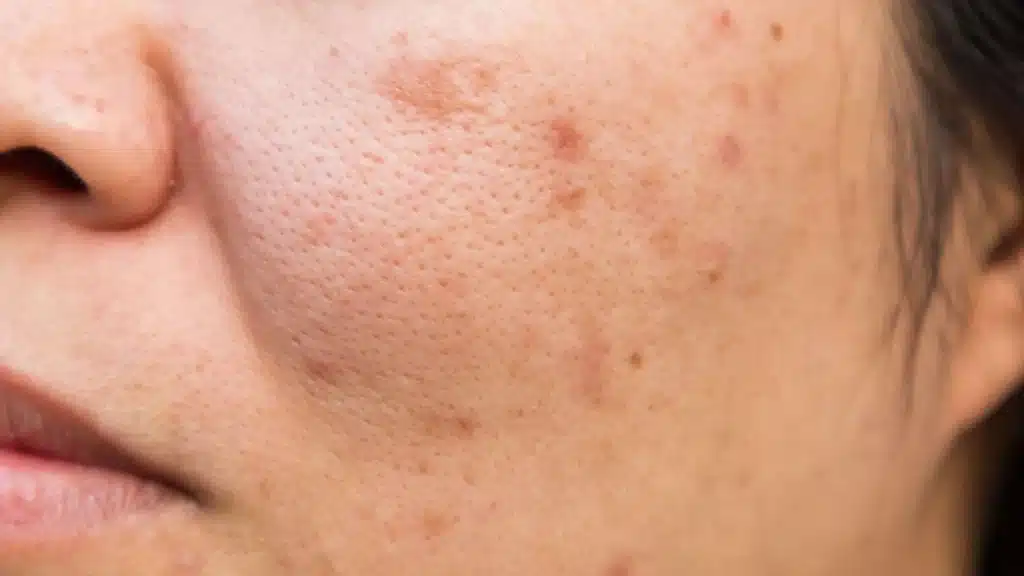
Regularly looking at your skin can help you identify changes early. You do not need to examine every mark every day. Instead, become familiar with your usual moles, freckles and other spots.
Check areas that are easy to see as well as areas that can be overlooked, such as the scalp, ears, back and lower legs. A mirror or assistance from another person may help with difficult-to-see areas.
Photographs can also help track changes in a particular lesion over time. If you notice a significant change, arrange an appropriate medical assessment rather than relying only on photographs.
Preventing Further Sun-Related Skin Damage
Sun protection is an important part of maintaining healthy skin. When UV levels are high, practical measures include seeking shade, wearing protective clothing, using a broad-brimmed hat and applying broad-spectrum sunscreen as directed.
Sunscreen should complement, rather than replace, other sun-protection measures.
People who spend considerable time outdoors in Canberra should consider sun protection during activities such as gardening, walking, cycling and playing sport. Consistent protection can help reduce additional UV damage over time.
When Should You See a Doctor About a Spot?
You should consider medical assessment if a spot is new, changing or noticeably different from the surrounding skin.
Particular attention is warranted when a lesion changes rapidly, develops irregular pigmentation, bleeds without a clear cause, repeatedly crusts or fails to heal.
It is also sensible to seek advice if you are unsure whether a mark is a mole, pigmentation, solar keratosis or another type of lesion. Trying to identify a potentially concerning lesion based only on online images can be unreliable.
A professional examination can provide a more appropriate assessment and determine whether monitoring, testing or treatment is necessary.
Conclusion
Spots and Blemishes in Canberra can develop for many reasons, including sun exposure, pigmentation, acne, ageing and different types of skin lesions. While many are harmless, changes in appearance should be taken seriously.
Canberra’s outdoor lifestyle makes sun protection and skin awareness particularly important. Knowing what is normal for your skin can help you notice new or changing areas sooner.
If a spot changes in size, shape, colour or texture, or if it repeatedly bleeds, crusts or fails to heal, seek professional medical advice. Early assessment can help identify the cause and determine whether monitoring, diagnosis or treatment is appropriate.
Concerned about a new or changing spot? Book a professional skin check in Canberra today and get the right advice for your skin.
Frequently Asked Questions
Q1. Are all spots and blemishes a sign of skin cancer?
No. Many spots are caused by harmless pigmentation, freckles, acne, moles or sun-related changes. However, a new or changing lesion should be assessed when it has unusual features or does not behave like your other skin marks.
Q2. What are common skin cancer spots?
Skin cancer spots can appear in different forms. They may be new lesions or changes in existing moles or marks. Warning signs include growth, irregular borders, colour changes, bleeding, crusting or a sore that does not heal.
Q3. Can sun exposure cause spots and blemishes?
Yes. Repeated UV exposure can contribute to freckles, pigmentation, solar lentigines and solar keratoses. Long-term UV exposure is also an important risk factor for skin cancer, making sun protection and skin monitoring important.
Q4. When should I have a skin spot checked?
A spot should be assessed if it is new, changing, bleeding, crusting, persistently itchy or noticeably different from other marks. If you are uncertain about a lesion, professional assessment can help determine the appropriate next step.
Q5. What does Skin Treatment in Canberra involve?
Treatment depends on the cause of the skin change. Options may include monitoring, topical treatment, procedures or surgical management. The appropriate approach should be selected after the lesion has been properly assessed and diagnosed.
| Canberra Skin Cancer Clinic- Green Way | Canberra Skin Cancer Clinic- Molonglo Valley |
| Phone: (02) 51046409 | Phone: (02) 51046409 |
| Email: reception@greenwaymedicalcentre.com.au | Email: reception@greenwaymedicalcentre.com.au |
| Address: Unit 6/175 Anketell Street, Greenway ACT 2900 | Address: 110 Woodberry Ave Coombs ACT 2611 |
| Website: https://canberraskincancerclinic.com.au/ | Website: https://canberraskincancerclinic.com.au/ |