What Is Actinic Keratosis?
Actinic keratosis, also known as solar keratosis, is a common skin condition caused by long-term exposure to ultraviolet (UV) radiation. It usually appears as a rough, dry or scaly patch on areas of skin that receive frequent sun exposure.
Actinic keratoses are not the same as skin cancer, but they are considered precancerous changes because some can develop into squamous cell carcinoma (SCC). Having actinic keratoses can also be a sign that your skin has experienced significant cumulative sun damage.
For this reason, an unusual rough or scaly patch should not simply be ignored, particularly if it is changing, becoming thicker, painful, or bleeding.
If you are concerned about a new or changing skin lesion, a professional assessment at a trusted Canberra Skin Cancer Clinic can help determine what it is and whether treatment is appropriate.
What Causes Actinic Keratosis?
The main cause of actinic keratosis is repeated exposure to UV radiation from the sun. Over time, UV radiation can damage the DNA within skin cells, leading to abnormal changes.
Australia experiences high levels of UV radiation, and unprotected exposure can cause cumulative skin damage even when the weather feels cool.
Factors that may increase the likelihood of developing actinic keratosis include:
- Spending significant time outdoors
- Long-term sun exposure
- A history of frequent sunburn
- Working outdoors
- Having fair or sun-sensitive skin
- Increasing age
- Previous actinic keratoses or other sun-damaged areas
- Having a history of skin cancer
Actinic keratosis is therefore not simply a problem caused by one day in the sun. It is generally associated with cumulative UV exposure over many years.
What Does Actinic Keratosis Look Like?
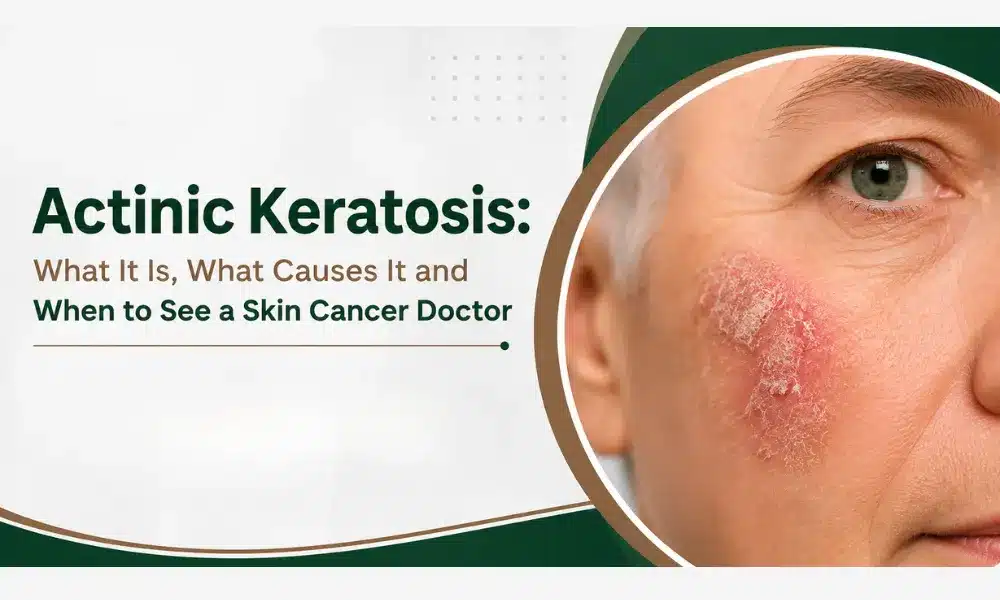
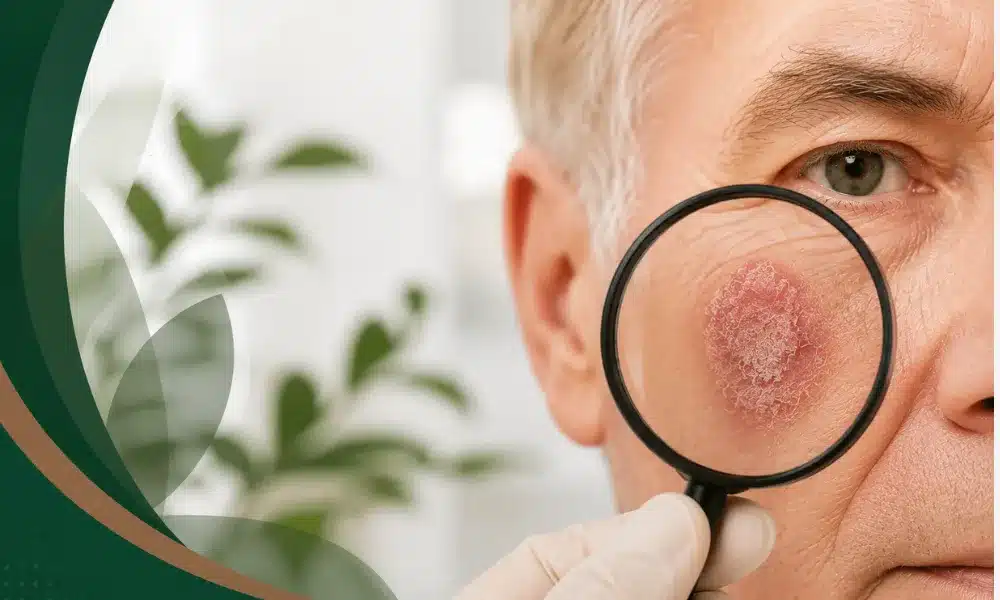
Actinic keratosis can look different from person to person. In many cases, the area may initially feel rough before it becomes clearly visible.
Common characteristics include:
- Rough or sandpaper-like texture
- Dry, scaly patches
- Red, pink, brown or skin-coloured areas
- A small crust or flaky surface
- A spot that feels rougher than the surrounding skin
- Occasional itching, stinging or tenderness
- A thicker or more noticeable lesion over time
Actinic keratoses commonly develop on sun-exposed areas such as the:
- Face
- Scalp, particularly where hair is thinning
- Ears
- Neck
- Forearms
- Back of the hands
Some actinic keratoses can be difficult to recognize because they may look similar to harmless dry skin, freckles, or other skin conditions. This is why persistent or changing lesions deserve professional assessment.
Is Actinic Keratosis Skin Cancer?
Actinic keratosis is not skin cancer, but it can be a warning sign of significant sun damage.
Some actinic keratoses may progress to squamous cell carcinoma. However, not every actinic keratosis will become cancerous.
Australian clinical guidance highlights features such as thickening and tenderness as reasons for concern that an actinic keratosis may have progressed to invasive SCC.
Because it can be difficult to determine the significance of a lesion by appearance alone, it is best to have suspicious or changing areas assessed by an appropriately trained medical professional.
When Should You See a Skin Cancer Doctor?
You should consider seeing a skin cancer doctor if you notice a rough or scaly patch that:
- Does not go away
- Keeps returning after seeming to heal
- Becomes thicker
- Becomes painful or tender
- Starts bleeding
- Develops a persistent crust
- Changes in appearance
- Grows or becomes more noticeable
- Looks different from other spots on your skin
You should also arrange a skin assessment if you have multiple areas of sun damage or a personal history of skin cancer.
Cancer Council Australia recommends seeking medical assessment for new or changing skin lesions, particularly those that are unusual, sore, itchy, bleeding, or fail to heal. Early detection can improve treatment outcomes.
How Is Actinic Keratosis Diagnosed?
A doctor will generally examine the affected area and assess its appearance, texture and characteristics. A dermatoscope may be used to provide a closer examination of the skin.
If there is uncertainty about the diagnosis or concern that a lesion could represent skin cancer, a biopsy may be recommended. The need for further investigation depends on the individual lesion and clinical assessment.
At Canberra Skin Cancer Clinic, skin assessments focus on careful examination, early detection and appropriate treatment planning. The clinic also provides biopsy and treatment options where clinically indicated.
How Is Actinic Keratosis Treated?
Treatment depends on factors such as the number of lesions, their location, thickness and appearance, as well as the patient’s overall skin health.
Common treatment approaches may include:
1. Cryotherapy
Cryotherapy uses liquid nitrogen to freeze and destroy abnormal skin cells. It can be a practical option for individual or limited actinic keratoses.
The treated area may become red, swollen or blistered before healing.
Canberra Skin Cancer Clinic lists cryotherapy among its available skin treatments.
2. Prescription Topical Treatments
Certain prescription creams can be used to treat areas of sun-damaged skin. Depending on the medication, they work by targeting abnormal cells and triggering an immune or inflammatory response.
Topical treatment may be particularly useful when there are multiple lesions or a broader area of sun damage.
3. Photodynamic Therapy
Photodynamic therapy (PDT) uses a light-sensitive treatment followed by a specific light source to target abnormal cells. It may be considered for suitable areas of sun-damaged skin.
4. Other Treatments
Depending on the diagnosis and clinical circumstances, other treatment methods may be considered. Your doctor can recommend the most appropriate option based on the lesion and your individual needs.
It is important not to self-treat a suspicious skin lesion without first establishing what it is.
Can Actinic Keratosis Be Prevented?
You cannot completely reverse the effects of past UV exposure, but you can reduce further sun damage by making sun protection part of your daily routine.
Helpful habits include:
- Apply broad-spectrum sunscreen regularly.
- Reapply sunscreen as directed, especially when outdoors.
- Wear a broad-brimmed hat and protective clothing.
- Use sunglasses when appropriate.
- Seek shade where possible.
- Avoid unnecessary exposure during periods of high UV.
- Regularly check your skin for new or changing spots.
Sun protection is particularly important in Australia because UV radiation can cause skin damage throughout much of the year.
Why Regular Skin Checks Matter
Actinic keratosis can be one of the visible signs of cumulative sun damage. If you have had one or several actinic keratoses, it is worth paying attention to the rest of your skin as well.
Regular skin checks can help identify suspicious lesions at an earlier stage. Canberra Skin Cancer Clinic focuses on early detection and thorough skin assessment, with treatment options available for suspicious lesions and sun-related skin damage.
You do not need to wait for a spot to become painful before having it checked. Some skin cancers can develop without obvious symptoms.
Actinic Keratosis: When to Take Action
A rough patch may seem like nothing more than dry skin, but persistent changes deserve attention—especially when they occur on areas that receive regular sun exposure.
Actinic keratosis is closely associated with cumulative UV damage and can sometimes progress to squamous cell carcinoma. Recognising changes early and obtaining an appropriate medical assessment can help ensure that concerning lesions are identified and managed promptly.
If you have noticed a new, rough, scaly, or changing area of skin, consider arranging a professional skin assessment rather than waiting for it to disappear.
Concerned about a suspicious or sun-damaged spot? Contact Canberra Skin Cancer Clinic to arrange a skin assessment and discuss the most appropriate next step for your skin.
Frequently Asked Questions About Actinic Keratosis
1. Is actinic keratosis dangerous?
Actinic keratosis is not itself skin cancer, but it is a precancerous skin change associated with long-term UV damage. Some lesions can progress to squamous cell carcinoma, so persistent or changing lesions should be assessed.
2. What causes actinic keratosis?
The primary cause is cumulative exposure to ultraviolet (UV) radiation, particularly from the sun. Long-term outdoor exposure and repeated sunburn can increase the risk.
3. Can actinic keratosis go away on its own?
Some lesions may become less noticeable, but this does not necessarily mean the underlying sun damage has disappeared. Persistent, recurrent or changing lesions should be assessed by a medical professional.
4. Can actinic keratosis turn into skin cancer?
Yes. Some actinic keratoses can progress to squamous cell carcinoma, although many do not. A doctor can assess whether treatment or monitoring is appropriate.
5. What does actinic keratosis look like?
It commonly appears as a rough, dry or scaly patch on sun-exposed skin. It may be pink, red, brown or close to the surrounding skin colour.
6. Is actinic keratosis painful?
Not necessarily. Some actinic keratoses have no symptoms, while others may cause itching, stinging, burning or tenderness. Increasing tenderness or thickening should be assessed.
7. How is actinic keratosis treated?
Treatment can include cryotherapy, prescription topical treatments and, for selected patients, photodynamic therapy. The appropriate treatment depends on the lesion and the patient’s individual circumstances.
8. When should I see a skin cancer doctor for actinic keratosis?
See a doctor if a rough or scaly patch persists, becomes thicker, changes, bleeds, becomes painful or does not heal. You should also consider regular skin checks if you have significant sun exposure or a history of skin cancer.
9. Can sunscreen prevent actinic keratosis?
Consistent sun protection can help reduce further UV-related skin damage and may reduce the risk of developing additional actinic keratoses. Sunscreen should be combined with protective clothing, shade, and other sun-safe behaviors.
10. Can Canberra Skin Cancer Clinic assess actinic keratosis?
Yes. Canberra Skin Cancer Clinic provides skin cancer checks and treatments for suspicious lesions and sun-related skin conditions, including cryotherapy and other treatment approaches where appropriate.
Final Takeaway
Actinic keratosis is more than just a dry or rough patch of skin. It can indicate significant cumulative sun damage and, in some cases, may progress to squamous cell carcinoma.
If you notice a persistent, rough, scaly, thickened, or changing area of skin, getting it checked early is a sensible step. Regular skin examinations and good sun protection can also play an important role in maintaining long-term skin health.
Book a skin check with Canberra Skin Cancer Clinic if you have concerns about a suspicious or sun-damaged spot.
| Canberra Skin Cancer Clinic- Green Way | Canberra Skin Cancer Clinic- Molonglo Valley |
| Phone: (02) 51046409 | Phone: (02) 51046409 |
| Email: reception@greenwaymedicalcentre.com.au | Email: reception@greenwaymedicalcentre.com.au |
| Address: Unit 6/175 Anketell Street, Greenway ACT 2900 | Address: 110 Woodberry Ave Coombs ACT 2611 |
| Website: https://canberraskincancerclinic.com.au/ | Website: https://canberraskincancerclinic.com.au/ |