

Many people have moles on their skin. Most moles are harmless and remain unchanged for years. However, some moles can develop features that may indicate skin cancer. Understanding what a dangerous mole looks like can help you identify warning signs early and seek professional medical advice when necessary.
Australia has one of the highest rates of skin cancer in the world. Residents of Canberra experience significant exposure to ultraviolet (UV) radiation throughout the year, making regular skin monitoring particularly important. While checking your skin at home is a useful habit, it should never replace professional assessments performed by a qualified healthcare provider. This guide explains how to recognize suspicious moles, when to seek medical attention, and why visiting a trusted mole check clinic can play a critical role in early detection.
Why Monitoring Moles Matters

A mole is a cluster of pigment-producing cells called melanocytes. Moles can appear anywhere on the body and vary in size, shape, and colour.
Most moles are benign. However, some can develop into melanoma, the most serious form of skin cancer. Early detection significantly improves treatment outcomes.
Regular skin monitoring can help identify changes that may indicate:
- Melanoma
- Basal cell carcinoma
- Squamous cell carcinoma
- Other abnormal skin lesions
When detected early, many skin cancers can be treated before they spread deeper into the skin or other parts of the body.
What Does a Normal Mole Look Like?
Before understanding dangerous moles, it helps to know what a typical mole looks like.
Most normal moles have the following characteristics:
- Symmetrical shape
- Smooth and regular borders
- Even colour throughout
- Small diameter
- Stable appearance over time
Normal moles may be:
- Brown
- Tan
- Black
- Pink
- Skin-coloured
They often remain unchanged for many years.
What Does a Dangerous Mole Look Like?
Dangerous moles often display noticeable differences from normal moles. They may change in appearance, develop unusual colours, or become asymmetrical.
Doctors commonly use the ABCDE rule to identify suspicious features.
A – Asymmetry
A healthy mole is usually symmetrical.
If one half of the mole looks different from the other half, this may be a warning sign.
Examples include:
- One side being larger
- Uneven shape
- Distorted appearance
Asymmetry is one of the earliest indicators of melanoma.
B – Border Irregularity
Normal moles generally have smooth and well-defined edges.
Dangerous moles may have:
- Jagged borders
- Scalloped edges
- Blurred outlines
- Uneven margins
Irregular borders can indicate abnormal cell growth.
C – Colour Variation
Healthy moles often have a single colour throughout.
A suspicious mole may contain multiple shades, including:
- Dark brown
- Black
- Red
- White
- Blue
- Grey
Multiple colours within the same mole should be assessed by a healthcare professional.
D – Diameter
While melanomas can be small, many are larger than 6 millimetres in diameter.
This is approximately the size of a pencil eraser.
Any mole that continues growing deserves medical evaluation, regardless of size.
E – Evolving
Evolution is often considered the most important warning sign.
Watch for changes in:
- Size
- Shape
- Colour
- Height
- Texture
- Sensation
A mole that changes over weeks or months should never be ignored.
Additional Warning Signs Beyond the ABCDE Rule

Not every dangerous mole follows the ABCDE criteria. Some melanomas present differently.
Additional signs include:
Itching or Irritation
Persistent itching can indicate underlying skin changes.
Seek medical advice if a mole becomes:
- Itchy
- Tender
- Painful
- Irritated
Bleeding or Crusting
Moles should not bleed without injury.
Warning signs include:
- Bleeding
- Oozing
- Crusting
- Scabbing
These symptoms warrant professional assessment.
Rapid Growth
A mole that suddenly enlarges can be concerning.
Monitor for:
- Noticeable size increases
- Raised areas
- New lumps
Rapid changes should be examined promptly.
Colour Changes
Pay attention if a mole becomes:
- Darker
- Lighter
- Patchy
- Multicoloured
Sudden colour changes can indicate abnormal activity.
New Moles in Adulthood
Most moles develop before age 40.
A new mole appearing later in life should be checked, especially if it displays unusual characteristics.
The Ugly Duckling Sign
Dermatologists often refer to the “Ugly Duckling” principle.
Most moles on an individual’s body tend to look similar.
A suspicious mole may stand out because it looks noticeably different from the surrounding moles.
Examples include:
- Different colour
- Different size
- Different shape
- Different texture
If one mole appears unlike all the others, it deserves attention.
What Does Melanoma Look Like?
Melanoma can appear in various ways.
Common presentations include:
- Flat Dark Patch: A flat area with uneven pigmentation may indicate early melanoma.
- Raised Dark Lesion: Some melanomas develop as elevated dark growths.
- Pink or Red Spot: Not all melanomas are dark. Some appear pink, red, or skin-coloured.
- Fast-Changing Mole: Rapid evolution is often a key feature. Because melanoma can mimic many skin conditions, professional evaluation is essential.
Risk Factors for Dangerous Moles and Skin Cancer
Certain factors increase the likelihood of developing skin cancer.
These include:
Excessive Sun Exposure
- UV radiation damages skin cells over time.
- People who spend significant time outdoors may face greater risk.
Fair Skin
- Individuals with lighter skin tones generally have less natural protection against UV radiation.
Family History
- A family history of melanoma can increase risk.
- Those with affected relatives may require more frequent skin assessments.
Multiple Moles
- Having many moles increases the chance that one may become cancerous.
Previous Skin Cancer
- People who have previously experienced skin cancer have a higher risk of developing future lesions.
Why Canberra Residents Should Be Particularly Vigilant

Canberra experiences high UV levels for much of the year.
Many residents enjoy outdoor activities such as:
- Hiking
- Cycling
- Sports
- Gardening
- Outdoor work
Repeated UV exposure can accumulate over time and contribute to skin damage.
Australia continues to report some of the world’s highest skin cancer rates, making regular skin monitoring especially important for local residents.
How to Perform a Skin Self-Examination
Monthly self-checks can help identify changes early.
Use a full-length mirror and a handheld mirror.
Inspect:
- Face
- Neck
- Ears
- Scalp
- Chest
- Back
- Arms
- Hands
- Legs
- Feet
- Soles
- Between toes
Consider taking photographs to track changes over time.
Record:
- Size
- Shape
- Colour
- Location
If you notice changes, book a professional assessment promptly.
When Should You Visit a Mole Check Clinic?
You should arrange an appointment if you notice:
- A changing mole
- An asymmetrical mole
- Irregular borders
- Multiple colours
- Persistent itching
- Bleeding
- Rapid growth
- A new unusual mole
A professional examination can determine whether further investigation is necessary. Searching for a reputable mole check near me can help you find experienced healthcare providers who specialize in skin assessments.
What Happens During a Professional Mole Examination?
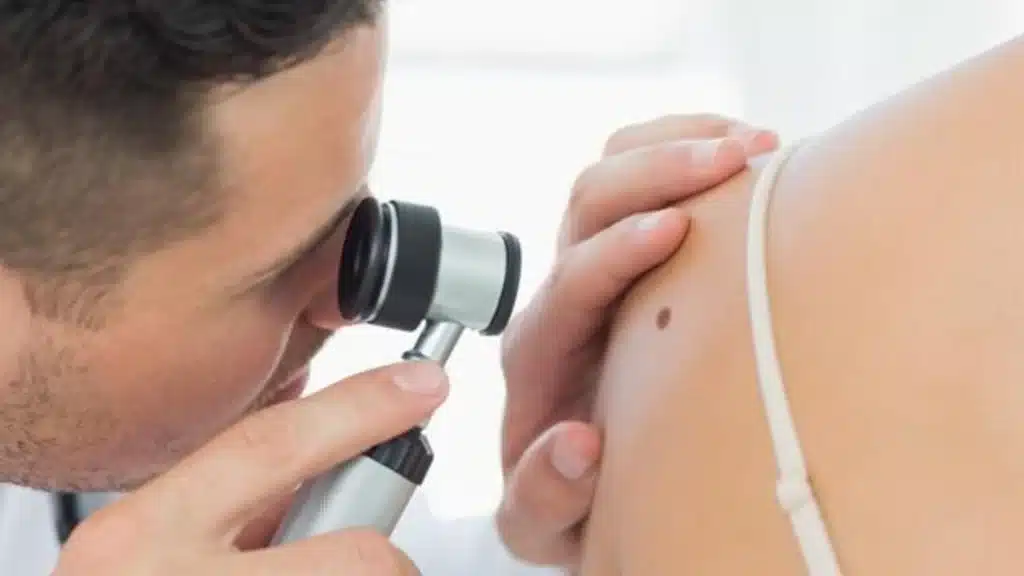
Many people feel nervous about skin checks, but the process is straightforward.
A clinician may:
Review Medical History
They may ask about:
- Previous skin cancers
- Family history
- Sun exposure habits
- Recent skin changes
Perform a Full Skin Assessment: The entire skin surface may be examined to identify suspicious lesions.
Use Dermoscopy: A dermatoscope provides a magnified view of skin structures not visible to the naked eye.
Photograph Lesions: Some clinics use digital imaging to monitor changes over time.
Recommend Further Action: If a lesion appears suspicious, a biopsy or removal procedure may be recommended.
Benefits of Regular Skin Checks
Routine assessments provide several advantages.
- Earlier Detection: Many skin cancers can be identified before symptoms develop.
- Better Treatment Outcomes: Early-stage skin cancers are often easier to manage.
- Peace of Mind: Professional evaluations can reassure patients when lesions are benign.
- Ongoing Monitoring: Regular reviews help detect changes over time.
Choosing a Canberra Skin Cancer Clinic
Selecting the right healthcare provider is important.
Consider factors such as:
- Experience in skin cancer detection
- Dermoscopy technology
- Comprehensive skin examinations
- Follow-up care
- Patient reviews
- Convenient appointment availability
Many residents seeking a trusted Canberra skin cancer clinic prioritize providers with extensive experience in skin cancer diagnosis and management.
How Often Should You Have a Skin Check?
Recommendations vary depending on risk factors.
Low-Risk Individuals: Many people benefit from annual skin examinations.
Moderate-Risk Individuals: More frequent monitoring may be advised.
High-Risk Individuals:
Patients with:
- Previous melanoma
- Strong family history
- Numerous atypical moles
may require checks every few months.
A healthcare professional can provide personalized recommendations.
Preventing Future Skin Damage
Although not all skin cancers can be prevented, reducing UV exposure lowers risk.
Protect your skin by:
- Applying broad-spectrum sunscreen
- Wearing protective clothing
- Using wide-brimmed hats
- Wearing sunglasses
- Seeking shade
- Avoiding peak UV periods
Consistent sun protection helps reduce cumulative skin damage.
Common Myths About Dangerous Moles
Myth 1: Only Dark Moles Are Dangerous
Some melanomas are pink, red, or skin-coloured.
Myth 2: Pain Means Cancer
Many dangerous lesions are painless.
Myth 3: Young People Cannot Get Melanoma
Melanoma can affect adults of various ages.
Myth 4: A Mole Must Be Large to Be Dangerous
Some melanomas are small but still aggressive.
Myth 5: Home Checks Are Enough
Self-monitoring is valuable but should complement professional skin examinations.
Signs That Require Immediate Medical Attention
Arrange an assessment promptly if a mole:
- Changes rapidly
- Bleeds repeatedly
- Develops multiple colours
- Becomes highly irregular
- Continues growing
- Looks significantly different from other moles
Early evaluation can make a substantial difference in treatment outcomes.
Conclusion
Most moles are harmless, but understanding what a dangerous mole looks like can help you identify warning signs early. Features such as asymmetry, irregular borders, colour variation, increasing size, and ongoing changes should never be ignored.
For Canberra residents, regular skin monitoring is particularly important due to Australia’s high UV exposure and skin cancer rates. Monthly self-checks combined with professional assessments provide the best approach to early detection.If you notice a suspicious mole, booking an appointment with a trusted mole check clinic can provide expert evaluation and peace of mind. Whether you are searching for a mole check near me, a reliable Canberra skin cancer clinic, or the best skin cancer clinic near me, timely assessment remains one of the most effective ways to protect your skin health and detect potential problems as early as possible.
Frequently Asked Questions (FAQs)
Q1. What does a dangerous mole look like?
A dangerous mole may show signs such as asymmetry, irregular borders, multiple colours, increasing size, or noticeable changes over time. Dermatologists often use the ABCDE rule (Asymmetry, Border, Colour, Diameter, Evolving) to identify suspicious moles that may require further assessment.
Q2. When should I visit a mole check clinic?
You should visit a mole check clinic if you notice a mole that is changing in size, shape, or colour, becomes itchy or painful, starts bleeding, or looks different from your other moles. Early evaluation can help detect potential skin cancers sooner.
Q3. Can a normal mole become cancerous?
Most moles remain harmless throughout life. However, some moles can develop abnormal changes that may indicate melanoma or another type of skin cancer. Regular self-checks and professional skin examinations are recommended.
Q4. Are all dangerous moles dark in colour?
No. While many suspicious moles are brown or black, some melanomas can appear pink, red, skin-coloured, or even white. Any unusual or changing skin lesion should be assessed by a healthcare professional.
Q5. How often should I check my moles?
It is generally recommended to perform a self-skin examination once a month. Regular monitoring helps you become familiar with your skin and identify changes early.
Your skin health matters. Book an appointment with our experienced Canberra skin cancer clinic today and have any suspicious moles professionally assessed.
| Canberra Skin Cancer Clinic- Green Way | Canberra Skin Cancer Clinic- Molonglo Valley |
| Phone: (02) 51046409 | Phone: (02) 51046409 |
| Email: reception@greenwaymedicalcentre.com.au | Email: reception@greenwaymedicalcentre.com.au |
| Address: Unit 6/175 Anketell Street, Greenway ACT 2900 | Address: 110 Woodberry Ave Coombs ACT 2611 |
| Website: https://canberraskincancerclinic.com.au/ | Website: https://canberraskincancerclinic.com.au/ |